Vessels violating Iran's rules and passing through the Strait of Hormuz would be “punished”, Iran’s Islamic Revolutionary Guard Corps (IRGC) warned on Friday. This came after the Iranian navy claimed to have targeted a liquefied petroleum gas (LPG) tanker attempting to pass through the strategic waterway illegally, Iranian state media reported.
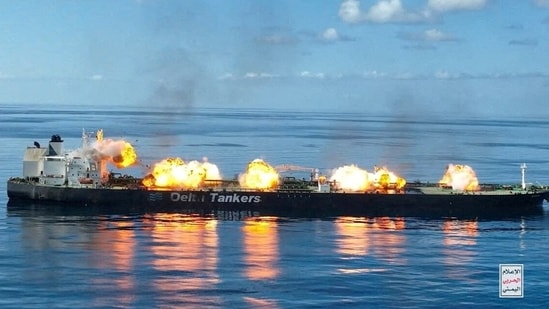
The IRGC Navy said the tanker saw a massive fire following the attack. At the same time, the United Kingdom Maritime Trade Operations (UKMTO) said a vessel was struck by an unknown projectile about 13 nautical miles west of Al Jazeera in the United Arab Emirates, causing a fire that was subsequently extinguished, Reuters reported. It is unclear it the two incidents are connected.
Ali Mohammadi, the IRGC Navy’s political deputy, said Iranian forces had been conducting nightly operations in the Strait of Hormuz since the beginning of the war to protect the country’s interests.
“Every night, from the beginning of the war until now, the IRGC Navy has carried out these operations to protect the country’s interests,” Mohammadi told the Fars news agency.
ALSO READ | Why are oil prices surging above $104? Hormuz attacks and Hurricane Isaias raise supply fears
{{/usCountry}}ALSO READ | Why are oil prices surging above $104? Hormuz attacks and Hurricane Isaias raise supply fears
{{/usCountry}}He claimed that the IRGC Navy had maintained “complete and absolute surveillance” over the waterway since the first day of the war, adding that its forces could “impose its will” on vessels they deemed to have violated their rules.
Why Iran is targeting ships in the Hormuz
This come amid an almost eight-month confrontation over control of the Strait of Hormuz, a vital shipping route connecting the Gulf with the Gulf of Oman and the Arabian Sea.
It began on February 28 when the US and Israel bombed Iran unprovoked and assassinated their Supreme leader. Tehran, in retaliation, struck US bases in the Gulf and shut off the Strait of Hormuz. Oil prices have skyrocketed since.
The strait has become a major point of contention, with Tehran seeking to maintain control over maritime traffic while Washington pushes for the resumption of commercial shipping.
ALSO READ | 11 Indian crew injured after merchant vessel hit by projectile in Strait of Hormuz
Before the war, roughly one-fifth of global oil and liquefied natural gas shipments passed through the strait. Disruptions to shipping have consequently affected energy supplies, raised transportation and insurance costs and increased volatility in global oil markets.
Iran has also objected to efforts to establish alternative shipping routes closer to the Omani side of the waterway, insisting that vessels follow routes it considers authorised.
Tehran has warned regional countries that attempts to establish alternative oil-export routes would be considered hostile, according to officials cited by Reuters.
Tanker attacks hit highest weekly level since war began
At least 12 attacks on oil, liquefied natural gas and LPG tankers were recorded around the Strait of Hormuz between September 28 and October 5, based on data from three maritime security sources, Reuters reported. This was the highest weekly tally since the war began.
The incidents included attacks, attempted attacks and harassment, including drone overflights, surveillance and radio warnings to ships.
ALSO READ | 3 years on, West Asia conflict widens, its costs mount: Number Theory
Shipping traffic has also declined. Data from analytics firm Kpler showed that only seven commodity-carrying vessels passed through the strait on October 6, the lowest daily number in more than two months. Crude oil shipments through the waterway fell 27% from a wartime peak to at least 10.1 million barrels per day, according to data cited by Reuters.