
 E-Paper



Iran’s supreme leader is fading into the shadows
Iran’s supreme leader is fading into the shadows


 Prefer HTon Google


Political power in Iran used to be simple. Call him dictator, supreme leader, imam or shadow of God on earth, Ayatollah Ali Khamenei was the absolute ruler. Military commanders, presidents and clerics were his underlings. He made all the top appointments and rigged the choice of presidential candidates.
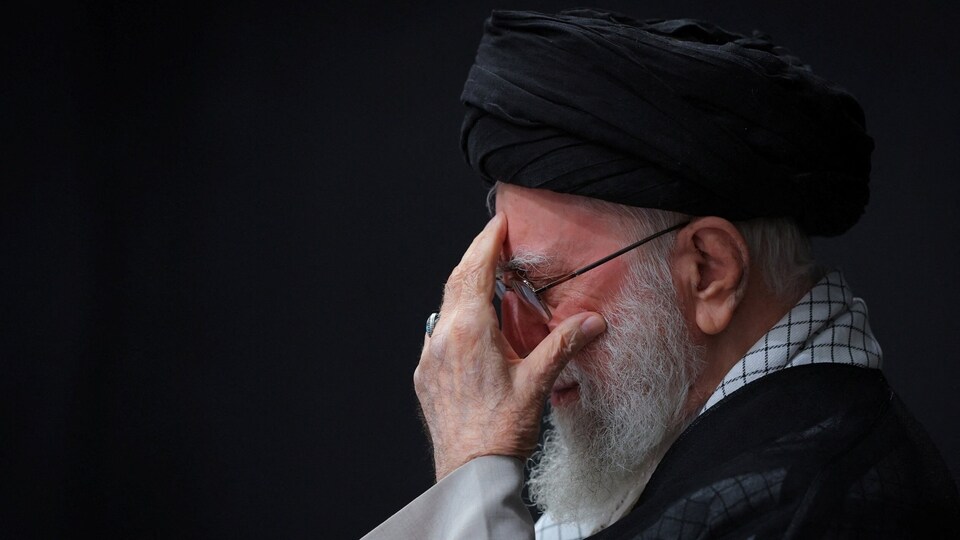
But since Iran’s 12-day war with Israel, things have become more complicated. The 86-year-old leader appears in public only rarely. His sermons, once lengthy, are brief. The question of succession looms larger than ever, with actors inside and outside the regime jostling for position, many openly advocating alternatives to 46 years of theocracy. The opacity around the fate of Iran’s nuclear programme after the strikes by Israel and America is replicated across the political system. Iranians want to know whether their leaders will accept Donald Trump’s terms for a deal. But they are no longer sure who is in charge.
Initially, the war appeared to stabilise Iran’s politics. A wave of patriotism pulled rulers and ruled together after years of polarisation. Calls by Binyamin Netanyahu, Israel’s prime minister, for Iranians to rise up fell on deaf ears. But since the ceasefire on June 24th the multiplicity of opinions on how to preserve unity has made the country look more fragmented.
Mr Khamenei’s preferred option is cosmetic. To appeal to a population disenchanted with clerical rule, he is dressing his theocracy in nationalist clothes. During celebrations on July 5th for Ashura, the anniversary of the martyrdom of the Prophet Muhammad’s grandson, Hussein, and the republic’s holiest day, Mr Khamenei ordered a muezzin to drop his incantations and instead sing Ey Iran Iran, a rendition of a patriotic anthem that was popular before the Islamic revolution in 1979 and had since been suppressed. He has played Shia saints down and puffed up Iran’s pre-Islamic past. New billboards in city squares give ancient Persian myths modern themes. Mr Khamenei has also turned a blind eye to a new crop of television shows, including a wildly popular Persian version of “Love Island”, where unmarried couples flirt and make out. In parts of Tehran, the capital, headscarves and long coats for women feel like a relic of the past.
But such concessions are designed to reduce the demand for political change, not herald its coming. Earlier this month Mr Khamenei reappointed his crusty Friday-prayer preacher and his 99-year-old head of the Guardian Council, the latter for the 33rd time. After a few brief post-war appearances, the state broadcaster has removed reformists from its airwaves. Executions are up; a widely expected amnesty for political prisoners looks far off.
Entering occultation
As the supreme leader tries to keep up the appearance of business as usual, rivals are circling. The Islamic Revolutionary Guard Corps (IRGC), the regime’s praetorian guard, is using the continued confrontation with Israel to justify its hold on power. Before retreating into his bunker as Israel struck, Mr Khamenei handed decision-making to the generals, inviting the possibility of a military junta reducing him to a figurehead. Yet the generals are struggling to project unity. Israel’s evident infiltration of their ranks has spread paranoia, complicating co-ordination. The IRGC’s extensive business interests and rampant corruption mean some see it fragmenting into a hotch-potch of decentralised mafias.
Masoud Pezeshkian, the president, has called for a dialogue with the opposition and the return of exiles in an attempt to turn the unity produced by the war into lasting reconciliation. But he lacks the clout to deliver. Iranians blame him for blackouts and lengthy water cutoffs in the summer heat. He is also seen as responsible for the run on the rial, having failed to persuade Iran’s sanctions-busting business folk to repatriate earnings.
Amid the discontent, two former presidents, Mahmoud Ahmadinejad and Hassan Rouhani, are plotting a comeback. Both command a larger popular base than Mr Pezeshkian. Mr Rouhani, a cleric, might fancy his chances as Mr Khamenei’s turbaned successor, reckoning he could end the stand-off with the West. The war, he said in a statement, “should be a wake-up call to correct our course and rebuild the foundations of governance”. Ali Larijani, a former speaker of parliament, is acting like the executive president he once tried to be. He, rather than Mr Pezeshkian, recently led a delegation to Moscow that met Vladimir Putin, Russia’s president.
Dissidents, too, are speaking out. On July 11th Mir-Hossein Moussavi, a former prime minister Mr Khamenei has kept under house arrest for 15 years, released a petition calling for a new constitution, which was signed by hundreds of intellectuals. Many younger Iranians want an overhaul without any past or present figures, including ageing dissidents like Mr Moussavi.
Domestic disunity weighs on foreign policy, where Iran has downsized its aspirations from regional domination to regime survival following Israel’s campaign against its proxies. Hardliners advocate dashing for a nuclear bomb. Others hope China, Iran’s primary market for oil, may come to the rescue with new warplanes. But with Israel threatening a resumption of bombing, any help would probably come too late. Russia, mired in Ukraine, has been slow to rebuild Iran’s air defences.
That leaves America. Mr Trump’s participation in Israel’s war spooked Iran and put talks about a nuclear deal on hold. Abbas Araghchi, Iran’s foreign minister, says Iran is ready to resume them. It may even agree to a non-aggression pact with Israel. An agreement would release Iran from sanctions, end its isolation from the West and perhaps restore foreign investment, but it is hampered by differences over where Iran should be heading. For Iranians the decision is urgent. But they may no longer have a leader with the authority or the vision to make it.
Sign up to the Middle East Dispatch, a weekly newsletter that keeps you in the loop on a fascinating, complex and consequential part of the world.


