
 E-Paper





Follow the latest breaking news, major developments and agenda-setting stories from India and around the world with the newsdesk at Hindustan Times. Operating round the clock, the desk brings together experienced editors, reporters and correspondents to deliver fast, accurate and contextual reporting across subjects that influence public policy, governance, business, society and international affairs. The HT News Desk covers politics, elections, government policies, the economy, business and markets, science and technology, the environment, law and order, infrastructure, education, climate issues and geopolitics, while closely tracking developments across states, institutions and global capitals. The team also leads coverage of major breaking news events, policy announcements, court proceedings, natural disasters, public emergencies and significant international developments. Reports published by the newsdesk are based on information gathered from reporters on the ground, official statements, government agencies, court records, regulatory filings, recognised institutions and other authoritative sources. Stories undergo editorial scrutiny and verification processes to ensure accuracy, fairness and relevance, and are updated as events evolve and additional information becomes available. Whether covering a key political decision in New Delhi, an economic policy shift affecting millions, a landmark court ruling or a major global event, the HT News Desk aims to provide readers with reliable, fact-based journalism that delivers not only the latest developments but also the context and analysis needed to understand their wider implications.
 Trending News
Nepal scraps $1.5-billion dam project with China
The proposed 750-MW West Seti hydropower project in western Nepal was considered one of the major Chinese ventures in Nepal, which has signed up for the Belt and Road Initiative.


The Nepal government announced on Wednesday it has scrapped an agreement with China Three Georges Corporation for building the $1.5-billion West Seti hydropower project, a blow to Beijing’s ambitious infrastructure plans in the country.
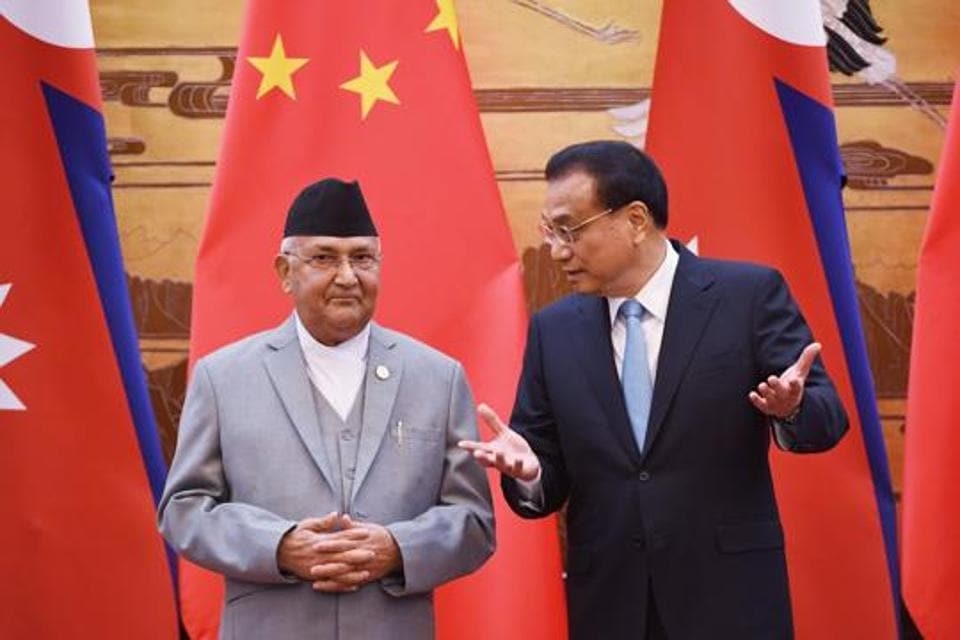
The proposed 750-MW project in western Nepal was considered one of the major Chinese ventures in Nepal, which has signed up for the Belt and Road Initiative. The two sides signed a memorandum of understanding for the project in 2012.
The move came 10 months after Nepal scrapped the award of the 1,200-MW Budhi Gandaki hydropower project to China’s state-owned Gezhouba Group. It also came days after Nepal pulled out of the Bimstec joint military exercise in India.
A meeting of the Investment Board Nepal (IBN), chaired by Prime Minister KP Sharma Oli, decided late on Tuesday to cancel the MoU with the Chinese state-run firm and to work out new modalities for building the dam.
“After Three Georges (Corporation) refuses to develop West Seti project, a task force is formed to recommend an appropriate model to develop the project. A three-member team that consists of the energy minister, finance minister and CEO of the board will recommend an appropriate model to develop the project,” an IBN statement said.
International media reports had said Three Gorges Corporation wanted to withdraw as it found the West Seti project unfeasible because of high resettlement and rehabilitation costs.
“The statement does not talk about the scrapping of the MoU with the Chinese firm because mutual understandings like an MoU do not have legal consequences. We also did not want to antagonise the Chinese,” an official of the board said.
After Oli, who is perceived as pro-China, formed the government, Chinese media reports had suggested Nepal’s Communist administration would go ahead with the West Seti project.
At the end of August, a team from Three Georges Corporation visited Kathmandu and held talks with IBN officials for two days but made no headway. Three Georges Corporation will now be officially notified of its removal from the project.
The Chinese firm had indicated the project was unviable even after the Nepal government agreed to certain conditions, including revision of the project’s installed capacity and a power purchase agreement in US dollars.
At Tuesday’s meeting, Oli did not consider any of the conditions put up by the Chinese firm and decided to scrap the deal, officials said. IBN had also offered to downsize the project’s capacity from 750 MW to 600 MW.
Officials present at the meeting said the Chinese firm had not shown any intent to take the project forward. Instead, the firm brought up the issues of resettlement and rehabilitation and described them as “expensive and unpredictable”.
The Chinese company entered the scene in 2011, after Nepal scrapped the licence of West Seti Hydropower Company Limited, in which Australia’s Snowy Mountain Engineering Corporation had a majority stake.
The project was originally conceived as export-oriented, with plans to sell 90% of the power to India. However, the West Seti Company failed to go ahead with the construction, mostly because of its failure to raise funding.
A political analyst in Katmandu described the latest development as a “smart, calculated and balancing act” by Prime Minister KP Sharma Oli that was apparently aimed at maintaining good relations with both India and China.


