
 E-Paper



US-Pak redux has implications on ties with India & QUAD
In a span of one month, the Biden administration first triggered a strategic point by announcing the F-16 package and then triggered a political point with its Pak ambassador calling what is an occupied territory as a so-called liberated or “Azad” zone.

 Prefer HTon Google


India has conveyed its serious concern to the US State Department on Ambassador to Pakistan Donald Blome’s recent visit and his comments on Pakistan Occupied Kashmir (PoK) at the highest bureaucratic level. The Modi government has also objected to the USD 450 million upgrade package for Pakistani F-16 fighters, announced by the Pentagon last month, at the top political level.
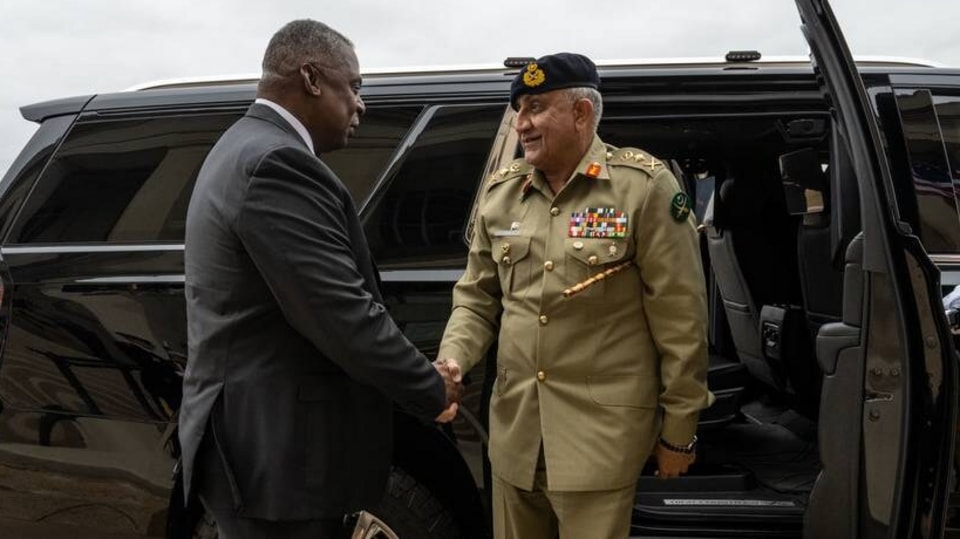
In a span of one month, the Biden administration first triggered a strategic point by announcing the F-16 package and then triggered a political point with its Pak ambassador calling what is an occupied territory as a so-called liberated or “Azad” zone.
To complicate bilateral matters further, US issued a travel advisory on Friday for its citizen travelling to India on count of crime and terrorism. The advisory specifically advised its nationals not to travel to Jammu and Kashmir due to “civil unrest and terrorism” and within “10 km of the India-Pak border due to the potential for armed conflicts.” Clearly, the US, egged on by Pakistan and UK behind the scenes, is revisiting its Kashmir flash-point theory and next will advocate a dialogue between India and Pakistan.
With Ambassador Blome having earlier served as political counselor in Afghanistan, his undiplomatic statement cannot be dismissed as an inadvertent mistake. He clearly knew exactly what he was doing and what it would do to India-US ties.
While it is understandable that the US is rewarding Pakistan for sending weapon and ammunition supplies to Ukraine via British C-130 J transport aircraft and the Romania route, Washington’s disregard for the impact of the two triggers on Indo-US ties is quite inexplicable and may have long term undesired consequences.
Fact is that F-16 is not merely a single-engine fourth generation fighter aircraft that the US has sold to Pakistan since the early 1980s, it is also the barometer of US-Pakistan relationship. The sinusoidal graph of US-Pakistan bilateral relations can be clearly understood using F-16 fighter sales as a reference point.
For India, the fighter resembles strategic headache on the western front as it is naivety to believe that Rawalpindi will use the 75-odd F-16 fighters for counter-terrorism mission in Afghanistan. These fighters will be used by Pakistan against India with Rawalpindi’s air attack, using the F-16 fighters and long-range air to air missiles, on India post IAF’s Operation Bandar in Balakot a solid proof of Islamabad’s perfidy.
Knowing fully well the impact of F-16 supplies to Pakistan, the visit of Ambassador Blome to Pakistan Occupied Kashmir and now travel advisory will affect India-US ties, the Biden administration must have thought through the pros and cons before taking these decisions.
Just like the US never informed India in March 2004 when it designated Pakistan as a major non-NATO ally, it did not inform the Modi government before announcing the F-16 package. The F-16 issue will become much more serious if the package includes supply of 120 km range air to air missile and air to ground precision guided ammunition for the Chinese fighter-dominated Pakistani Air Force.
While India is upset at these developments, Islamabad continues to play Washington against Beijing for its own short-term benefits with the former hoping to wean away Pakistan from its all-weather friend and the latter using Rawalpindi to destabilize India.
Pakistan also every now and then adds a sweetener to its ties with America by exposing a global jihadist to the Hell-Fire missiles fired from US Predator drone in the name of counter-terror cooperation. Even the Pakistan support to US against Tehran in future cannot be ruled out given the current context of Russia using Iranian armed drones to strike deep into Ukraine.
Even though the US is fully entitled to forge deep ties with Pakistan, it should not be at the cost of souring its ties with a QUAD partner and a close strategic natural ally India. The ball is now in the US court to clear differences with India.


