
 E-Paper



Pakistan bars movement of Chinese nationals without armoured vehicles
These measures were announced after a suicide bomber targeted a convoy of Chinese engineers, on March 26, who were engaged in a dam project in Pakistan.

 Prefer HTon Google


The Khyber Pakhtunkhwa government has prohibited Chinese nationals from traveling within the province unless they are accompanied by armored vehicles, a senior police official stated on Wednesday.
Speaking to Dawn News, Hazara range deputy inspector general (DIG) of police Tahir Ayub Khan said, “As we’re adopting all possible measures for the safety of Chinese nationals, they shouldn’t travel in the province without armoured vehicles in line with the government’s directions.”
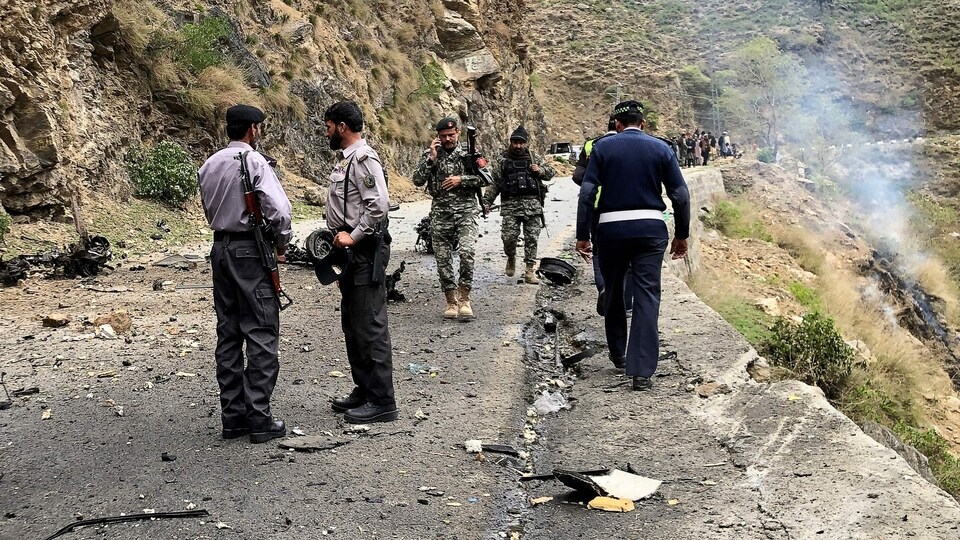
These measures were announced after a suicide bomber targeted a convoy of Chinese engineers, on March 26 this year, who were engaged in a dam project in northwest Pakistan. This attack claimed the lives of six individuals. This incident marked the third significant assault on Chinese interests within Pakistan in the span of a single week. Prior attacks had aimed at a Pakistan naval air base and a strategic port crucial for Chinese investments in the southwest province of Balochistan, underscoring growing security concerns for Chinese projects in the region.
View: China's ‘good terrorist, bad terrorist’ ploy to blame for attacks on Chinese nationals in Pakistan
As reported by Dunya News, several Chinese nationals were restricted to move only within their hotels amid the rising security concerns. A letter by the police stressed on the need to protect Chinese nationals who are involved in non-China-Pakistan Economic Corridor (CPEC) projects.
Pakistan's home department also stated that the projects who have not been using bulletproof vehicles will be stopped unless the changes are made.
Accompanied by District Police Officer Shafeeullah Gandapur, the DIG visited the sites of the Suki Kinari and Balakot hydropower projects to discuss security arrangements for the Suki Kinari project in the Malkandi area of Kaghan Valley, Dawn reported.
He attended security meetings concerning the hydropower projects in the Malkandi and Ghanool areas. The attendees comprised security personnel, Chinese engineers, and project managers from both sites.
Read Here: China’s perspective on ties with Pakistan and CPEC’s prospects
Tahir mentioned that the boundary walls of residential colonies, housing Chinese engineers and workers, would be at least eight feet high and might be additionally fortified with barbed wire.
He emphasised that the security personnel would ensure the safety of the Chinese engineers at all costs.
Tahir joined the post after former DIG Mohammad Ijaz Khan was suspended after the attack on Chinese officials.
In the wake of the attack, heightened security concerns have prompted authorities to take proactive measures to minimise risks and safeguard the well-being of foreign nationals.


