
 E-Paper



Pak PM condoles Khamenei's death in US-Israeli strikes, says ‘age old convention’ violated
He posted on X, “Pakistan also expresses concern over violation of the norms of international law."

 Prefer HTon Google


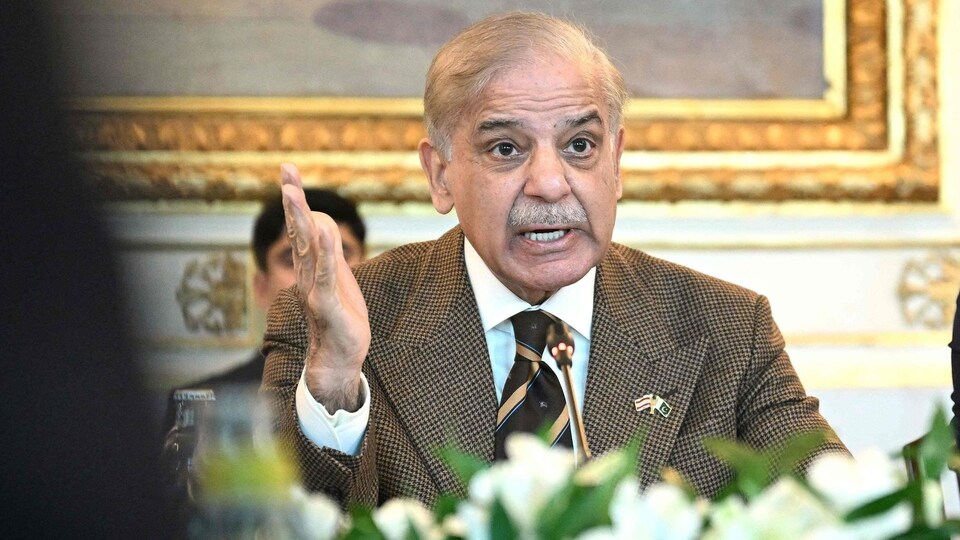
Pakistan's Prime Minister Shehbaz Sharif said on Sunday that his government and the people of the country “join the people of Iran in their hour of grief and sorrow and extend the most sincere condolences on the martyrdom of His Eminence Ayatollah Seyyed Ali Khamenei".
Follow: Live updates on the conflict
He further said in a post on X, “Pakistan also expresses concern over violation of the norms of international law. It is an age old convention that the Heads of State/Government should not be targeted.”
Earlier, he cancelled on Sunday a trip to Russia in the coming days, citing the "regional and internal situation". Sharif was due to travel to Russia from March 3 to 5, it had been reported in Russian media.
Protesters took to the streets across Pakistan on Sunday after the death of neighbouring Iran's supreme leader Ali Khamenei in US-Israel air strikes.
Also, months of cross-border clashes between Pakistan and Afghanistan have flared since Thursday when Afghanistan launched an offensive along the frontier, with Pakistani forces hitting back on the border and from the skies. "In view of the current regional and internal situation, the prime minister has decided to postpone his visit to Russia after consultations," Sharif's office said in a statement. A new date will be decided after "mutual consultations", the statement added.
Violent clashes between protesters and security forces in the Pakistani port city of Karachi left at least nine people killed and more than 50 others wounded on Sunday morning, after hundreds of demonstrators attempted to storm the US Consulate, authorities said.
The violence came just hours after the United States and Israel attacked Iran and killed the country’s supreme leader, Ayatollah Ali Khamenei.
Police and officials at a hospital in Karachi said that at least 25 people were also wounded in the clashes and some of them were in critical condition.
Summaiya Syed Tariq, a police surgeon at the city's main government hospital, told news agency AP that initially six bodies and multiple injured people were brought to the facility. However, she said the death toll rose to nine after three critically wounded people died.
US on Pak protests
The US Embassy in Pakistan wrote on X that it was monitoring reports of ongoing demonstrations at the consulate in Karachi and Lahore, as well as calls for additional protests at the embassy in Islamabad and the consulate in Peshawar. It advised US citizens in Pakistan to monitor local news, stay aware of their surroundings, avoid large crowds and keep their travel registration with the U.S. government up to date.
Karachi is the capital of southern Sindh province, and Pakistan’s largest city.
What local authorities said
Senior police official Irfan Baloch said that protesters briefly attacked the perimeter of the US consulate, but were later dispersed.
He dismissed as baseless reports that any part of the consulate building was set on fire.
However, he said that protesters torched a nearby police post and smashed windows of the consulate before security forces arrived and regained control.
The clashes prompted Interior Minister Mohsin Naqvi to issue an appeal for calm.
“Following the martyrdom of Ayatollah Khamenei, every citizen of Pakistan shares in the grief of the people of Iran," Naqvi said in a statement.
He described it as “a day of mourning for the Muslim Ummah and for the people of both Iran and Pakistan,” but urged people not to take the law into their own hands and to express their protests peacefully.
Shiite Muslims also held a rally and clashes with police repeatedly near the US consulate in Lahore, the capital of eastern Punjab province, police said.
Rallies against Israel and the United States were also planned in northern Gilgit-Baltistan region.
Shiites make up roughly 15% of Pakistan’s population of about 250 million and represent one of the largest Shiite communities in the world.


