
 E-Paper



South Korea president Yoon Suk Yeol impeached by parliament over martial law debacle
The impeachment motion, which required a two-thirds majority to pass, alleged that Yoon committed insurrection.

 Prefer HTon Google


South Korean lawmakers voted to impeach President Yoon Suk Yeol on Saturday following his failed attempt to impose martial law last week.
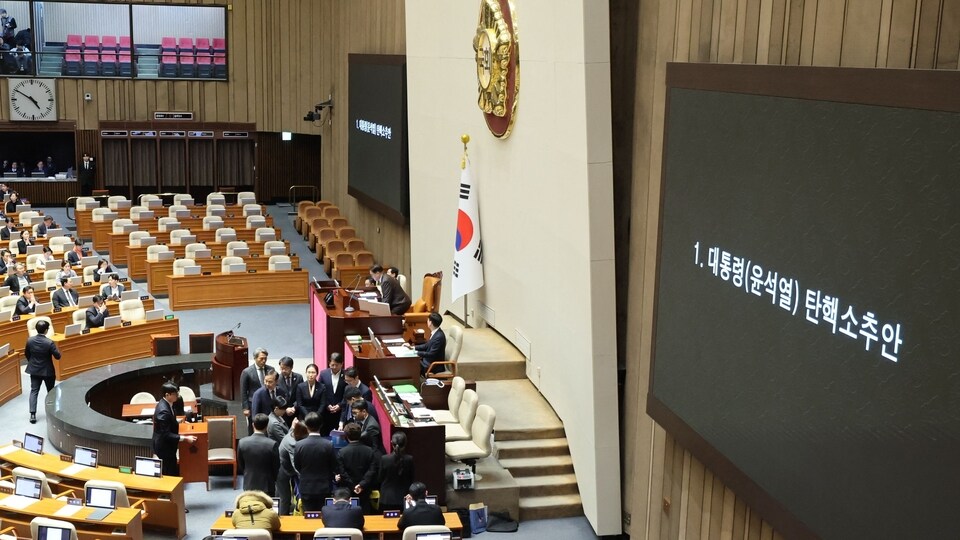
Of the 300 lawmakers, 204 voted in favor of impeachment on charges of insurrection, while 85 voted against it. Three lawmakers abstained, and eight votes were nullified.
The impeachment motion, which required a two-thirds majority to pass, alleged that Yoon committed insurrection by staging a series of riots and threatening the National Assembly and the public.
Yoon's presidential powers and duties have been suspended, and Prime Minister Han Duck-soo has taken over as interim president. The Constitutional Court will now deliberate on whether to uphold Yoon's removal, with a decision expected within 180 days. If the court rules against Yoon, he would become the second president in South Korean history to be successfully impeached, triggering a presidential election within 60 days.
South Korea crisis
The impeachment vote follows a tumultuous period in South Korean politics, with Yoon's approval rating plummeting to a record low of 11%. Large demonstrations have been held across Seoul, with protesters calling for Yoon's ouster and arrest. The metropolitan government has deployed 1,000 safety personnel to maintain order.
Yoon's attempt to impose martial law on December 3 was widely criticized, with opposition parties and experts accusing him of rebellion. The president had cited the need to eradicate domestic political support for North Korea as one of the reasons for his decision. However, his actions were seen as a high-risk gamble that has left the nation vulnerable to security threats.
The fallout from Yoon's actions has been severe, with the nation's former defense minister under arrest and several leading military officials under investigation. The situation has sparked concerns about the nation's ability to respond to security threats, particularly given the elevated tensions with North Korea.


