
 E-Paper



Speaker Mahinda Abeywardana may be Acting President of Sri Lanka
The inflation hit public of Sri Lanka is not in favour of Ranil Wickremesinghe to be appointed as the Acting president after disgraced Gotabaya resigns on July 13. Political parties like SJB and SLFP want both Rajapaksas and Wickremesinghe out of the scene before the decision of Acting President.

 Prefer HTon Google


With no public sympathy for the eternal survivor and former prime minister Ranil Wickremesinghe to succeed the disgraced Rajapaksas, Speaker Mahinda Yapa Abeywardana is likely to be appointed Acting President of Sri Lanka after President Gotabaya Rajapaksa demits office on July 13. This will lead to an interim government with all-party consensus and representatives and thereon calling for general elections to elect a new Parliament after the situation stabilizes in the Island nation.
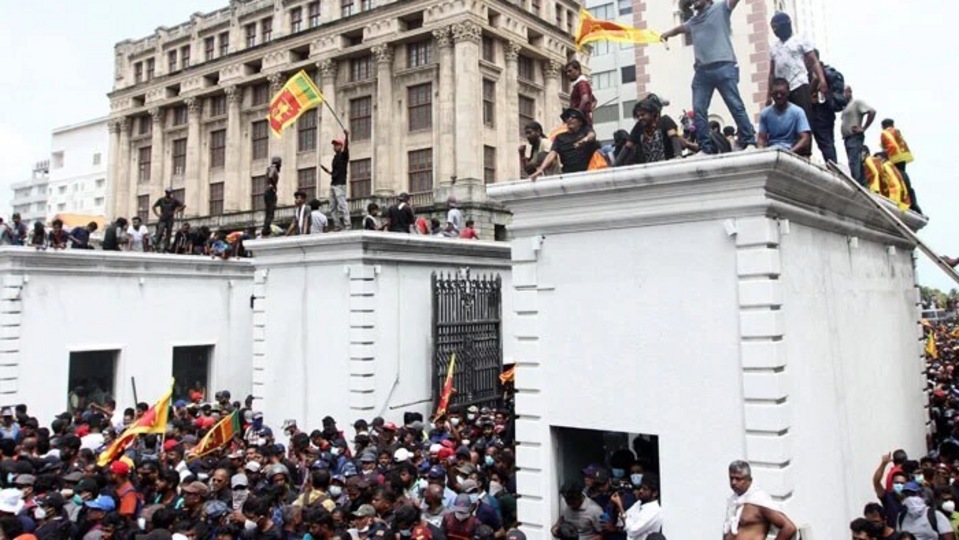
The political meltdown in the Island nation is clearly a result of economic profligacies and poor governance of the Rajapaksa enterprise, which went for white elephant projects funded by high interest loans from China’s EXIM bank. The loans from Beijing are not only contributors to Sri Lanka’s high external debt of over USD 50 billion and loan default, but even the storming of the President Palace on July 9 appears to be orchestrated by Leftist social media in the garb of peoples’ revolution.
Given the present weak political leadership in Sri Lanka with no leader willing to grab the runaway bull by horns, communist parties like Janatha Vimukhi Peramuna (JVP) are active to reclaim the political space and disgraced Rajapaksas are out to promote Ranil Wickremesinghe’s as the man to succeed Gotabaya as part of a tacit understanding, say Colombo watchers. This is even though both Samagi Jana Balawegaya (SJB) and Sri Lankan Freedom Party (SLFP) have made it clear to the Speaker that both Gotabaya and Wickremesinghe must step down and should not have any immediate role in stemming the political rot in Sri Lanka.
Contrary to reports, both Gotabaya and his brother Mahinda are in Colombo and still want to exercise power through the appointment of Wickremesinghe, whose party has single seat in Parliament, as the Acting President.
While India has offered full support to the Sri Lankan people by sending more than USD 3.5 billion worth of aid and essential supplies, China is only offering loans and support for a Sri Lanka relief package at the IMF. It is not only the weak and ineffective leadership of the Pearl nation that has allowed matters to deteriorate, but the national security agencies also do not have the technical expertise to control the orchestrated Leftist-inspired storm over social media to fan the flames in an already beleaguered country.
With food and fuel running scarce and the global powers dealing with Ukraine and Indo-Pacific, India is left to help stabilize the nation while Beijing is looking for an opportunity in crisis. The Sri Lankan crisis is an example of the inbuilt debt trap in China’s belt road initiative. Nepal, Pakistan, and Bangladesh could be next on the list.


