IN THE DEPTHS of the cold war, American spooks and generals came to suspect that the nuclear-weapons club was about to gain an incongruous new member. That state was Sweden, a neutral power that sat out both world wars, then declined to join the West’s new defence alliance, NATO, at its founding in 1949.
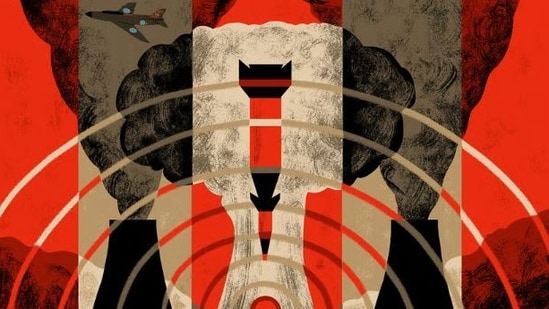
For all Sweden’s war-shunning ways, by the early 1960s its scientists were perhaps two years from building a nuclear bomb, after years of secret work. Officials
IN THE DEPTHS of the cold war, American spooks and generals came to suspect that the nuclear-weapons club was about to gain an incongruous new member. That state was Sweden, a neutral power that sat out both world wars, then declined to join the West’s new defence alliance, NATO, at its founding in 1949.
For all Sweden’s war-shunning ways, by the early 1960s its scientists were perhaps two years from building a nuclear bomb, after years of secret work. Officials held James Bond-ish discussions about hiding a plutonium-production plant in a vast rock cavern. Military commanders drew up plans to maul any threatening Soviet force with an arsenal of 100 tactical, or battlefield-scale nuclear bombs, missiles and torpedoes. A favoured scenario involved targeting a Soviet invasion fleet as ships clustered in a port embarking troops before crossing the Baltic Sea.
It was cold-war America’s policy to prevent the nuclear-weapons club from growing. What looks like a trap was duly set. This was baited with uranium-235, enriched for use in civilian power generation and offered to Sweden (and others) at low cost. With cheap fuel available, why would Sweden build its own reprocessing plant, a US atomic-energy chief asked a Swedish scientist in 1963. Was it planning to build weapons, the American went on. If so, his government would take an extremely negative view.
As America applied the screws, domestic politicians were also turning against the programme. After lengthy wrangling, Social Democrat leaders decided that a small nuclear arsenal of the sort envisaged would not deter the Soviets but rather make them target Sweden, while straining defence budgets and harming the country’s moral standing. By the mid-1960s the programme was over.
Sweden’s atomic adventure has lessons for the present day. During the cold war, a fearful time, several industrialised countries considered going nuclear. America worked hard to thwart such proliferation, using threats but also economic incentives and security guarantees. The world is alarming once more. Debates about acquiring nuclear weapons are growing louder in countries with scary neighbours, from South Korea and Japan, in North Korea’s and China’s backyard, to Poland, on Russia’s doorstep.
President Donald Trump has, over the years, swerved between expressions of horror about nuclear war and insouciance about countries getting their own bombs. During his presidential campaign in 2016, Mr Trump averred that it might be “better” for Japan to go nuclear, to deter North Korea’s nuclear-armed regime. Mr Trump added that America “cannot be the policeman of the world. And unfortunately, we have a nuclear world now.” More recently, Mr Trump has railed against the cost of keeping troops in Japan and South Korea, and demanded that Europe spend far more on its own defence.
Months before the elections in 2024, Elbridge Colby, who now serves as Mr Trump’s undersecretary for defence policy, told South Korean reporters that their country should take “primary, essentially overwhelming, responsibility for its own self-defence against North Korea because we don’t have a military that can fight North Korea and then be ready to fight China.” Mr Colby added that America should refrain from imposing sanctions on a nuclear-armed South Korea.
For its part, Russia does not hide its admiration for the clout conferred by nuclear arms. Vladimir Putin has made nuclear threats to Western governments that dare to help Ukraine (stoking alarm that saw Sweden join NATO in 2024). Russia’s foreign minister, Sergei Lavrov, recently hailed North Korea’s “timely” decision to pursue nuclear weapons as the reason that nobody is “even contemplating the use of force” against that country.
Actually, there is no reason to imagine that an enlarged nuclear club would make the world more stable, or let America off the hook for the security of its friends. Sweden is a prime example of a country whose small arsenal was never intended to defeat its larger adversary. Its goals were two-fold: to raise the costs of a Soviet invasion; and to make American assistance more likely.
America Firsters need to read more history
Mats Bergquist, a former Swedish ambassador and historian of his country’s cold-war foreign policy, describes a twin-track strategy. Plan A was neutrality. Discreet military co-operation with the West was Plan B. Posted to Washington in the 1970s, he observed the close ties between the two countries’ armed forces, even after leading politicians wrangled publicly over the Vietnam war and other divisive topics. After the late 1950s Swedish defence planners talked of fighting “until help can be obtained”. That reflected the government’s “fairly strong conviction” that America’s security umbrella would extend to Sweden in a crisis, says Mr Bergquist.
To be precise, Sweden was pursuing what Vipin Narang, a scholar of deterrence, calls a “catalytic nuclear posture”, in other words one designed to trigger help from a superpower patron. This is a common strategy for smaller nuclear powers, says Scott Sagan of Stanford University. He points to the Yom Kippur war in 1973, when Israel signalled to America it might use nuclear weapons, triggering a hasty American airlift of conventional arms.
For deterrence scholars, a nuclear South Korea raises a whole other set of worries. Special risks are created when two rivals fear surprise attack from the other. Today, nuclear-armed North Korea and conventionally armed South Korea fit that pattern. Both have already adopted pre-emptive, hair-trigger strategies. All new nuclear powers follow “a learning curve”, for instance as they distinguish false alarms from real threats, worries Professor Sagan.
South Korea would be a nuclear newcomer on a hair-trigger, with a volatile neighbour. If they were veering towards a nuclear war, even an America First president could be dragged in.
One Subscription.
Get 360° coverage—from daily headlines
to 100 year archives.
Archives
HT App & Website