Doctors in the US have successfully completed a near-total face transplant on a 32-year-old man during an extensive, life-changing surgery to improve his ability to chew, speak, breathe and smell.
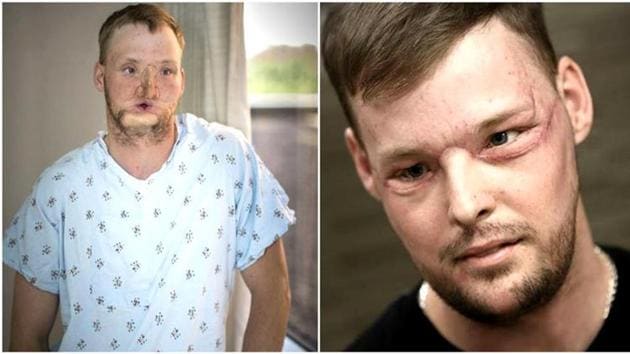
The face of recipient Andrew Sandness was devastated by a gunshot wound at the age of 21.
The surgery, which spanned more than 50 hours, was carried last year and involved restoring Sandness’ nose, upper and lower jaw, palate, teeth, cheeks, facial muscles, oral mucosa, some of the salivary glands and the skin of the face.
A multidisciplinary team of surgeons, physicians and health professionals used virtual surgical planning technology and 3D printing to optimise the aesthetic and functional outcomes of the surgery at Mayo Clinic’s Rochester campus.
Sandness has been recovering in Rochester and likely will return home in eastern Wyoming this month, the team said.
“I am absolutely amazed at the outcome so far. I am now able to chew and eat normal food, and the nerve sensation is slowly improving, too,” said Sandness.
“Andy (Sandness) has been our patient for 10 years. He has worked so hard to prepare for this, and during his entire recovery period, he has been strong, gracious and determined. Andy is an amazing person and so well-deserving of this gift,” said Samir Mardini, the surgical director at Mayo Clinic Essam and Dalal Obaid Centre for Reconstructive Transplant Surgery.
{{/usCountry}}“Andy (Sandness) has been our patient for 10 years. He has worked so hard to prepare for this, and during his entire recovery period, he has been strong, gracious and determined. Andy is an amazing person and so well-deserving of this gift,” said Samir Mardini, the surgical director at Mayo Clinic Essam and Dalal Obaid Centre for Reconstructive Transplant Surgery.
{{/usCountry}}Facial transplantation is the process of removing part or all of a donor’s face and attaching it onto a patient who has previously suffered facial injury or deformity.
Skin, fat, muscles, nerves, tendons, cartilage and bone may be components of the transplant.
Attaching nerves and blood vessels from the donor’s face to the recipient’s provides the potential (with extensive rehabilitation) for sensation, function and mobility similar to an uninjured face.
In some situations, it may allow the recipient to regain the ability to speak, chew food, avoid ongoing use of feeding tubes and regain their sense of smell.