
 E-Paper


From 'obliterated' to 'imminent threat': Trump administration contradicts President on Iran war
Director of National Intelligence Tulsi Gabbard made headlines as she dodged several questions regarding the intention behind starting a war with Iran.

 Prefer HTon Google


Almost three weeks into the Iran war, officials from the Trump administration testified publicly in front of the Senate Intelligence Committee on Wednesday. Among the testimonies, Director of National Intelligence Tulsi Gabbard made headlines as she dodged several questions regarding the intention behind starting a war with Iran.
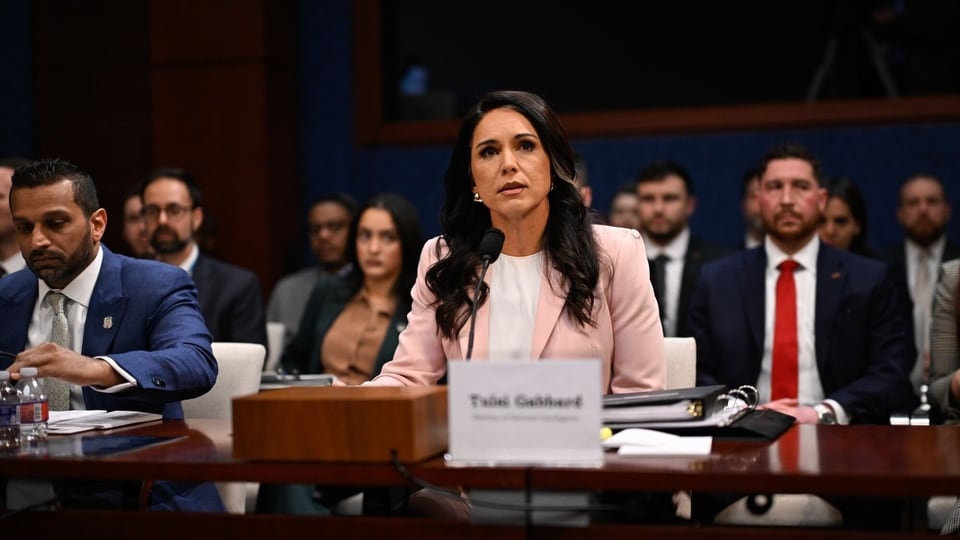
The hearing also came a day after the resignation of the Director of the National Counterterrorism Centre, Joe Kent, due to the war in Iran. Kent claimed that Tehran posed no imminent threat to the US and that the war was launched solely due to pressure from Israel.
Iran's nuclear programme - Obliterated or imminent threat?
During the 12 day war between Iran and Israel last year, the US stepped in with ‘Operation Midnight Hammer’, targeting three nuclear facilities and sites in Iran.
Following this operation, US President Donald Trump on multiple occasions has claimed that Washington completely "obliterated" the Iranian nuclear programme.
This statement has been reiterated many times by Trump and his officials, on numerous occasions, even as the US negotiated with Iran over its nuclear programme.
A key question remains - if Iran's nuclear facilities were in fact gone and set back by decades, what threat did Tehran pose?
In his State of the Union address, Trump stated that Iran was attempting to rebuild its nuclear programme. White House adviser and special envoy Steve Witkoff went further and stated that Iran was "a week away from having industrial-grade bomb-making material."
Hence, the "imminent nuclear threat" posed by Iran comes into play again.
However, during Wednesday's hearing. Tulsi Gabbard contradicted Trump and Witkoff and said that there had been no efforts from Iran to rebuild its programme.
“As a result of Operation Midnight Hammer (in June), Iran’s nuclear enrichment program was obliterated. There has been no efforts since then to try to rebuild their enrichment capability," she said.
Trump also stated in his SOTU address that Iran was building an intercontinental ballistic missile, which would seen reach the US.
But Gabbard's remarks once again contradicted the president's after she said that the intelligence community's assessment stayed the same as before, which is that Iran had made no attempt to restart its programme.
It is to be noted that this statement from Gabbard was only highlighted after Ossof noticed that the DNI had omitted the mention of Operation Midnight hammer during her opening remarks.
Is Iran's threat imminent?
We don't know, and it seems neither does the Trump administration. In his resignation letter, Joe Kent said that Iran posed no threat to the US and the war was manufactured solely based on Israeli pressure.
Trump and the White House continues to state that Iran posed an "imminent threat" to Washington, justifying yet another war in the Middle East.
However, things take a turn after Gabbard failed to comment on what an "imminent threat" really is.
During her testimony, Gabbard, who is the Director of National Intelligence for the US, stated that the US President is the only one who can determine what is or is not an "imminent threat."
“It is not the intelligence community's responsibility to determine what is and is not an imminent threat,” said Gabbard, which was met with a sharp rebuke from Ossof, who said it was precisely the responsibility of the intelligence community to determine what is a threat to the US.
Trump surprised that Iran struck back
The US President was once again contradicted after he recently said that he did not expect Iran to strike back and hit the Gulf regions.
However, when the US struck Iran in June 2025, the first thing Iran did was target US bases in the Gulf region.
"They weren't supposed to go after all these other countries in the Middle East. Those missiles were sent to go after them. They hit Qatar, Saudi Arabia, UAE, Bahrain, Kuwait. Nobody expected that. We were shocked. You know, they fought back," said Trump.
Reports citing US officials and sources familiar with intelligence assessments said that Iran’s retaliation had been considered a possible outcome before the strikes. Furthermore, the closure of the Strait of Hormuz was also considered a possible retaliatory action from Iran.
White House press secretary Karoline Leavitt said in a post on X that Trump was “fully briefed” on the possibility of Iran closing the Strait of Hormuz and that the Pentagon has been planning for the possibility of Iran closing it “for DECADES.”
Furthermore, Iran itself has openly stated that any escalation or attack against it would be considered an act of war, as Trump repeatedly warned of a possible US strike as it pressured Iran to sign a nuclear deal.


