
 E-Paper


The JD Vance Classmate Emerging as a Key Player in Talks to End the Ukraine War
President Trump has enlisted Army Secretary Dan Driscoll to handle high-stakes diplomacy in the administration’s push to find a peace deal.


 Prefer HTon Google


When President Trump decided to send Pentagon representatives to Ukraine in an attempt to resuscitate stalled peace talks, he turned to an unexpected source: Army Secretary Dan Driscoll.
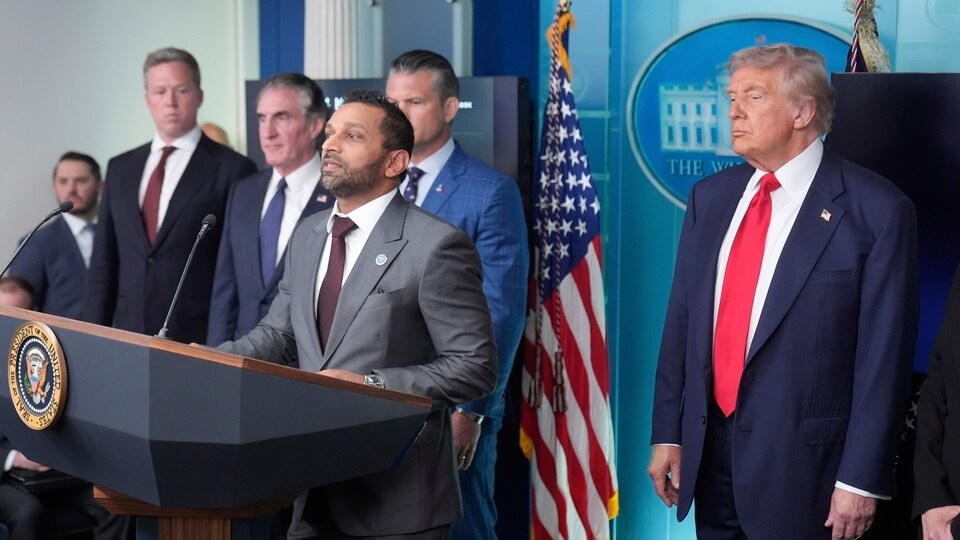
Driscoll, a friend and former law-school classmate of Vice President JD Vance, vaulted to a new diplomatic role last week when he delivered to Ukrainian President Volodymyr Zelensky a U.S.-led proposal to end the war. On Monday, he traveled to Abu Dhabi to meet with a Russian delegation and with the Ukrainian officials again, clinching a promise that Kyiv would sign a peace deal Trump has sought since the campaign trail. Russia hasn’t signed off on the plan.
Trump has said that there will not be a deal until Zelensky and Russian President Vladimir Putin have agreed on a final settlement.
Driscoll is now planning to head back to Kyiv to meet with Ukrainian leaders again, as special envoy Steve Witkoff travels to Russia to meet with Putin, according to a senior White House official. Witkoff’s leaked communication with Russian officials over the peace talks has drawn scrutiny in recent days.
Witkoff’s presence as Trump’s de facto dealmaker has attracted much more attention, but Driscoll has emerged as a trusted White House emissary whose stature is only growing. He began as a service chief dealing with training and equipping soldiers and is now key to international negotiations.
“It’s clear the vice president respects him,” said Justin Logan, director of defense and foreign policy at the Cato Institute, who is supportive of U.S.-led pressure to end the war. “It’s clear that he has navigated the fraught shoals of the bureaucratic politics of the administration effectively. He hasn’t ticked off anybody who matters, and that’s a lot by itself.”
Vance and Driscoll met privately at Fort Campbell, the home of the Army’s 101st Airborne Division, on Wednesday.
Driscoll’s rise inevitably raises questions about whether he is being groomed to eventually replace Defense Secretary Pete Hegseth. Hegseth continues to be involved in discussions about top national-security issues, including Ukraine, according to White House press secretary Karoline Leavitt. Hegseth has briefed the president on battlefield updates alongside Gen. Dan Caine, the chairman of the Joint Chiefs, and he takes part in the president’s intelligence briefings, Leavitt said.
Driscoll denied that there is any daylight between himself and Hegseth.
“Secretary Hegseth has been a force for good as he has transformed the Pentagon and the culture within it,” he said in a statement to The Wall Street Journal. “I greatly respect and am honored to be working for President Trump and Secretary Hegseth.”
Trump mentioned both Driscoll and Hegseth, along with other senior aides, in a social-media post about progress on ending the Ukraine war on Tuesday.
At first glance, Driscoll seems an unlikely choice for the role of Pentagon civilian-turned-diplomat. He spent three years in the Army, deploying to Iraq in 2009, before attending Yale Law School with Vance. He worked in investment banking and private equity, and ran for the Republican nomination to represent North Carolina’s 11th congressional district in 2020.
But after stepping into the new role, the Army secretary quickly gained respect across the administration. Officials say he is known for being easy to talk to and an effective and charismatic leader. He is still a close friend of Vance’s and they text regularly.
Driscoll tells anyone who will listen that he isn’t after the Pentagon chief’s job, two people familiar with his thinking said. They say he enjoys his role as Army chief, even if he assumes additional responsibilities.
“The Secretary has built an All-Star team at the Department of War, and we are proud of our many accomplishments,” Pentagon spokesman Sean Parnell said.
Still, two senior European defense officials said their governments were increasingly looking to Driscoll as the defense-policy heavyweight in the administration.
Trump appears fond of Driscoll, calling him a “killer” in an Oval Office announcement. Trump refers to him as the drone guy, officials said, a reference to his goal to field a million drones. Trump also tapped Driscoll to oversee the Bureau of Alcohol, Tobacco, Firearms and Explosives.
Driscoll has earned praise from both sides of the aisle on Capitol Hill for his aggressive push to modernize the Army and overhaul the service’s unwieldy procurement program, lawmakers and Senate aides said.
Republican lawmakers have privately and publicly voiced frustrations at the inner turmoil in Hegseth’s front office in recent months, and see Driscoll as a foil to him. Sen. Thom Tillis (R., N.C.) earlier this year publicly rebuked Hegseth for being “out of his depth” as defense secretary and suggested he regretted voting to confirm him.
While Driscoll ideologically aligns more with Vance, who believes the Ukraine war is distracting from domestic problems, he also often speaks highly about how Ukraine’s military has fought the war, particularly its ability to adapt under fire.
The U.S. Army is often using outdated equipment while “Ukraine is updating its drone software every couple of weeks,” he said at a major annual Army meeting last month, noting that the Army should learn lessons from how Ukraine has waged the war.
Senior European leaders and U.S. lawmakers on both sides of the aisle have criticized the Trump administration’s peace plan, saying they assess that Russia hasn’t changed its overall goal of subjugating Ukraine. Any peace deal brokered by Trump’s team, including Driscoll, that doesn’t shore up military support for Ukraine or meaningfully deter Moscow would only invite future conflict, they say.
After the administration’s initial plan leaked publicly, Driscoll presented the plan to the Ukrainian officials during his visit to Kyiv in what amounted to a diplomatic trial-by-fire for the Army secretary, officials said. During that visit, he implicitly threatened Ukraine that the U.S. could cut off the supply of weapons or intelligence-sharing to Kyiv if it didn’t cooperate on peace talks, they said.
Secretary of State Marco Rubio later told senators in a call on Saturday that he wasn’t aware of any threats being made to cut off intelligence-sharing when they pressed him on the matter, Republican Sen. Mike Rounds (R. S.D.) told reporters. Rubio later rebutted some of what the senators said he shared in the calls.
Driscoll then joined Rubio and Witkoff for talks with Ukrainian negotiators in Geneva over the weekend, before traveling to the United Arab Emirates to lead talks with Russian officials.
“Driscoll was part of the initiative that created a sense of urgency,” the Cato Institute’s Logan said. “He came with a forceful message and has made the argument forcefully.”
Write to Lara Seligman at lara.seligman@wsj.com, Robbie Gramer at robbie.gramer@wsj.com and Alexander Ward at alex.ward@wsj.com


