
 E-Paper


US shares test video of bunker-buster bombs to back Donald Trump's ‘obliterated’ claim
The White House shared test footage of bunker-buster bombs to support Donald Trump’s claim that American airstrikes “obliterated” Iran’s nuclear sites at Fordo.

 Prefer HTon Google


The White House on Thursday shared test footage of the bunker-buster bombs used in strikes on Iran’s underground nuclear facility at Fordow to prove US President Donald Trump’s claim that the targets were “obliterated.”
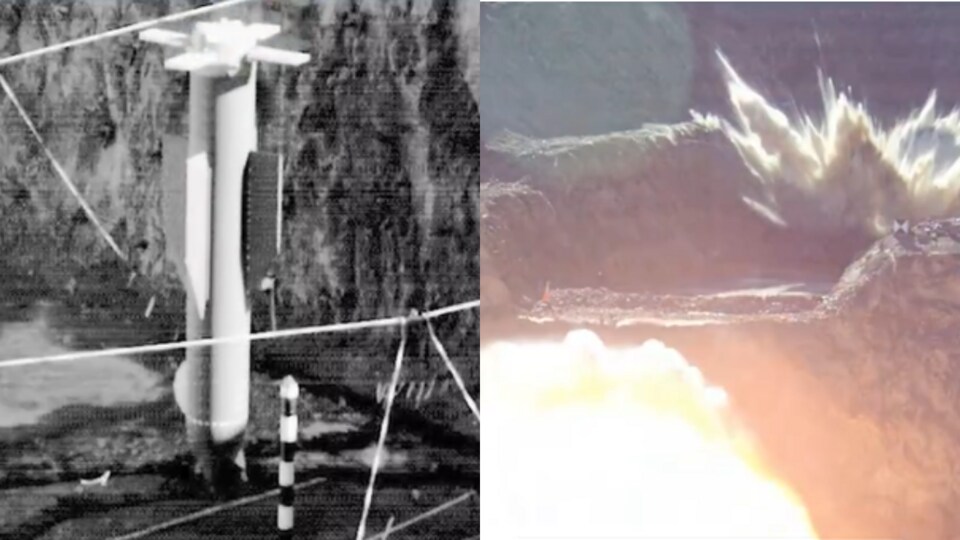
The video was posted with a quote from US defense secretary Pete Hegseth: “Because of the hatred of this press... your people are trying to leak & spin that it wasn't successful. It's irresponsible.” General Dan “Razin” Caine, who oversaw the mission, added: “I have chills… talking about this.”
Doubts over Trump's claim began after the US defense intelligence agency said Fordo, Natanz, and Isfahan sites suffered “significant” damage but not total destruction.
Israel has claimed the strikes have set Iran’s nuclear program back by “many years,” The International Atomic Energy Agency (IAEA) too reported “extensive damage” at all three locations. But experts say damage assessments are still ongoing and subject to revision.
Questions were also raised about the presence of highly enriched uranium at the time of the attack, as satellite imagery had earlier shown trucks and bulldozers at the Fordo site starting June 19—three days before the attack—raising speculation that Iran may have attempted to shield assets.
However, Hegseth said, “I’m not aware of any intelligence that I’ve reviewed that says things were not where they were supposed to be — moved or otherwise," reported news agency Reuters.
How the US said it bombed the Fordo facility
According to General Caine, the Pentagon's design team analysed every detail of the site for over a decade, from geology and excavation patterns to the movement of construction equipment.
“We had so many PhDs working on the mock program — doing modelling and simulation — that we were quietly and secretly the biggest users of supercomputer hours within the United States of America,” the Associated Press quoted Caine as saying.
The bomb was built to delay detonation until it reached the enrichment chambers deep underground, creating a shockwave capable of destroying nuclear equipment through connected tunnels.
12 bombs struck Fordo, six bunker-busters used
During the operation, seven B-2 stealth bombers carried two bombs each. Each of Fordo’s two main underground ventilation routes—shaped like pitchforks with three shafts—was targeted with six bunker-buster bombs.
Large concrete slabs placed by Iran over the ventilation shafts days before the strike were first neutralised by the initial bombs. Then, four bombs were dropped down the central shaft at speeds exceeding 1,000 feet per second, detonating inside the facility. A sixth bomb served as a backup.
In total, 12 bombs struck Fordo, and two more targeted Iran’s leading nuclear site at Natanz. “Each crew was able to confirm detonation as they saw the bombs drop from the aircraft in front of them,” Caine said.
According to the report, pilots also witnessed blinding flashes from the explosion. “It looked like daylight,” one crew noted.
Caine emphasised that every step—from loading the munitions to impact—had gone according to plan. “Iran’s nuclear facilities have been destroyed,” Hegseth added.
(With AP inputs)


