E-Paper


What are Trump’s July 4 plans this year? Here's how POTUS is celebrating America's 250th birthday
President Donald Trump announced a series of events for July 4, which marks 250 years of American independence

 Prefer HTon Google


July 4 marks an important day in the US calendar. Recognized as a federal holiday, this year commemorates 250 years of American independence. During his first term, President Trump used to go all out in his celebrations, which included a massive event at the National Mall, fireworks at Mount Rushmore, and more. So, what are the President’s plans for this year’s celebrations?
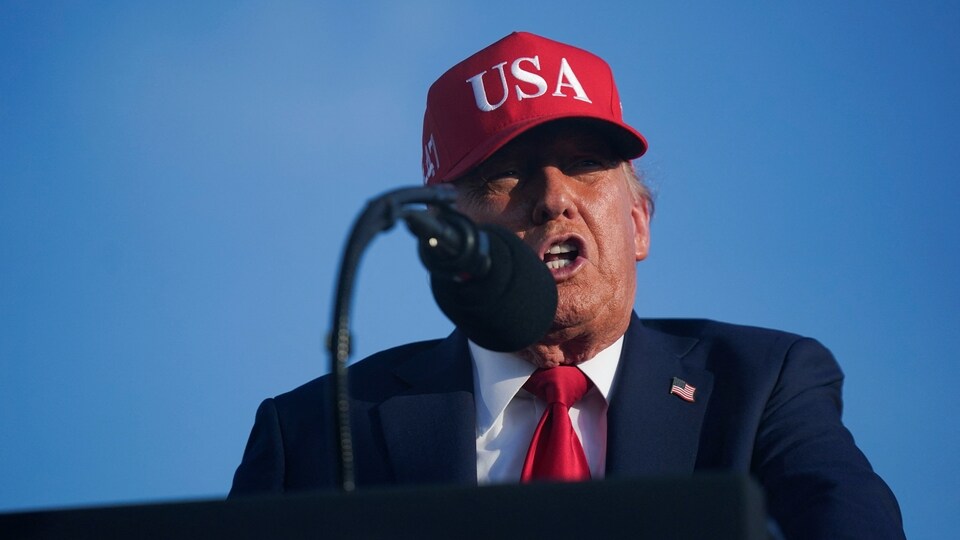
How will Trump celebrate July 4 this year?
As of now, no public appearance has been announced for Trump to make on the day itself. The closest the President will come to an actual July 4 celebration will be him travelling to Iowa a day before for the “Salute to America” event, a kick-off to Trump’s grand 250th celebration planned for 2026. If no official engagement is announced in the time left, this will mark the first time Trump’s skips taking part in any public event for Independence Day.
As per a recent Yahoo/YouGov poll in late June, Trump’s approval ratings have slipped down to 40% from 44% in March. 56% of Americans now disapprove of his policies and a new swing of 10 percentage points away from the President’s favor over the course of the last three months.
What did previous Presidents do on July 4?
July 4 has always remained a day of fervor and celebration for those in the White House ever since Jefferson opened up the house gates to greet diplomats and eminent individuals to an annual reception that followed through for most of the century.
Here’s a look at the activities past Presidents chose to do on July 4 during their time in office:
George Washington
President Washington travelled to Lancaster, Philadelphia in 1791, Mt Vernon and festivities in Alexandria, Virginia in 1793 and Philadelphia in 1795 on July 4.
John Adams
A trip to Philadelphia to review the military parade followed by a reception later in the afternoon marked President Adam’s July 4 in 1798. The next year, he attended an oration by John Lowell, Jr. at the old South Meeting House in Boston on the day.
Thomas Jefferson
President Jefferson was the first to turn the Fourth of July into a grand celebration at the White House. Diplomats, civil and military officers, citizens and Cherokee chiefs gathered in the oval saloon. “The Marine Band played in the Entrance Hall while on the north grounds a festival took place—complete with horse races, parades, and food and drink,” says the official website of the White House Historical Association (WHHA).
James Madison
President Madison welcomed various heads of departments to the 1809 celebrations at the White House. In 1812, he was at the Capitol for a ceremony and later reviewed a military parade before calling on guests at the White House. A visit to the capital and a reception at the Octagon House occupied his day in 1815.
John Quincy Adams
“John Quincy Adams often celebrated the holiday by joining a procession to the Capitol before returning to the White House to receive the public. For John Quincy Adams, Independence Day was bittersweet,” the website states. In 1826, he was joined by the Vice President to the Capitol in a reception. “There was turtle soup from a turtle weighing 300 lb a present from Key West,” he wrote in his diary entry for July 5, 1841.
James K Polk
“During the James K. Polk administration (1845-1849), celebrations were shaped by a sharp rise in patriotic sentiment brought on by the Mexican-American War and westward expansion. In 1845, the Polks opened the White House for the annual Independence Day reception,” reads the WHHA’s website. In 1846, Polk opened up the White House for a public celebration, and in 1847 President Polk spent the holiday in Portland, Maine, as part of a two-week tour of the Northeast to garner support for the Mexican American War, although the usual Independence Day celebrations continued in Washington despite his absence.
Zachary Taylor
The archives of WHHA reveal, “In 1850, President Zachary Taylor fell ill after drinking ice water and eating cherries while attending the Independence Day celebrations at the Washington Monument. He died five days later from a gastrointestinal illness (perhaps cholera), which was not uncommon in D.C. before the advent of modern plumbing and sewage.”
Abraham Lincoln
African American schools and churches visited by President Lincoln amid the Civil War held an event on the White House South Lawn, setting an example of tolerance across the country. In 1863, he honored the Army of the Potomac with an address remembering “the many gallant fallen”.
Richard Nixon
“In 1969, President Richard Nixon invited staff and a group of Vietnam veterans to join these celebrations. President Nixon was not at the White House that year for the celebrations, as he was away on vacation in Key Biscayne, Florida. While the first family often leaves town for the holiday, White House staff and guests are often permitted to celebrate on the South Lawn with picnics, games, and the fireworks display,” reveals the WHHA.
Gerald R Ford
The 200th anniversary of American independence was commemorated by President Gerald R Ford and First Lady Betty Ford by travelling to Valley Forge, Pennsylvania. He delivered a speech and then signed legislation to transfer management of the park to the National Park Service. After delivering another speech at Independence Hall, he headed to New York to review the ships.
Ronald Reagan
President Ronald Reagan and First Lady Nancy Reagan celebrated the 100th anniversary of the Statue of Liberty by travelling to the New York Harbor in 1986. ““Tonight, with heart and hand, through whatever trial and travail, we pledge ourselves to each other and to the cause of human freedom, the cause that has given light to this land and hope to the world,” he said in his address on the day.
Barack Obama
President Obama hosted a barbecue pit on the White House Lawn for all 1,200 members of the US Armed Forces multiple times during his two-term run as President.
Donald J Trump
President organized a fireworks event at Mount Rushmore followed by a “Salute to America” event at the National Mall in 2020, a “Salute to America” event at the Lincoln Memorial in 2019, a White House picnic and a visit to a Sterling, Virginia golf club event in 2018 and a White House picnic in 2017.
By Stuti Gupta