E-Paper


What is the 14th Amendment? The 158-year-old US law behind Trump's birthright case
The constitutional amendment, ratified after the Civil War, was at the center of a landmark US Supreme Court ruling.

 Prefer HTon Google


The US Supreme Court has struck down President Donald Trump's executive order aimed at limiting birthright citizenship, ruling that it violates the US Constitution's 14th Amendment. In a 6-3 decision, the court held that Trump's January 20, 2025, executive order was unlawful, according to NBC News.
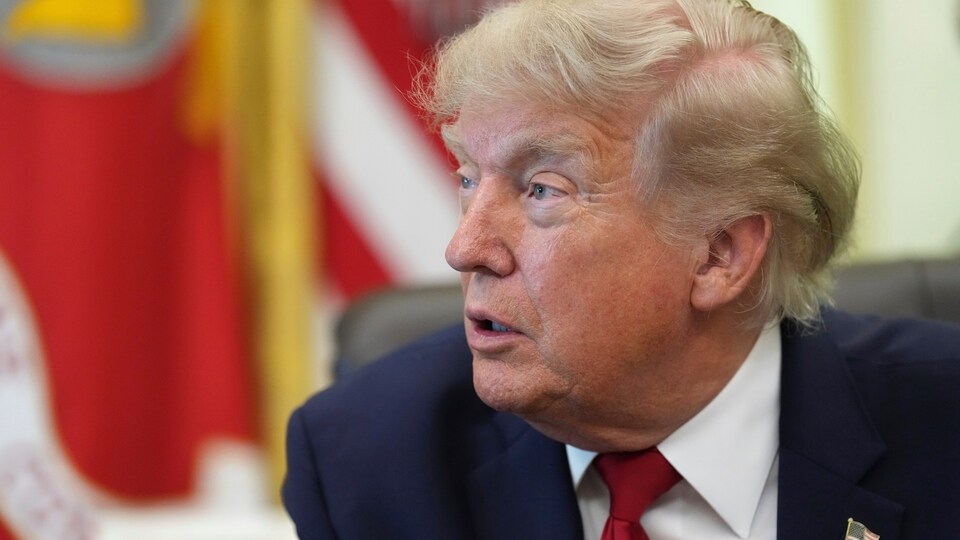
Five justices concluded that the order conflicted with the Constitution's long-standing interpretation of birthright citizenship, while Justice Brett Kavanaugh said it violated federal law, though not necessarily the Constitution.
The executive order sought to deny automatic US citizenship to children born in the country unless at least one parent was a US citizen or lawful permanent resident.
The policy never took effect after lower courts blocked it soon after it was signed.
Writing for the majority, Chief Justice John Roberts rejected the administration's interpretation, saying there was "scant evidence" to support it. "Citizenship then and now, was the right to have rights; to freely participate in our political community," Roberts wrote. "We keep that promise today."
What is the 14th Amendment?
The 14th Amendment is one of the most significant amendments to the US Constitution. Ratified in 1868 following the American Civil War, it was designed to guarantee citizenship and equal legal protections to formerly enslaved people born in the United States, according to the BBC.
Its Citizenship Clause states:
"All persons born or naturalized in the United States, and subject to the jurisdiction thereof, are citizens of the United States and of the state wherein they reside."
The provision forms the legal basis for birthright citizenship, also known as jus soli ("right of the soil"), under which almost every person born on US soil automatically becomes a US citizen, regardless of their parents' immigration status.
The only widely recognized exceptions include children born to foreign diplomats.
The amendment's interpretation was cemented in the landmark 1898 Supreme Court case United States v. Wong Kim Ark, which held that a man born in San Francisco to Chinese immigrant parents was a US citizen under the 14th Amendment.
Why did Trump challenge the amendment?
According to the BBC, the Trump administration argued that the phrase "subject to the jurisdiction thereof" should not apply to children born to undocumented immigrants or to parents who were in the US temporarily on visas.
Civil rights groups, including the American Civil Liberties Union (ACLU), challenged the executive order, arguing that the Constitution guarantees citizenship based on birth in the United States, not on a parent's immigration status.
The ACLU also warned that ending birthright citizenship would create "a permanent subclass of people born in the United States."
Following the ruling, Trump called on Congress to pass legislation reflecting his proposal, while the ACLU welcomed the decision as a reaffirmation of a long-standing constitutional guarantee.