E-Paper


Where is Artemis II now? How to track NASA’s Moon mission in real time
As Artemis II launches, NASA provides real-time tracking through website and app with augmented reality.

 Prefer HTon Google


As NASA launches its Artemis II, many are asking a simple question: Where is the spacecraft right now? Thanks to new tracking tools and livestreams, the answer is now available to anyone with a phone or laptop.
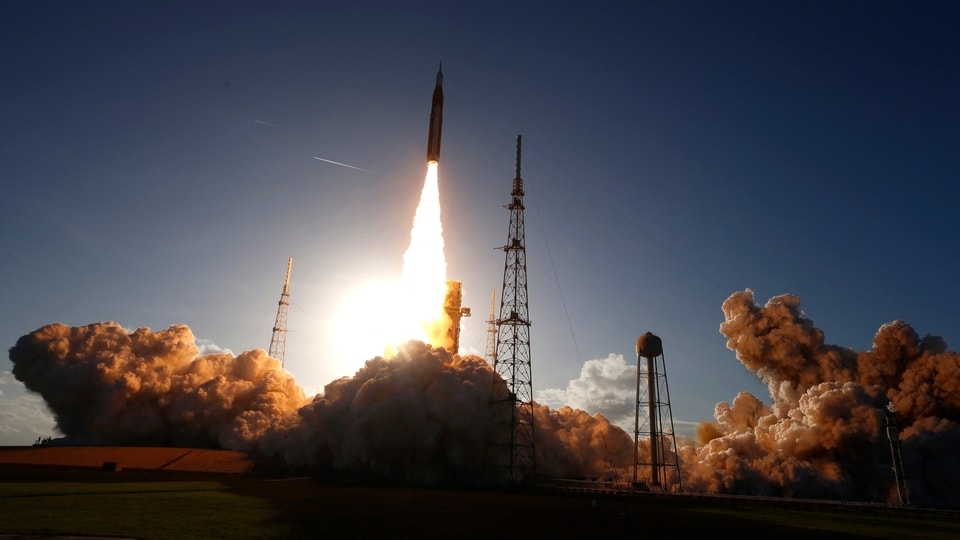
Here’s how you can follow the mission in real time.
Track Orion’s location live with NASA tools
The easiest way to monitor Artemis II is through NASA’s official tracker, known as the Artemis Real-time Orbit Website (AROW).
Available on both desktop and mobile, the platform shows:
- The current position of the Orion spacecraft
- Its speed through space
- Distance from Earth and the Moon in miles
The interface also shows key mission milestones and includes background on historic lunar landing sites from the Apollo era.
For smartphone users, NASA’s app adds an augmented reality feature. By moving your phone, you can visualize where Orion is positioned relative to Earth at any given moment.
Also Read: Artemis 2 weather forecast: NASA gives latest update on moon mission hours before Florida launch
How real-time updates actually work
The tracking system relies on sensors onboard Orion, which continuously send data back to mission control at Johnson Space Center.
According to NASA, this data starts streaming roughly one minute after liftoff and continues throughout the mission until the spacecraft begins re-entry into Earth’s atmosphere about 10 days later.
This means users can follow the spacecraft’s journey almost as it happens, from launch to its return.
Watch Artemis II through telescope livestreams
Beyond digital trackers, skywatchers can also try to see Orion from Earth. The Virtual Telescope Project is hosting a live observation of the spacecraft once it becomes visible in the sky.
Founder Gianluca Masi said the team will attempt to capture Orion “as soon as it is visible over Italy,” which could be about four hours after launch if conditions are favorable, reported Space.com.
The livestream is scheduled to begin at 10:45 am EDT, though visibility will depend on weather and orbital conditions.
Also Read: Artemis II update: When will 4 NASA astronauts return to Earth? Timeline revealed
Mission timeline: What happens next
Artemis II is scheduled to lift off aboard the Space Launch System from Kennedy Space Center during a two-hour launch window opening at 6:24 pm EDT on April 1.
NASA estimates an 80% chance of favorable weather for liftoff, with backup launch opportunities extending into early April if needed, as per Space.com.
Once underway, the mission will last about 10 days, taking a crew of four astronauts thousands of miles beyond the Moon before returning to Earth.
Why tracking Artemis II matters
Although Artemis II will not land on the Moon, it marks the first time humans travel around it since Apollo 17.
The mission is a critical test flight, aimed at validating systems for future lunar landings under NASA’s Artemis program: missions that could eventually establish a sustained human presence on the Moon and pave the way for journeys to Mars.
So, where is Artemis II now? The answer is constantly changing, and that’s the point.
With real-time trackers, augmented reality tools, and even telescope livestreams, anyone can watch Orion’s path unfold live.