
 E-Paper


Who is Ashok Veeraraghavan? Indian-American engineer wins Texas' prestigious academic award
Veeraraghavan received this year's engineering prize, which recognised his group's “revolutionary imaging technology that seeks to make the invisible visible.”

 Prefer HTon Google


Ashok Veeraraghavan, an Indian-origin computer engineer and professor, has received the Edith and Peter O'Donnell Engineering Award, one of Texas' top academic accolades.
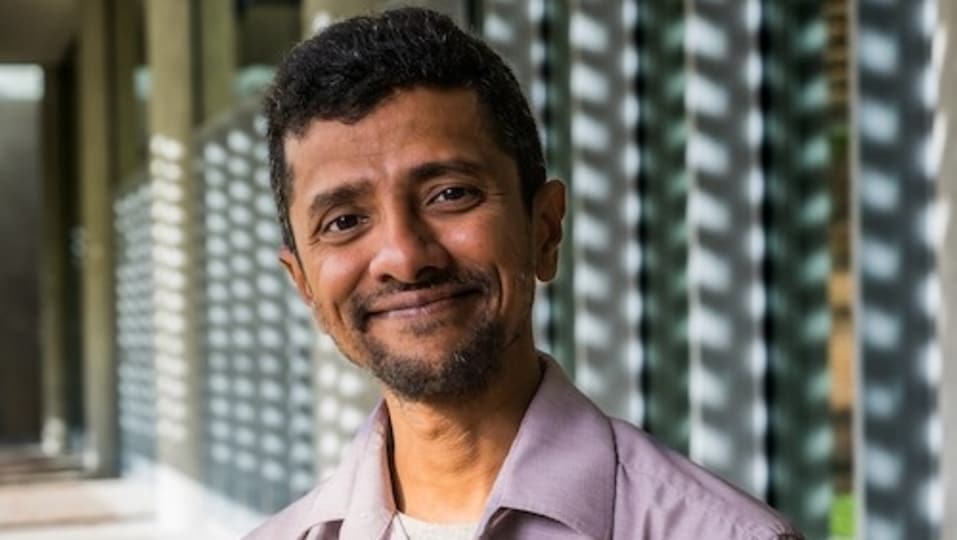
The prize is granted annually to outstanding researchers in the state who have made groundbreaking contributions in medicine, engineering, biological sciences, physical sciences, and technological innovation.
The Texas Academy of Medicine, Engineering, Science, and Technology (TAMEST), which bestows this award on emerging researchers in the state, announced Veeraraghavan was chosen for his groundbreaking imaging technology that aims to make invisible things visible.
Veeraraghavan received this year's engineering prize, which recognised his group's "revolutionary imaging technology that seeks to make the invisible visible," according to a TAMEST statement.
Veeraraghavan, who was born in Chennai, told PTI, "I am delighted to receive this award. It is the recognition of the wonderful and innovative research that many students, postdocs and research scientists, in the computational imaging lab at Rice University have done over the last decade."
His computational imaging lab investigates imaging processes holistically, from optics and detector design to machine learning analysing algorithms, in order to address imaging difficulties that would otherwise be beyond the capabilities of existing technologies.
"Most imaging systems today are designed in a way that does not take all these three things into account together; they are designed separately," Veeraraghava said.
"Co-design opens up new degrees of freedom and allows us to achieve some imaging functionalities or performance capabilities that are otherwise not possible," he added.
Veeraraghavan's study aims to create solutions for imaging settings in which the visualisation objective is unreachable by present imaging technologies due to light scattering in participating medium.
“One familiar example of this is when you’re driving a car and it’s foggy, so you can’t see too far out. In this case, fog acts as the scattering medium. If you’re doing satellite imaging, clouds can act as the scattering medium. And if you’re doing biological imaging, it’s skin that acts as the obscurant so you can’t see blood cells or the structure of the vascular system, for example," he explained.
“In all of these contexts, the main challenge is that light interacts with the participating media and scatters, which means you lose information about the image you are trying to capture. I think imaging through scattering media is one of the most challenging problems that’s left in imaging. So that is what the core focus of my lab is, and we've made significant advances toward solving that problem.”
Also Read: Who is Preesha Chakraborty? Meet India-American who is among ‘world’s brightests students'
All you need to know about Veeraraghavan
Veeraraghavan was born in Chennai and spent most of his childhood in India. He is a Professor in the Electrical and Computer Engineering Department at Rice University.
He holds a B.Tech. in electrical engineering from Indian Institute of Technology, Madras 2002, as well as master's and doctoral degrees from the Department of Electrical in 2004 and Computer Engineering at the University of Maryland, College Park 2004 in 2008.
After joining the ECE Department in 2010, he was promoted to Associate Professor in 2017 and professor in 2020. He co-developed FlatCam, a small sensor chip with a mask that substitutes lenses in typical cameras.
His computational imaging lab conducts extensive research on imaging processes. Their research focuses on optics and sensor design, as well as machine learning methods, to tackle imaging issues beyond current technology.
Also Read: Exclusive | Meet Annu Khot, Indian American entrepreneur who made a mark in the world of cannabis
Professors hail Veeraraghavan's achievement
Luay Nakhleh, Rice's William and Stephanie Sick Dean of Engineering and professor of computer science and biosciences, complimented Veeraraghavan on his accomplishment, stating he "richly deserves this special recognition".
“In fact, this is extra special for our school since it is the second year in a row that one of our faculty receives the O’Donnell Award, with Jamie Padgett being last year’s recipient."
Ramamoorthy Ramesh, Rice's executive vice president for research and a professor of materials science and nanoengineering, physics, and astronomy, lauded Veeraraghavan and highlighted the significance of his work.
“I'm so pleased to see Ashok recognised with the Edith and Peter O'Donnell Award, joining an accomplished group of prior Rice University recipients of the honour,” he said.
“Ashok has used math and technology to solve some of the most difficult problems in imaging. His work has broad applications for the advancement of human health, microscopy, national security, autonomous vehicles, photography and so much more.”


