
 E-Paper


Who is Jeffrey Goldberg? The Atlantic’s editor accidently receives top-secret Trump admin Houthi war plans
Jeffrey Goldberg was inadvertently included in an unsecure group chat used by national security officials to launch airstrikes against Houthi targets in Yemen.

 Prefer HTon Google


US Defense Secretary Pete Hegseth and other senior national security officials admitted in an unsecured group chat used to coordinate airstrikes against Houthi targets in Yemen last month to include Jeffrey Goldberg, the top editor of The Atlantic, in their group chat without his knowledge. It appears to have violated a number of federal rules and standards.
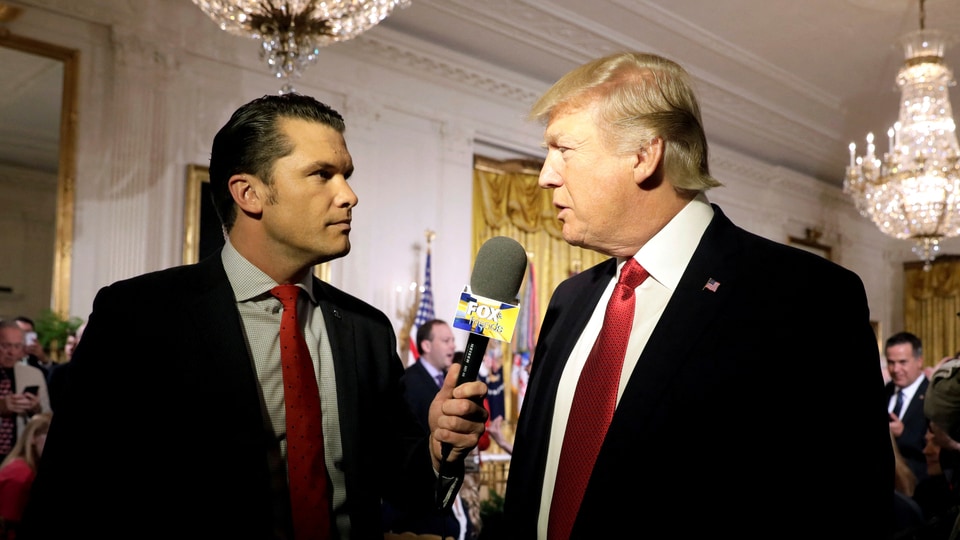
Editor-in-Chief Goldberg wrote in an article for The Atlantic magazine that “U.S. national-security leaders included me in a group chat about upcoming military strikes in Yemen. I didn’t think it could be real. Then the bombs started falling.”
Goldberg was included to the group on Signal, which is an open-source messaging app with a privacy focus. He was added by someone posing as Michael Waltz, President Donald Trump's national security adviser, according to an Atlantic story published Monday titled “The Trump Administration Accidentally Texted Me Its War Plans.”
Goldberg claims he knew about upcoming Yemen strike more than two hours ago
According to Goldberg, the discussion included “operational details of forthcoming strikes on Yemen, including information about targets, weapons the U.S. would be deploying, and attack sequencing.” At some point, it also included messages from Secretary of State Marco Rubio, Vice President JD Vance, and Defense Secretary Pete Hegseth, among others.
Goldberg claimed to have discovered about the bombings over two hours before the government authorities made them public due to texts received in the group chat.
“The information contained in them, if they had been read by an adversary of the United States, could conceivably have been used to harm American military and intelligence personnel, particularly in the broader Middle East, Central Command’s area of responsibility,” Goldberg stated.
Earlier this month, US military units launched an offensive against Iran-backed Houthi rebels, a terrorist organization that has blocked international shipping for more than a year, in Yemen, hitting over 30 targets over a few days.
Also Read: Donald Trump to impose sharp tariff on countries buying Venezuelan oil and gas; Is India at risk?
National Security Council breaks silence on blunder
Meanwhile, officials from the US Defense Department directed inquiries about the matter to the National Security Council.
National Security Council spokesperson Brian Hughes acknowledged in a statement that “the message thread that was reported appears to be authentic,” adding that they are investigating how an accidental number was added to the chain.
The thread “is a demonstration of the deep and thoughtful policy coordination between senior officials,” Hughes added. He, however, ensured that there were no risks to the US service members or national security amid the ongoing Houthi operation's continuous success.
What rules have been violated?
Goldberg may have been on the list by accident or on purpose, but officials may have breached the regulations about sharing sensitive operations data, secret military information, and government record maintenance.
Senior leaders expressed concerns about Trump's Middle East approach and bemoaned the inaction of European allies in the region, according to Goldberg.
Additionally, he said that Hegseth reassured chat participants that "we are currently clean on OPSEC" despite the usage of outside-of-government platform and the inadvertent addition of a journalist in the discussion.
Who is Jeffrey Goldberg?
Prior to joining The Atlantic, Goldberg enjoyed an equally illustrious career. He worked for The New Yorker as a correspondent in the Middle East and then Washington. Additionally, he published 15 cover articles for The New York Times Magazine. His career in media started as a police reporter for The Washington Post.
As a writer, Goldberg's book Prisoners: A Story of Friendship and Terror reflects his keen interest in international conflicts, diplomatic efforts, and security challenges. Along with being a fellow at the American Academy in Berlin, he has won numerous honors, including the Overseas Press Club Award, the Daniel Pearl Award, and the National Magazine Award for reporting.


