Lindsay Clancy is facing trial in Massachusetts for allegedly killing her three children. Another woman, Latarsha Sanders, who was convicted of killing her two sons is now going to have a new trial. The two cases reportedly have some similarities, not the least of which is that they were both presented before the same judge. William Sullivan presided over Sanders' case and is now hearing Clancy's.
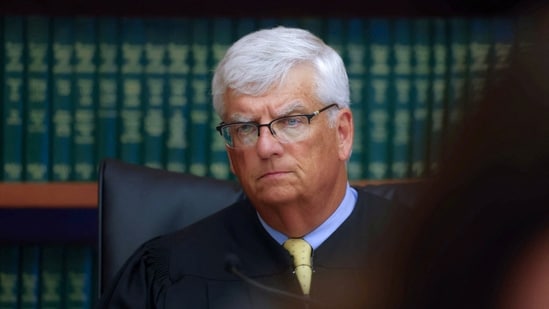
Here's all you need to know about Judge William Sullivan and what happened in Latarsha Sanders' case.
Who is Judge William Sullivan
William Francis Sullivan was born on June 15, 1957. He was appointed associate justice of the Massachusetts Superior Court in 2014.
Deep Dive
What cases has Judge William Sullivan presided over?
Why did the Supreme Judicial Court order a new trial for Latarsha Sanders?
How does the mental health defense factor into the Lindsay Clancy trial?
Sullivan graduated from Xaverian Brothers High School in Westwood, Massachusetts. He attended college in the University of Notre Dame and got his J.D. from the Boston College Law School.
Before his judicial career, Sullivan practiced law at Sullivan and Sweeney, LLP in Quincy. He was also special assistant city solicitor for Quincy and prosecutor for the Norfolk County, Massachusetts District Attorney’s Office.
{{/usCountry}}Before his judicial career, Sullivan practiced law at Sullivan and Sweeney, LLP in Quincy. He was also special assistant city solicitor for Quincy and prosecutor for the Norfolk County, Massachusetts District Attorney’s Office.
{{/usCountry}}Sullivan is married to Mary Lou and they have three children together, as per reports.
What to know about the Latarsha Sanders case
Sanders was accused of killing her two boys, while Clancy is accused of murdering her three children. The former was tried in 2022, and was found guilty of two counts of first-degree murder in the 2018 deaths of sons Edson Brito, 8, and La'Son Brito, 5.
Sanders got mandatory life terms without the possibility of parole. She had told the cops in 2018 that she attacked Edson with a kitchen knife as part of a voodoo ritual but failed, at which point she turned to La'Son.
The elder child was stabbed over 80 times and the younger over 20 times. The Supreme Judicial Court vacated the conviction cited problems in the trial, and set aside the verdicts, sending the matter to the Superior Court for a new trial.
Sanders, on appeal, argued that the judge prevented her from fully presenting a case about her mental health. The SJC's summary reportedly noted the appeal argue that the judge excluded some medical records about post-arrest diagnoses and mental illness treatment.
“There is no doubt the defendant committed these incomprehensible crimes. The sole issue before a Superior Court jury was whether she lacked criminal responsibility…As a result, the defendant is entitled to a new trial,” they wrote, saying there was ‘prejudicial error’ in the trial.