
TEL AVIV—Israel wrapped up its campaign against Iran in 12 days. It finished its fight with the Lebanese Shiite militia Hezbollah in two months. But after nearly two years of fighting, Israel’s war in Gaza continues.
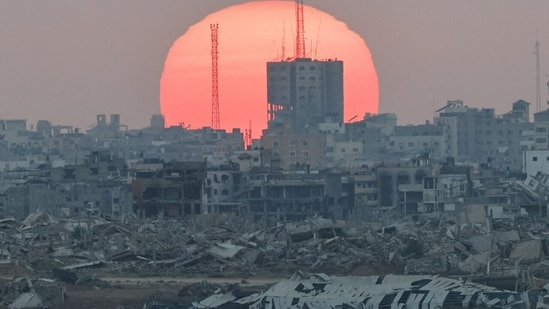
More than 60,000 Palestinians have been killed, according to the Gazan health ministry. A deadly hunger crisis has taken hold. Many of the roughly two million people trapped inside Gaza struggle daily to find food, shelter and medical care. Vast swaths of the Strip
TEL AVIV—Israel wrapped up its campaign against Iran in 12 days. It finished its fight with the Lebanese Shiite militia Hezbollah in two months. But after nearly two years of fighting, Israel’s war in Gaza continues.
More than 60,000 Palestinians have been killed, according to the Gazan health ministry. A deadly hunger crisis has taken hold. Many of the roughly two million people trapped inside Gaza struggle daily to find food, shelter and medical care. Vast swaths of the Strip have been reduced to mounds of concrete and rebar.
The violence and hunger have eroded Israel’s standing on the global stage. In the U.S. and Europe, large portions of the population have turned against the country. U.K. Prime Minister Keir Starmer said Tuesday that the U.K. would recognize a Palestinian state in September unless Israel takes “substantive steps” to end the war in Gaza, following a similar pledge by France.
Inside Israel, polls show a majority of Israelis say it is time for the war to end, as they watch the number of Israeli troops and hostages killed in Gaza rise. Many exhausted Israeli soldiers agree.
The strategic goals of the warring parties, however, seem nearly unbridgeable. Israeli Prime Minister Benjamin Netanyahu is seeking the complete surrender or elimination of Hamas. The one thing Hamas won’t give up—despite the loss of most of its senior leadership and fighting capabilities and the suffering of the people of Gaza—is its existence as an armed group fighting Israel. Until one side gives in, the war is likely to grind on.
On Friday, after weeks of cease-fire talks in Doha, Qatar, and expressions of optimism from the White House that a deal was imminent, Israel and the U.S. recalled their negotiating teams. The talks, aimed at reaching a temporary cease-fire and the release of some of hostages, stalled amid familiar recriminations over which side was standing in the way of a deal.
Amir Avivi, a former Israeli defense official who is close to the current government, said Israel mistakenly believed it had a strong negotiating hand with Hamas after defeating Iran and Hezbollah and taking over most of the Gaza Strip. “But it didn’t happen,” he said.
The two sides couldn’t come to terms on such seemingly small issues as who would distribute humanitarian aid, where Israeli troops would be stationed, the number of Palestinian prisoners to be exchanged for Israeli hostages and the opening of a border between Gaza and Egypt, Arab officials said.
After Palestinian Islamist militant group Hamas attacked Israel on Oct. 7, 2023, killing nearly 1,200 people and taking another 251 hostage, Netanyahu vowed to eliminate Hamas. He hasn’t backed off that goal in the 21 months since.
After the war with Iran, Netanyahu stressed that Israel’s fight with Tehran has opened up historic diplomatic opportunities that likely require at least a temporary respite in the fighting in Gaza. On Thursday, though, he indicated Israel was holding firm in cease-fire talks with Hamas.
“If Hamas perceives our willingness to reach a deal as weakness, as an opportunity to dictate to us terms of surrender that will endanger the state of Israel, it is making a great mistake,” Netanyahu said
President Trump, Israel’s most important backer, has called repeatedly for an end to hostilities. On Friday, he accused Hamas of obstructing a deal over fear of what happens to the group when it no longer has any hostages. He also said the U.S. would help get aid into the enclave, acknowledging that people there are starving.
Ghazi Hamad, a senior Hamas official, said in an interview Saturday night with Saudi news channel Al Arabiya that the group would continue to hold out for a deal that will lead to an end to the war and a full Israeli withdrawal from Gaza. In a speech on Sunday, Khalil al-Hayya, Hamas’s top negotiator, called on civilians in neighboring Arab countries to break into Gaza to bring food, and to invade Israel.
Different goals
Israel’s goals in both Lebanon and Iran were more modest, and its operations there were planned years in advance. It wanted the powerful Lebanese militia Hezbollah to pull back from its border with Israel and adhere to a United Nations resolution that called for its disarmament. In Iran, it sought to set back that nation’s nuclear ambitions and ballistic missile capabilities. In neither case was it looking for the total destruction of those entities, let alone regime change.
Israel’s military successes in Gaza, including killing the Oct. 7 mastermind Yahya Sinwar, haven’t been enough to foreclose the possibility that Hamas will pop back up, declare victory and go back to ruling Gaza after the war ends, as it did during a two-month cease-fire implemented in January.
Hamas has agreed to cede governing power and allow a technocratic committee to manage Gaza after the war, but it hasn’t agreed to disband its armed wing, and Israeli leaders fear it will control Gaza from behind the scenes.
Israel’s military estimates it has killed more than 20,000 militants, including nearly all of Hamas’s top leaders in Gaza. But Hamas remains the strongest Palestinian force in Gaza, and it has recruited thousands of new fighters since the war began, according to Israeli and Arab officials.
If the goal is to wipe out all of Hamas’s military and operational capabilities, the war is “not a matter of weeks or months, it’s a matter of years,” said Ofer Guterman, a senior researcher at the Tel Aviv-based Institute for National Security Studies.
Israel has few new military options left to push Hamas to surrender. Israeli forces say they now control about 75% of the Gaza Strip. The military could move into the areas it hasn’t yet taken over, but that would require the army to enter large population centers still under Hamas control and where Israeli officials believe the group holds hostages.
According to the U.N., only 425,000 of around two million people living in Gaza are currently in the humanitarian zone along Gaza’s southern coast. Entering the big population centers would be one of Israel’s biggest challenges to date.
As the war drags on, the humanitarian crisis in Gaza has grown, as have deaths attributed to starvation. On Sunday, Israel’s army announced it would pause fighting in populated areas each day from 10 a.m. to 8 p.m. to facilitate the flow of aid and secure safe routes for aid workers.
Israel could continue to fight Hamas indefinitely through tactical raids, airstrikes aimed at killing more of its leaders and operations to rescue hostages. Israel believes around 20 remain alive and that Hamas holds 30 bodies. The hostages have constrained the military’s ability to take out Hamas strongholds.
Israeli security analysts said Israel could try to increase pressure on Hamas by sidelining or even assassinating its leaders in Doha and negotiating directly with Hamas operatives on the ground in Gaza to free the hostages. The U.S. and Israel could press to extradite to the U.S. Hamas’s leaders in Qatar.
Those are the options left to pressure Hamas, said Avivi, the former Israeli defense official. “This is maybe the last chance we have to release the hostages without taking risks that may endanger their lives,” he said.
Critics of Netanyahu say his unwillingness to accept existing alternatives for governing Gaza, such as the West Bank’s Palestinian Authority, has deprived Israel of an important tool for forcing out Hamas. Netanyahu portrays the Palestinian Authority as terrorist sympathizers no different from Hamas.
Guterman, the national-security researcher who once served as a senior Israeli intelligence official, said the failure of Oct. 7 has made it emotionally and politically difficult to end the war without the ability to say an attack by Hamas will never happen again.
“There is the factor of humiliation on the personal level of decision makers like Prime Minister Netanyahu and his ministers,” said Guterman. “We have to fix the deterrence that was lost so nobody can do such a thing to Israel and just stay alive.”
Reputational hit
Israel’s global reputation has taken a big blow as the war has dragged on. In the U.S., more than half of Americans now hold an unfavorable view of Israel, according to a Pew Research Center poll published in June. France has sought to ban or limit participation of Israeli defense companies in leading defense exhibitions. The U.K. has paused trade talks and joined Canada, Australia, New Zealand and Norway in sanctioning senior far-right ministers. Many Israelis say that when they travel abroad, they are afraid to say where they’re from.
Last week, 28 countries signed a letter demanding an immediate cease-fire in Gaza, including the U.K., France, Italy, Canada, Austria, Spain, the Netherlands, Japan, Greece and Belgium.
Outside of Israel, Jews who hold pro-Israel views have found themselves ostracized by both the progressive left and the far right.
Inside Israel, polls show more than 70% of Israelis want the fighting to end and the hostages to be freed. Even among voters for Netanyahu’s right-wing Likud party, some 50% now say they support ending the war through a hostage deal, according to polling by the Israel Democracy Institute, a Jerusalem-based think tank.
Some of Netanyahu’s far-right coalition allies have been doubling down, saying the country should focus exclusively on defeating Hamas militarily and stop negotiating temporary cease-fires. They argue that a total defeat of Hamas is more important for Israel’s future than securing the freedom of the rest of the hostages through negotiations.
“The humiliating ceremony of negotiations with terrorists is over. Dear prime minister, now is the time for victory,” Israeli Finance Minister Bezalel Smotrich, a far-right leader in the government, wrote in an X post on Friday.
Israel’s opposition, along with the majority of Israeli civilians and families of hostages, support an immediate negotiated end to the war, rather than the temporary cease-fire and two-phase deal Israel’s government has been pushing for.
Many Israelis worry about the toll the war is taking on soldiers, especially reservists who have had to leave their families and jobs for long stretches of time. More than 400 Israeli soldiers have been killed in Gaza since Israel’s invasion of the Strip.
Israel has a very small standing army and relies on reservists for most of its troops. They are exhausted from fighting on expanding fronts in one of the longest stretches of war in the nation’s history. Commanders say it is getting harder to recruit men for new fighting.
“Every day people now are killed, and for what?” said a reservist from the 98th commando division, who served in Gaza for months on end after Oct. 7. He has decided not to go back. He said the fighting endangers the lives of the hostages and that, in his view, it is impossible to completely destroy Hamas due to its use of guerrilla warfare.
“It’s no longer a just war,” he said.
Write to Dov Lieber at dov.lieber@wsj.com and Shayndi Raice at Shayndi.Raice@wsj.com
One Subscription.
Get 360° coverage—from daily headlines
to 100 year archives.
Archives
HT App & Website