
 E-Paper



Women, minorities worst hit since Taliban takeover of Afghanistan: UN report
A majority of the civilian casualties were attributed to targeted attacks by the ISKP (Islamic State – Khorasan Province) against minority communities in places of worship.


The United Nations mission in Afghanistan (UNAMA) on Wednesday released a report on the human rights situation in the country that was retaken by the Taliban more than 10 months ago.
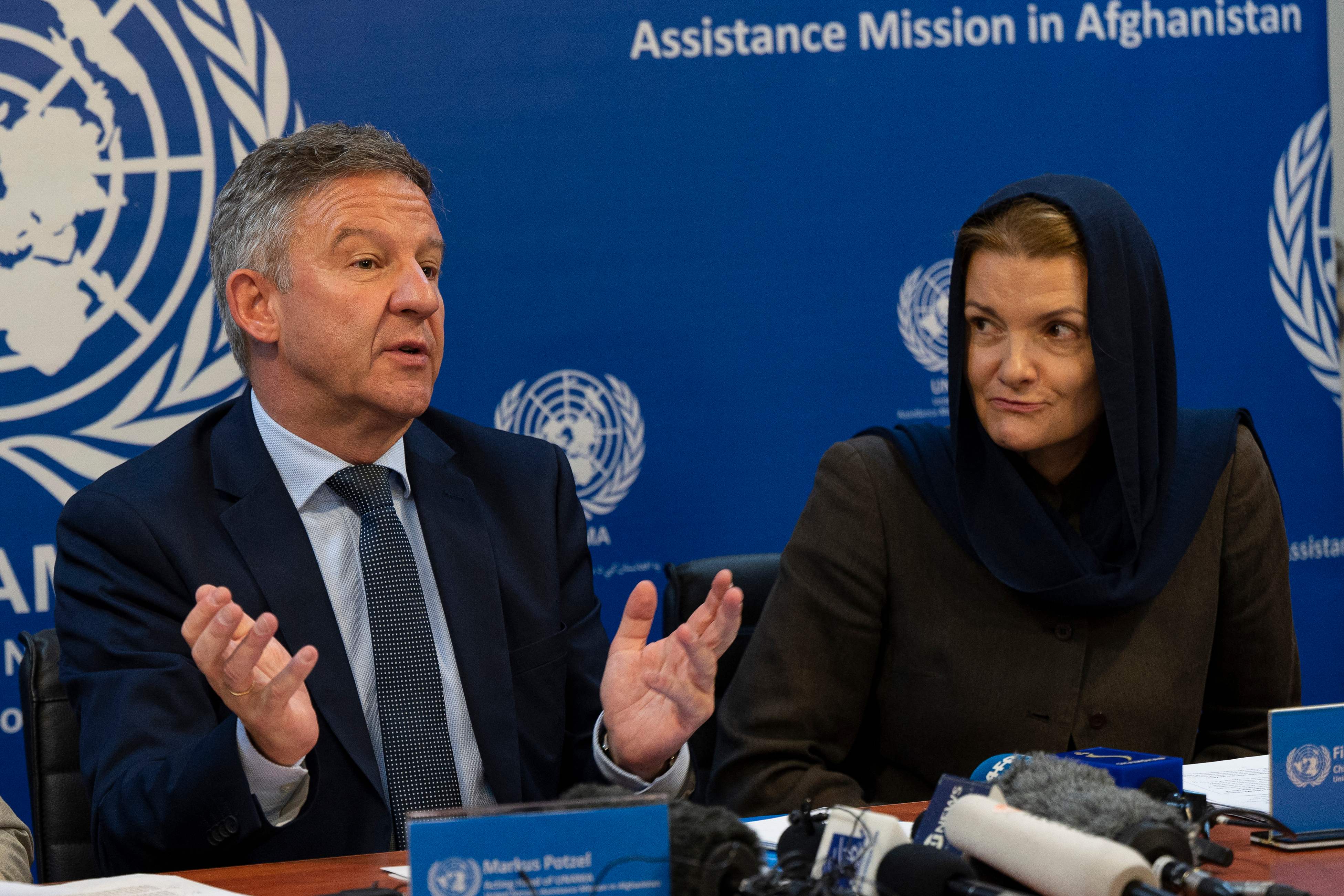
The report summarised the UNAMA’s findings with regards to protection of civilians, extrajudicial killings, torture and ill-treatment, arbitrary arrests and detentions, rights of women and girls, fundamental freedoms and situation in places of detention. It also contained recommendations for both de facto authorities and the international community.
It further stated that despite significant reduction in armed violence between mid-August 2021 and mid-June 2022, 2,106 civilian casualties – 700 deaths, 1,406 injuries – were recorded. Majority civilian casualties were attributed to targeted attacks by the ISKP (Islamic State – Khorasan Province) against minority communities in places of worship.
The report said that monitoring found that despite the improved security situation since 15 August, the people of Afghanistan, in particular women and girls, are deprived of the “full enjoyment of their human rights”.
Here are some of the key findings for the period between August 15, 2021 to June 15, 2022:
• 2,106 civilian casualties (700 killed, 1,406 wounded) predominantly caused by improvised explosive device (IED) attacks attributed to ISIL-KP and unexploded ordnance (UXO).
• 160 extrajudicial killings, 178 arbitrary arrests and detentions, 23 instances of incommunicado detention and 56 instances of torture and ill-treatment of former ANDSF (Afghan National Defense and Security Forces) and government officials carried out by the de facto authorities.
• 59 extrajudicial killings, 22 arbitrary arrests and detentions and seven incidents of torture and ill-treatment by the de facto authorities of individuals accused of affiliation with ISKP.
• 18 extrajudicial killings, 54 instances of torture and ill-treatment and 113 instances of arbitrary arrest and detention and 23 cases of incommunicado detention of individuals accused of affiliation with self-identified “National Resistance Front”.
• 217 instances of cruel, inhuman and degrading punishments carried out by the de facto authorities since August 15, 2021
• 118 instances of excessive use of force by the de facto authorities between August 15, 2021, and June 15, 2022.
• Human rights violations affected 173 journalists and media workers, 163 of which were attributed to the de facto authorities. Among these were 122 instances of arbitrary arrest and detention, 58 instances of ill-treatment, 33 instances of threats and intimidation and 12 instances of incommunicado detention.Six journalists were also killed during the period (five by ISKP, one by unknown perpetrators).
• Human rights violations affected 65 human rights defenders, 64 of which were attributed to the de facto authorities. Among these were 47 arbitrary arrests, 17 cases of incommunicado detention, 10 cases of ill-treatment and 17 cases of threats and intimidation.
Taliban spokesperson Zabihullah Mujahid termed the report as not true and nothing but propaganda."


