Friday’s vote for Iran’s parliament and the Assembly of Experts, the body that will pick the next supreme leader, have assumed an importance well beyond the perennial battles between hardliners entrenched in power and reformists seeking to unseat them.
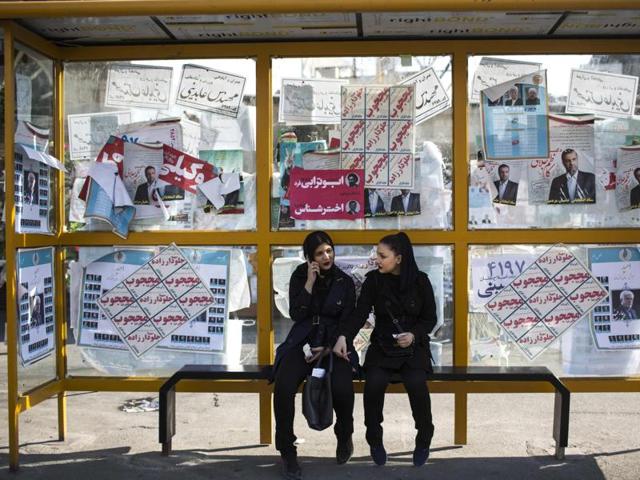
These are the first elections since Tehran reached an accord with major powers to curb its nuclear programme, leading to the removal of most of the sanctions that have strangled the economy over the past decade.
The breakthrough took place under pragmatic President Hassan Rouhani, who sees it as a springboard for Iran to reintegrate into the international community and return to world markets. But hardline opponents are determined to prevent it leading to any liberalisation of the Islamic system through the ballot box.
The outcome could be skewed by the disqualification of many pro-reform candidates by an unelected clerical Guardian Council that reports directly to Supreme Leader Ayatollah Ali Khamenei.
The stakes are high for all factions, since the outcome may well determine whether Rouhani has a mandate to push ahead with long-promised political, social and economic reforms, as well as influencing his chances of re-election in 2017.
Moderate allies of Rouhani are hoping to win back positions they lost over the past decade. But the filtering out of candidates and the slow pace of economic improvement have added to popular disillusion over Rouhani’s stalled reforms, leaving them facing an uphill battle.
{{/usCountry}}Moderate allies of Rouhani are hoping to win back positions they lost over the past decade. But the filtering out of candidates and the slow pace of economic improvement have added to popular disillusion over Rouhani’s stalled reforms, leaving them facing an uphill battle.
{{/usCountry}}Uphill battle for women MPs
Defeating claims of equality, women hold just nine of Iran’s 290 parliamentary seats and they are highly unlikely to reverse the disparity in Friday’s elections.
Representation has never neared parity — 14 is the highest number of MPs ever elected — and it has prompted a campaign: “Changing the male face of parliament.”
The group has set a target of 50 female lawmakers, a huge leap forward on the current three-percent level of representation.
“Whether it be in parliament or the Assembly of Experts, we are seeking to tackle discrimination,” woman activist Jila Shariatpanahi, an author and leading member of the campaign, said.
Women make up 50.4% of Iran’s population, according to the last census.