An action plan on counterterrorism and a blueprint to spur global economic growth through steps such as infrastructure spending will dominate the agenda of the two-day summit of the leaders of the seven most advanced economies in the world.
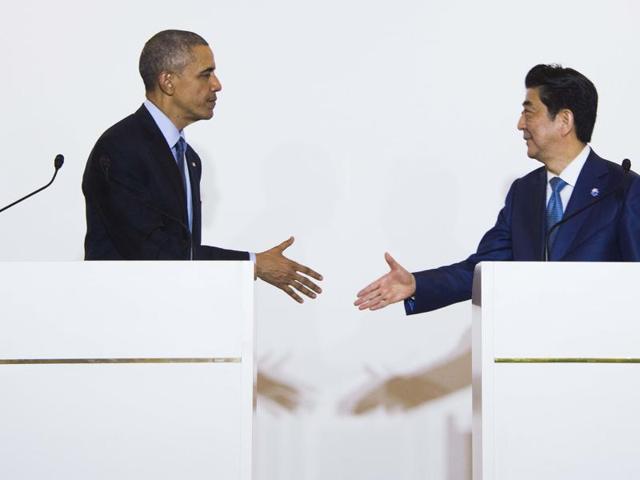
The meeting of G7 -- the US, UK, Germany, France, Italy, Japan and Canada-- starting on Thursday in this picturesque town in Western Japan comes in the wake of falling oil prices and a slowdown in Chinese economy.
A combination of policies including monetary, fiscal and structural measures are expected at the end of the meet. Japan, the presidency of the summit, has already announced spending of $ 200 billion in next five years on quality infrastructure around the world, a measure that would benefit developing countries like India and many African nations.
Japan going for an aggressive push in building infrastructure is seen as a measure to checkmate China, which is undertaking infrastructure projects with strategic underpinnings in countries across the world. Though Prime Minister Shinzo Abe’s advocacy for bold and large public spending to shore up global economy has support from France and Italy, countries like Germany and the UK have reservations on such a policy. These two countries push for greater structural reforms.
The G 7 leaders are expected to come out with a strong counterterrorism strategy, which would also emphasise on the need to address the root causes of extremism in many parts of the world that includes lack of financial inclusion. On dealing with the threat, the G 7 countries are expected to announce measures such as more stringent cracking on terror financing and greater sharing of information.
{{/usCountry}}The G 7 leaders are expected to come out with a strong counterterrorism strategy, which would also emphasise on the need to address the root causes of extremism in many parts of the world that includes lack of financial inclusion. On dealing with the threat, the G 7 countries are expected to announce measures such as more stringent cracking on terror financing and greater sharing of information.
{{/usCountry}}Japan has decided to invest in 20,000 youngsters in Middle East in helping them better educate and find jobs.
However, the summit agenda is laced with many complex international issues such as the refugee crisis, policy approach towards Iran, Russia’s perceived intransigence on Ukraine crisis and an aggressive China in the South China sea territorial disputes.
Especially on China, unanimity eludes the G 7. Western countries seem more worried about decline in Chinese economy that would shrink its market to an extent to create an economic crisis. European countries don’t give much credence to the military posturing of China compared to countries in the region. At best, the summit communique is set to mention maritime security and issues related to freedom of navigation in South and East China sea without naming China.