
 E-Paper





Follow the latest breaking news, major developments and agenda-setting stories from India and around the world with the newsdesk at Hindustan Times. Operating round the clock, the desk brings together experienced editors, reporters and correspondents to deliver fast, accurate and contextual reporting across subjects that influence public policy, governance, business, society and international affairs. The HT News Desk covers politics, elections, government policies, the economy, business and markets, science and technology, the environment, law and order, infrastructure, education, climate issues and geopolitics, while closely tracking developments across states, institutions and global capitals. The team also leads coverage of major breaking news events, policy announcements, court proceedings, natural disasters, public emergencies and significant international developments. Reports published by the newsdesk are based on information gathered from reporters on the ground, official statements, government agencies, court records, regulatory filings, recognised institutions and other authoritative sources. Stories undergo editorial scrutiny and verification processes to ensure accuracy, fairness and relevance, and are updated as events evolve and additional information becomes available. Whether covering a key political decision in New Delhi, an economic policy shift affecting millions, a landmark court ruling or a major global event, the HT News Desk aims to provide readers with reliable, fact-based journalism that delivers not only the latest developments but also the context and analysis needed to understand their wider implications.
India starts process to build 6 nuclear-powered attack submarines
Navy Chief Admiral Sunil Lanba said the process to build the attack submarines was a classified project.


India kick-started the process to build six nuclear-powered attack submarines which will significantly boost the Navy’s overall strike capabilities in the face of China’s growing military manoeuvring in the Indo- Pacific region.
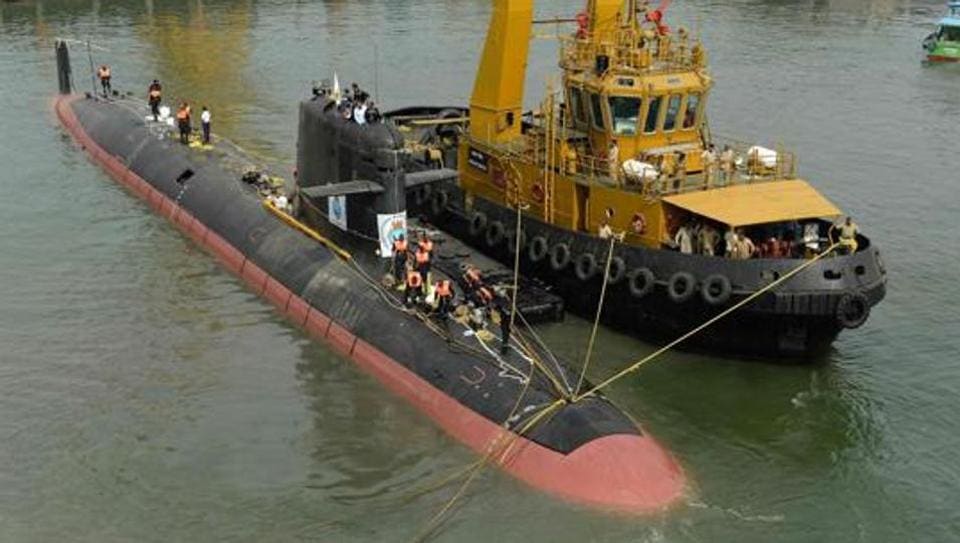
“It has kicked off and I will leave it at that. It is a classified project. The process has started,” Navy Chief Admiral Sunil Lanba said on Friday.
He said the Navy will play its role in the Indo-Pacific region when the much talked about quadrilateral coalition among India, Australia, Japan and the US takes shape, reflecting the Navy’s readiness to play a much assertive role in the critical sea lanes.
In a major move, officials of the four countries earlier this month had set the ball rolling to pursue their common interests in the strategically important Indo-Pacific region where China has been aggressively expanding its military presence.
“We are all aware of the prevailing security scenario in our maritime domain. The continued presence of both traditional and non-traditional threats in the maritime domain demand constant attention and robust mitigating measures,” he told a press conference.
On Chinese presence in the strategically-important Gwadar port in Pakistan, he said it may be a security challenge for India in future.
“It will be a security challenge. We will have to look at it and mitigate,” he said.


