
 E-Paper



SC to examine public prosecutors’ authority under defamation law
The Supreme Court will examine if a public prosecutor should mechanically sanction legal action against a public servant, including the President, Prime Minister and chief ministers, under the criminal defamation law.

 Prefer HTon Google


The Supreme Court will examine if a public prosecutor should mechanically sanction legal action against a public servant, including the President, Prime Minister and chief ministers, under the criminal defamation law.
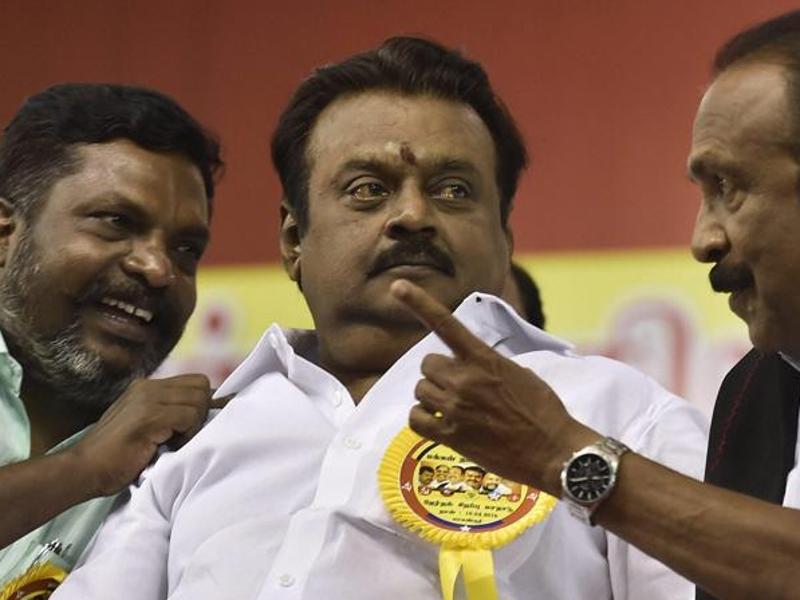
The apex court will review the issue on the petition of DMDK chief Vijayakanth who is facing several defamation cases filed by Tamil Nadu chief minister J Jayalalithaa. A bench headed by Justice Dipak Misra is likely to lay down the guidelines for a prosecutor while giving a go ahead for legal action.
The bench had on May 13 upheld the provisions that make defamation a criminal offence in India, and dismissed a batch of petitions to declare two sections of the Indian Penal Code (IPC) in this regard unconstitutional.
Cutting across party lines, political leaders, including Congress vice-president Rahul Gandhi, BJP MP Subramanium Swamy, and Delhi chief minister and AAP leader Arvind Kejriwal, had sought this declaration.
Vijayakanth’s lawyer, GS Mani, contended before the bench that a public prosecutor should be independent and not misuse his sanctioning authority to muzzle free speech or harass those who criticise government policies.
A public prosecutor is a government employee, who tends to “become a post office at the hands of the state administration”, Mani claimed.
Solicitor General Ranjit Kumar held a similar view. He said prosecutors should be neutral and grant sanction after considering all the facts of the complaint presented before him.
Mani argued the “citizenry’s right to criticise cannot be atrophied by constant launching of criminal prosecution for defamation on each and every issue to silence the critics”.
“When criticism in a vibrant democracy in this manner is crippled, the democracy, which is best defined as the ‘Government of the People, by the People, for the People’ would lose its cherished values,” he said.


