
 E-Paper



India needs a full-time defence minister as ministry cannot be run on ad hoc basis
The decision to put Arun Jaitley in charge of South Block is quite understandable. Jaitley, with his legal and political acumen, is the best bet for Prime Minister Narendra Modi after Manohar Parrikar. But time has come for the government to spell out clearly whether Jaitley continues to have double barrel portfolios for time to come or appoint someone else in his place

 Prefer HTon Google


It must be a measure of Prime Minister Narendra Modi’s implicit trust in Union finance minister Arun Jaitley that he has been again asked to handle hefty defence portfolio after Manohar Parrikar was happily packed off to Goa to become chief minister for the unprecedented fourth time.
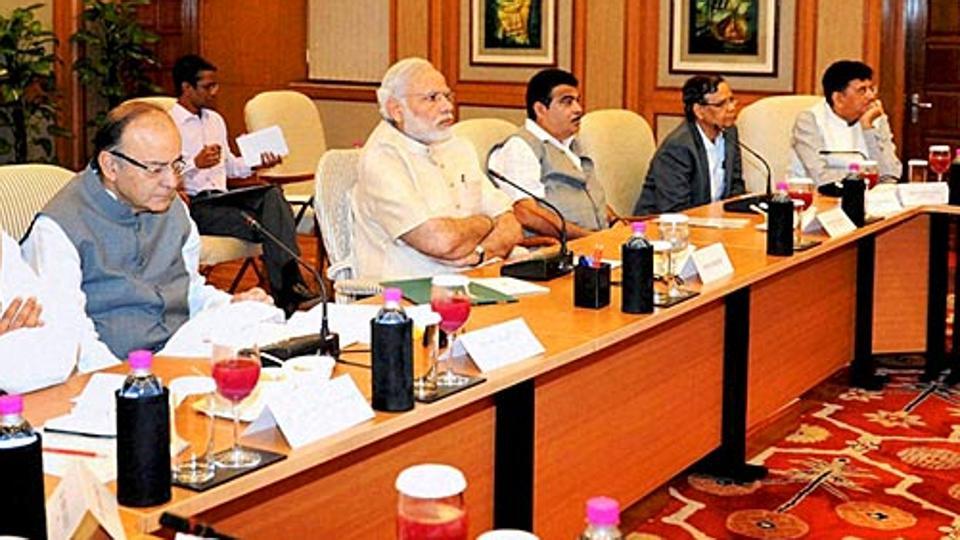
The decision to put Jaitley in charge of South Block is quite understandable as Modi knows that this ministry has been a political graveyard in the past for the Congress with allegations of corruption in hardware acquisition periodically flying thick and fast. Jaitley, with his legal and political acumen, is the best bet for Modi after Parrikar, who could also understand technological as well as financial demands of the defence ministry.
The fact is that after Parrikar made a highly-classified air power presentation before Modi in 2015, the Prime Minister, openly before PMO officials, said that India was fortunate to have such a defence minister.
While the Raisina Hill buzz is that Jaitley will remain in South Block for some more time, the government must spell out clearly whether Jaitley will continue to have double barrel portfolios for some time to come or appoint someone else in his place. Considering the sensitivity of the portfolio, the defence ministry cannot be run on an ad hoc basis with security concerns mounting on the northern and western fronts.
Apart from the security ramifications of developments in China and in the Af-Pak region, the ministry and the three service headquarters are in dire need of disruptive reforms as each still continues to function in vertical silos behind the so-called façade of synergy. The “Make in India” plan in the defence sector is still a work in progress with Parrikar leaving the “strategic partners” proposal to his successor for approval.
Under this scheme proposed by the ministry mandarins, select Indian private defence sector players will be allowed to tie-up with original equipment manufacturers from abroad to make top end hardware in India for both domestic consumption as well as exports. It seems that the new defence minister will again have to go back to the drawing board to convince himself of the proposal or come up with amendments to it.
While Parrikar had made the service headquarters and ministry mandarins more accountable during his 27-month tenure, the restructuring of the higher defence command is still hanging fire in spite of it being proposed by the K Subrahmanyam Kargil Committee report and its successors. The decision of appointing a chief of defence staff, a single point military advisor to the government, is still to be taken, as well as reorienting the service headquarters from its imperial past to a US style of theatre commands for faster military response, synergy and inter-service coordination.
Even though Lt Gen DB Shekatkar committee on military restructuring and downsizing had submitted its report last December to Parrikar, the report was still in process and on the table of defence minister before he was packed off to Goa.
Given the all-weather military relationship between China and Pakistan, with the former empowering the latter with beef to box much above it weight category, India cannot afford a status quo in the defence sector with decision-making delayed in acquisition of air platforms, particularly to maintain its cutting edge in South Asia and beyond.
It is not that the Indian strategic capability is in the decline. On the contrary, New Delhi has taken big steps in enhancing its strategic reach as well as its capacity to make the battlefield more transparent across the borders. The border infrastructure under the Modi government has been definitely upgraded along the 720-kilometre Line of Control with Pakistan, as well as the 3,488 kilometre Line of Actual Control with the Tibetan Autonomous Region of China.
India needs a permanent defence minister to expedite day-to-day decision-making, as well as keeping the continuous turf war between mandarins and military under control. The unsavoury sacking of Admiral Vishnu Bhagwat in the previous NDA regime showed that this ministry is not an elephant that anyone can ride.
shishir.gupta@hindustantimes.com


