
 E-Paper



In UP, the hunt for poll partners continues despite history of dismal alliances
Though such alliances between ideologically incompatible parties have rarely lasted in the long run, they have delivered short-term political gains since 1967

 Prefer HTon Google


The hunt for viable poll partners ahead of the Uttar Pradesh (UP) assembly elections in 2022 persists in the politics of the state, notwithstanding dismal past of electoral alliances in UP’s political theatre in the past.
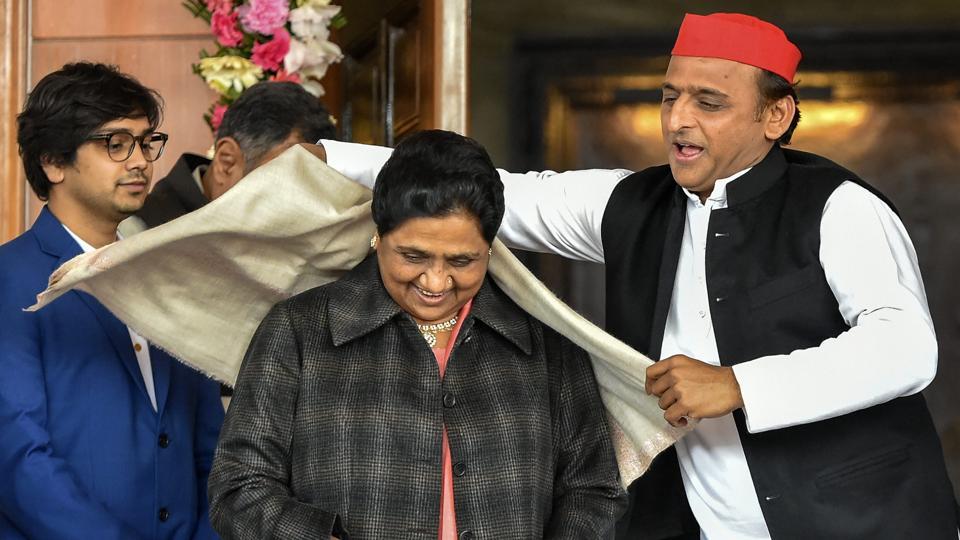
Though such alliances between ideologically incompatible parties have rarely lasted in the long run, they have delivered short-term political gains since 1967. When the Samyutka Vidhayak Dal was formed as a coalition of parties to oppose the Congress government, it was considered a watershed moment in Indian politics. This later led to the Janata Party experiment in 1977.
UP: The nerve-centre of Indian politics
UP has been the nerve centre of the country’s politics with giants such as Ram Manohar Lohia, Charan Singh, Raj Narain, Kamlapati Tripathi, Chandrashekhar, VP Singh, Atal Bihari Vajpayee, and Indira Gandhi, among others, playing crucial roles in shaping its politics.
The one-party rule of the Congress made a comeback in the state only in 1980. This continued for a decade, with chief ministers being changed frequently. The late Kalyan Singh of the Bharatiya Janata Party (BJP) then formed a majority government in June 1991 which was dismissed on December 6, 1992, after the demolition of the Babri shrine in Ayodhya.
Then, the coalition era began again in the 1990s, and saw the growth of many regional parties. Interestingly, politicians always had a holy cognitive cover for unholy alliances such as empowering the Bahujan Samaj Party (BSP), constructing a rainbow coalition of Brahmins, Dalits and Muslims, or decimating communal forces.
Significantly, the BSP not only owes its growth to the alliances it ruthlessly sealed and snapped, but it is also credited for breaking the 14-year-long coalition jinx of the 1990s in 2007. The BSP founder-president, Kanshi Ram, often said that the party will continue with coalition politics until its “samaj” is ready to grab power at the Centre.
Caste over numbers: The strategy for 2022
Now, with elections are around the corner, mainstream political parties are gearing up for a solo journey in choppy waters. Bitten, not once but several times, they are instead looking for alliances with smaller caste-based parties to augment their vote bank without giving away a large chunk of the 403 assembly seats. The political landscape looks crowded.
Leading the stratagem is the BJP, which won 325 seats in the 2017 assembly election. The BJP’s state vice-president Vijay Bahadur Pathak explains, “We, as Bhartiya Jan Sangh, had also contested the country’s first post-Independence in alliance with other political parties. It is our tradition to take all along with us, irrespective of our strength or the size of the ally. Today, Apna Dal is a bigger party than the Congress in the state as it has more MLAs [Members of Legislative Assembly].”
However, these alliances by either the BJP or Opposition parties are based more on the caste that the party represents, rather than its actual size or strength. The BJP, which has already set up an alliance with the Kurmi-based Apna Dal, has also opened a dialogue with the Nishad Party, which claims a decisive vote in 70-odd assembly constituencies.
Anupriya Patel, who inherited Apna Dal from her father Sone Lal Patel, has been a hard bargainer after she won nine of the 11 seats that the party contested in the 2017 assembly polls in alliance with the BJP. She also won the Mirzapur Lok Sabha seat in 2014 and 2019.
She once said, “My politics starts with the base vote of 5-7%. I have to judiciously use my support base to grow.” Kurmis constitute about 7% of the population, and are concentrated in eastern UP. She is a Union minister of state in the Narendra Modi government.
As for the Nishad party, soon after he met with Union home minister Amit Shah in New Delhi on August 15, party chief Sanjay Nishad indicated a continuation of the alliance with the BJP. But he is demanding the inclusion of Nishads in the Scheduled Caste (SC) category along with the withdrawal of cases against his party workers.
Launched in 2016, the Nishad Party came into the limelight when, with the support of the Samajwadi Party (SP)-BSP combine, it had wrested the Gorakhpur Lok Sabha seat in the 2018 by-poll. This improved the party’s bargaining power and, in 2019, became the BJP’s ally, winning the Sant Kabir Nagar Lok Sabha seat.
Party chief Nishad said, “A survey is on to assess the party’s strength in the state, which will be submitted to BJP national president JP Nadda to facilitate the seat-sharing formula.” The importance that the BJP gives to alliances, even with small parties, can be gauged from the fact that its top-most leaders sign the deals.
The nine-party Bhagidari Sankalp Morcha led by Om Prakash Rajbhar is up for grabs, but the presence of All India Majlis-e-Ittehadul Muslimeen (AIMIM) led by Asaduddin Owaisi in the group has made it untouchable for the BJP and unwanted by the SP and the BSP.
There are also smaller groups struggling to create their own political space including the Aam Aadmi Party (AAP) and the Bhim Army among others.
SP chief Akhilesh Yadav, who has been favouring tie-ups with smaller groups, has an old ally in the Rashtriya Lok Dal and new allies in the Mahan Dal and the Rashtriya Janwadi Party. He is under pressure to ally with his uncle Shivpal Singh Yadav’s Pragatisheel Samajwadi Party.
However, while keeping the SP’s doors open for smaller parties, Akhilesh Yadav has repeatedly ruled out tie-ups with mainline parties. This comes after bitter experiences of alliances with the Congress in 2017 and the BSP in 2019. He is currently strengthening the party, and is bringing back Mulayam Singh Yadav’s friends, who for various reasons, quit the SP.
BSP leader Mayawati has also closed doors for alliances as she believes that while she can transfer her votes, other parties lack that ability.
As of now, UP’s poll landscape is chaotic with mainline Opposition parties determined to go it alone since the SP-Congress alliance for the 2017 assembly elections failed to bear any fruit and the SP-BSP tie-up for the 2019 Lok Sabha polls broke under its legacy of bitterness.
The roots of inter-party discord
The 1990s saw the coming together of two regional forces — the SP and the BSP — to take on a resurgent BJP riding the Ram wave. Both parties were new, but the political acumen of their founder-presidents, Mulayam Singh Yadav and Kanshi Ram, was well established.
The SP-BSP together represented the Other Backward Classes (OBCs), Muslims and Dalits — a dream that Kanshi Ram had seen of uniting 85% of the population. Interestingly, the BJP had won more seats in the 1993 polls, but despite protests outside Raj Bhavan, was not invited to form the government. The SP-BSP government, led by Mulayam Singh, was established with support from the Congress and the Janata Dal.
As Dalit and Yadavs, the two antagonistic groups led by two strong leaders Mayawati and Mulayam clashed in the heartland, the alliance started developing cracks and collapsed in 1995.
Mayawati was seen as too demanding. She closely monitored the government’s performance. She kept Mulayam Singh as well as his ministers in check. Her focus was on the welfare of Dalits. Mulayam Singh acquiesced to all of the BSP’s political whims, but his political humiliation continued. Social tensions grew, rupturing the alliance at the highest level. The slogan of Muslim-Dalit-Yadav unity failed.
The BJP, watching the entire political drama unfold from the sidelines, was uncomfortable with the unity of backwards and Dalits since they were trying to consolidate all Hindu castes under the banner of Hindutva. It jumped in to support Mayawati, albeit from the outside, who became CM in June 1995.
The BJP’s support laid the foundation stone for future alliances with the BSP and won over its target group of Dalits. The alliance also helped heal much of the party’s political wounds after the demolition of the Babri Masjid in 1992.
Drama ensued as Mayawati, though supported by the BJP, aggressively pursued her Dalit agenda, upsetting the BJP’s Hindutva plan. She ruled the state for four-and-a-half months in her first term. Soon, her political agenda became intolerable for the BJP and the party withdrew support. The breaking point was the installation of Periyar’s statue at Parivartan Chowk in Lucknow.
The Congress’s role in the BSP-BJP alliance
It was in 1996 when the Congress, led by PV Narasimha Rao and Sitaram Kesari, decided to ally with Kanshi Ram, and guaranteed 296 of the 425 assembly seats. Together, however, they barely touched the 100-mark, with the Congress winning 33 and the BSP, 67. Rahul Gandhi later described the alliance as a complete sellout by the Congress.
The BSP was, however, not disturbed as its vote-share went up from 11.11% in 1993 to 19.64% in 1996. Mayawati said they were on the right track. Two months later, she dropped her pre-poll partner, the Congress, to join hands with the BJP — the communal forces that they had vowed to decimate — to form the government.
Mayawati later explained her choices of allies, by saying that the BSP had entered into pre-poll alliances twice in its 22 years of political existence until then. “The reasons were convincing. It was with the SP in 1993. The sole aim was to unite the Bahujan Samaj under the leadership of a neta from Bahujan Samaj, and Muslims. The second pre-poll pact was signed with the number one Manuvadi party, the Congress, in 1996 to avenge the near murder of Ambedkar’s Republican Party of India in Maharashtra.”
When the Congress-BSP alliance failed, the government was formed after keeping the assembly in suspended animation. When the Congress was left out and the BSP found an ally in the BJP, they together evolved a formula of governance by six-month rotation. The BJP emerged as the single-largest party in the 1996 polls, but fell short of the majority mark. Mayawati got to rule the state for the first six months. After completing her part of the tenure, Mayawati handed over power to Kalyan Singh, but soon pulled the rug from underneath.
The build-up that broke the coalition jinx
Rajnath Singh, the then Chanakya of UP BJP, split the parties to save the Kalyan Singh government. In the process, the state had a jumbo coalition government of 90+ ministers.
By then, dissensions plagued the BJP. The high command removed Kalyan Singh, installed a little-known Ram Prakash Gupta, whom Rajnath Singh later replaced. Kalyan Singh became a rebel, criticised the Rashtriya Swayamsevak Sangh (RSS) and the BJP, quit the party and formed his own Rashtriya Kranti Party. Many believe that he helped the SP emerge as the single-largest party in the subsequent elections held in 2002 to avenge his humiliation. The SP had won 143 seats. As no party could form the government in a hung House, the state was forced into President’s rule.
Despite a past marked by acrimony, the BSP and the BJP tried yet another marriage of convenience. However, this time, Mayawati had bargaining power, with about 98 members in the House against 88 of the BJP. Her vote percentage had also shot up to 23.19%, barely 2% less than the SP.
Mayawati became the chief minister again. But the mistrust between the two parties did more damage to the BJP as she fanned differences within its state unit. She resigned after staying in power for one year and 128 days after her name was figured in the Taj Corridor scam.
In October 2003, Kalyan Singh, and the late Amar Singh and Choudhury Ajit Singh installed a Mulayam Singh-led government in the state. They were leaders of different political temperaments, but came together for a common cause: Power. They ruthlessly broke parties to form the government in 2003 after a bloody battle on the floor of the House.
However, ahead of the 2004 Lok Sabha polls, Kalyan Singh returned home, but the Mulayam Singh government remained safe. It completed the full term. Rashtriya Kranti Party had only four MLAs. In 2007, Mayawati broke the coalition jinx by winning an outright majority. Five years later, the SP formed an independent government in 2012 and then, the BJP government in 2017.
The mega show of 2022
However, experiments in alliances continued. The Congress-SP came together in the 2017 assembly polls, and the BSP-SP in the 2019 Lok Sabha polls. Besides the initial hype, both alliances failed to yield the desired results. The Opposition is unlikely to unite though they have a common political rival in the BJP.
Paradoxically, the Congress continues to hope the next election will be theirs and, thus, for the last 30 years, they have not given up their revival efforts. The SP is banking on its leader’s goodwill and consolidation of the anti-BJP votes in its favour. The BSP is waiting for a fractured verdict as the BJP would want to propel a Dalit chief minister to retain its hold on the vote bank. The BJP is confident of returning to power, however, with a lesser margin.
So, will 2022 finally bring curtains down on the mega show on alliances or leave space for a remake? In Indian politics at large, and UP, in particular, all seems to be fair in love and war — and elections.


