External Affairs Minister S Jaishankar’s address at a conference on Thursday makes it amply clear that the only way forward for the two countries is for their armies to go back to their permanent bases along the 1597-km Line of Actual Control (LAC) in East Ladakh as they existed in April 2020.
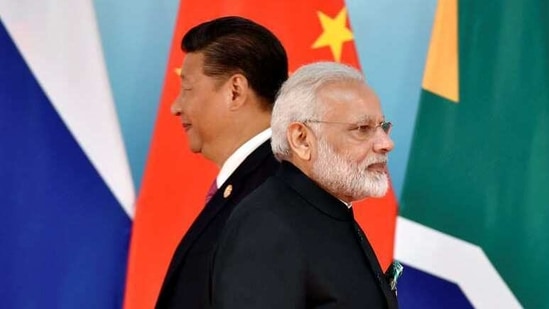
Jaishankar’s speech lucidly spells out that India and China are competitors in both the Asian and global context and that New Delhi is not the regional south Asian player that Beijing wants it to be. The three mutual and eight broad propositions spelt out by the minister, who was India’s longest-serving envoy to China over the past decade, are reminders to Beijing that the bilateral relationship between the two Asian powers is not a one-way street. The proposition that India and China are civilization states, something that Beijing seems so reluctant to acknowledge about New Delhi, is designed to remind the Middle Kingdom that all civilization states have their ups and downs in their history and nothing is permanent.
That the Xi Jinping regime must adhere to all past agreements and desist from any unilateral change of status quo of LAC is also a clear message from the Modi government that any new agreement, possibly on disengagement and de-escalation, will have credibility only if the past understandings are honoured in letter and spirit. Simply put, the Modi government wants iron-clad guarantees that China will not repeat the 2020 aggression on the north or south banks of Pangong Tso if and when the Indian Army goes back to its permanent base as part of any future understanding on East Ladakh.
In his speech, Jaishankar has yellow-carded China for using Pakistan as a proxy in its rivalry with India and at the same time expecting New Delhi to be neutral in its conduct of foreign policy. The fact is that China has used Pakistan to block India’s entry into the Nuclear’s Suppliers Group though the two ‘iron brothers’, as Islamabad and Beijing describe their relationship, have a patchy track record on nuclear non-proliferation.
{{/usCountry}}In his speech, Jaishankar has yellow-carded China for using Pakistan as a proxy in its rivalry with India and at the same time expecting New Delhi to be neutral in its conduct of foreign policy. The fact is that China has used Pakistan to block India’s entry into the Nuclear’s Suppliers Group though the two ‘iron brothers’, as Islamabad and Beijing describe their relationship, have a patchy track record on nuclear non-proliferation.
{{/usCountry}}China also backed Pakistan to get global terrorists such as Jaish-e-Mohammad chief Masood Azhar off the hook at the UNSC 1267 committee while both of them tried to frame Indian engineers working in Afghanistan in terror cases.
In the present context too, Beijing has been talking about de-escalation plans with New Delhi for East Ladakh but has been making aggressive moves in north Sikkim and Arunachal Pradesh.
While Beijing routinely fires threats at other countries including India to dissuade them from taking up the issue of Tibet, Xinjiang, Hong Kong or Taiwan, China hasn’t respected Indian sovereignty by taking up huge infrastructure projects in the occupied Northern Areas and Kashmir in its endeavour to use warm water ports of Gwadar and Karachi for trade with Middle-East and the Persian Gulf.
Jaishankar’s speech, delivered against this backdrop, signals India’s determination to continue to stand up to Xi Jinping’s expansionist plans for Asia as an equal and make it clear that nothing that Beijing does against India will be overlooked, or allowed to go unpunished. The ball is firmly in China’s court.