
MCD results 2017: Why it won’t be wise to write off Kejriwal, AAP after Delhi defeat | Opinion
Arvind Kejriwal and Aam Aadmi Party are resilient and will over come the civic poll setback.
Arvind Kejriwal’s Aam Aadmi Party may be down in Delhi’s municipal elections but is not out.
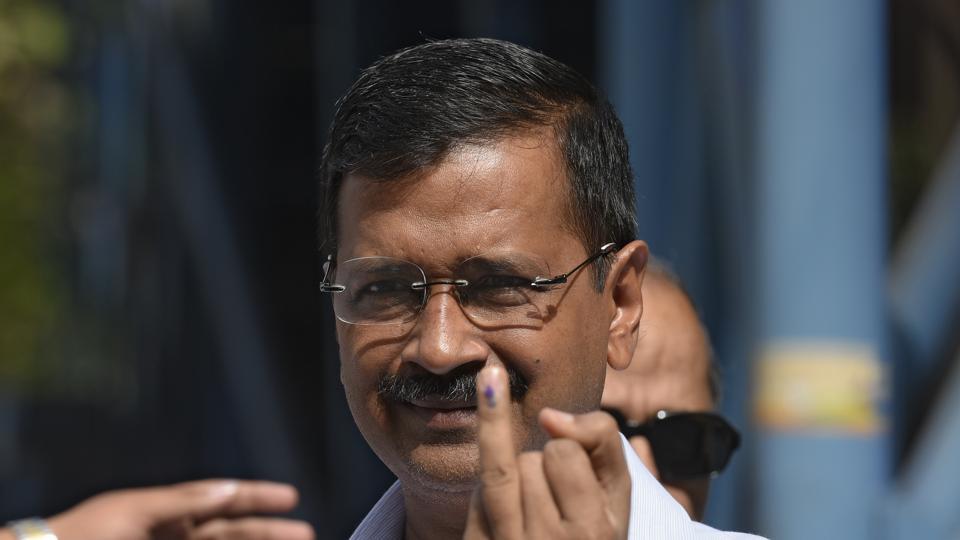
Writing an obituary for the Capital’s ruling party based on the outcome of a civic election would be foolish, as the five-year-old party has tremendous comeback ability.
It was routed in the 2014 Lok Sabha polls, not winning one of the seven seats in the Capital. But nine months later, it created poll history by winning 67 of the 70 assembly seats in Delhi.
Born out of a people’s movement against corruption, the party needs to re-invent itself and reconnect with people as it did after the 2014 election.
A party that thrived on people connect saw its leaders shut themselves in the secretariat after coming to power, choosing radio jingles and advertisements to communicate with supporters.
The party of “street fighters” went missing from localities and got alienated.
Kejriwal has to go back to people and explain his government’s policies that should have an inclusive vision for the national capital.
The Kejriwal government is seen as working for only 40% of the population, which lives in slums and unauthorised colonies. Middle class, vital to AAP’s wins in 2013 and 2015 assembly polls, feels ignored.
More importantly, the party needs to shun its confrontationist image and have a more constructive outlook. This is what Kejriwal did after the 2014 loss. He did not utter a word against Prime Minister Narendra Modi and convinced people of his plan for a better Delhi.
The AAP government can no longer blame the Centre for its failures. It promised free Wi-Fi zones in the city, a waste-management system, safety of women, a crackdown on water mafia, a modern transport system and much more.
Half-way into his term, Kejriwal has to start delivering on his promises.
The Modi government has already shown it will not oppose good governance moves of the AAP government. The Centre supported Kejriwal’s car-rationing plan and the AAP should seek its support more often as is being done by other opposition ruled states.
The civic polls show the AAP’s weakest link is its “missing” volunteers who were instrumental in its poll success. The inability of the leadership to empower volunteers on the ground and lumpen elements taking over the local units left many volunteers disenchanted.
Kejriwal, who before turning to politics was a Right to Information and an anti-corruption activist, has had many setbacks in public life. His never say die spirit, I am sure, will see him set aside the civic poll setback and move on.
ABOUT THE AUTHORChetan ChauhanChetan Chauhan is the National Affairs Editor looking into all aspects of news and features from across India. A Chevening scholar with over three decades of experience in reporting and news management, Chetan has extensively covered all important aspects of the social sector, political economy, environment and climate change nationally and internationally. He did a journalism course at the Reuters Institute of Journalism in Oxford and Digital Media training at Nanyang Technological University in Singapore. He started as a reporter with The Statesman in 1996 and joined the Hindustan Times in 2000 in the metro bureau covering environment, crime and Delhi politics. He covered hot local news, from the Jessica Lal murder case to the rebellion of Delhi Congress MLAs against then Chief Minister Sheila Dikshit, to the replacement of toxic vehicle fuel with cleaner compressed natural gas (CNG) in the national capital. Some of his stories on air pollution became part of the Supreme Court’s landmark MC Mehta versus Government of India case in the National Capital Region (NCR), forcing the government to take corrective measures. As part of the national political bureau since 2004, he covered important central sectors such as environment, education, social justice, labour, rural development, water resources, renewable energy, agriculture, broadcasting and the Planning Commission for more than a decade producing several exclusive and investigative breaking stories. His specialisation is the environment, having covered at least a dozen United Nations global conferences on climate change, biodiversity and wildlife including climate summits in Paris, Copenhagen and Bali. He also covered India’s two five-year plans ---11th and 12th and reported on drafting and execution of right based laws such as Right to Education, Right to Information and rural job guarantee law, MG-NREGA, now being introduced in new format as VG-RAM-G Act. He has in-depth knowledge of social sector issues. He was one of the first to report on tigers vanishing from Sariska and Panna wildlife reserves in 2004 and 2008, respectively, leading to the setting up of the National Tiger Conservation Authority (NTCA) and the introduction of stringent penal provisions for poaching. He has written extensively on the rising human-animal conflict in India and the degradation of India’s biodiversity hotspots because of mining and other activities. Since 2004, Chetan has covered Parliament comprehensively and participated in training on the nuanced coverage of Parliament proceedings. He has travelled extensively across India to cover national and provincial elections since 1998, especially in the Hindi heartland states, considered India’s road to power. He writes a regular column for Hindustan Times, Ecostani, on important national politics, economy, Himalayan ecology and environmental issues. His other responsibilities include providing inputs for edits and edit page articles for the publication, apart from managing news flow from across India.Read More

E-Paper


