E-Paper



An object theatre play discusses inclusivity and social order
The premiering play sees a dhaba populated by veggies


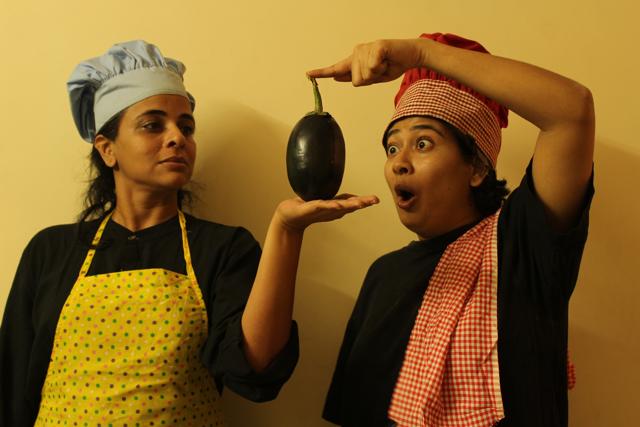
The stage is set like a roadside dhaba. Plastic tables and chairs are laid out front, and at the back is a marble counter that shelters a kitchen. Something is unusual, though — the space is populated by eggplants and only serves dishes made from eggplant. The vegetable has complete monopoly of the eatery, and even controls the social order of the dhaba: the eggplants are categorised into sections based on size and colour.
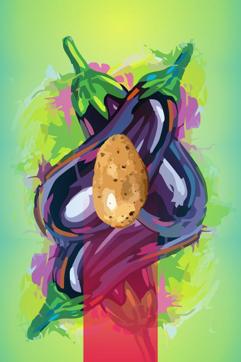
One day, the eggplants wake up to a sack kept on the counter. Inside are round, brown and dusty things — potatoes. The new vegetable slowly penetrates the existing social order of the dhaba, paving the way for more vegetables to enter and settle.
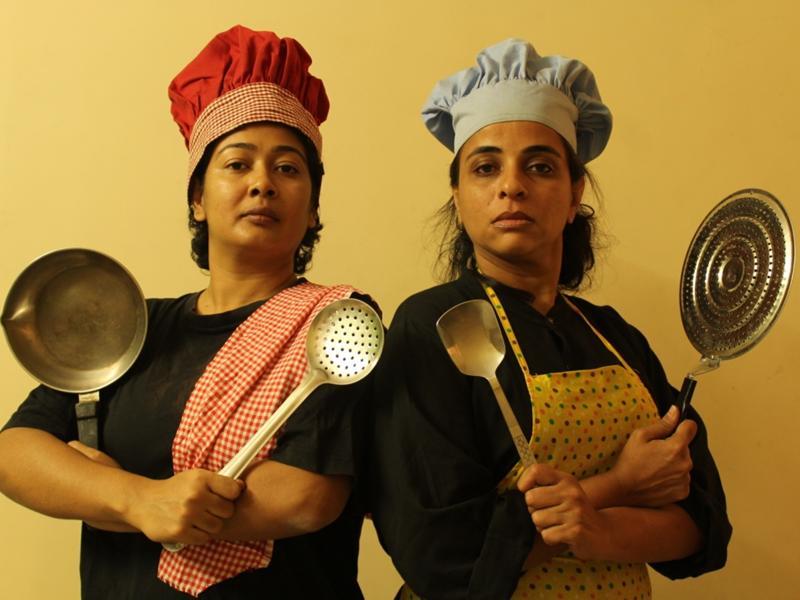
That’s the premise of Dhaaba, a play by object theatre practitioner Choiti Ghosh (36). Simply put, object theatre refers to theatre done with everyday objects, without assigning human form or attributes to them.
Read more: Versova studio turns into a museum for ordinary objects
Ghosh got the idea to make Dhaaba in 2012, when she was busy in her kitchen. “I was chopping away when the concept of a vegetable-driven play first came to me,” she says. Four years later, she has translated the idea into a play. It will premiere at the National Centre for the Performing Arts’ (NCPA) annual theatre festival, Centrestage.
The unusual premise notwithstanding, the story discusses the making of multicultural and multi-ethnic society — how foreign cultures enter an existing society, and momentarily disrupt social order. And though they cause initial friction, courtesy the fear of unfamiliarity, over time, they are absorbed into society.
Read more: Pratibimb: The best of Marathi theatre, under one roof
To further explore this confluence of cultures, Ghosh spent three years researching the history of vegetables, to narrow down her choices for the play. For instance, Ghosh says the most fascinating vegetable is the onion, as its origin cannot be traced back to any particular region in the world. “Onions seem to have cropped up simultaneously across the world. They have no specific area of origin. The tomato comes from Latin America. But onions have no cultural identity,” says Ghosh.
The timing of Dhaaba’s premiere is uncanny, to say the least, as the debate around racial equality intensifies worldwide. Yet, Ghosh insists that the play makes no political statement. “The play is not preachy. It is open to interpretation, and I hope to have a one-on-one discussion at the end of the performance,” she says.
Dhaaba will be staged on November 26, 8pm
At Godrej Dance Theatre, NCPA, Nariman Point
Call 6622 3724
Tickets: Rs 250 on bookmyshow.com/plays