E-Paper



Madhya Pradesh to roll out welfare policy for transgenders
A few months after Sanjana Singh, a transwoman, joined the government as the personal secretary of the director of the department of social justice and disabled welfare, the state will roll out a welfare policy for transgender residents in the next two months

 Prefer HTon Google


A few months after Sanjana Singh, a transwoman, joined the state government as the personal secretary of the director of the department of social justice and disabled welfare, the state will roll out a welfare policy for its transgender residents in the next two months.
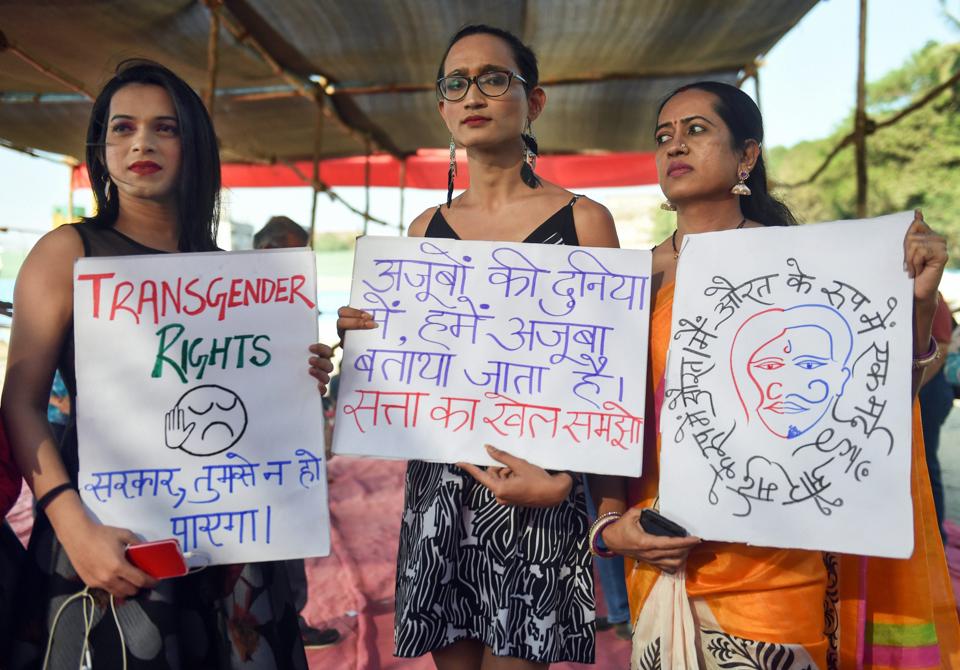
Some of the issues that the recently appointed Congress-led government will take up include, a monthly allowance to parents of intersex children, provisions for job reservations for transgender persons in the state government and separate public toilets, officials of the department, said the minister for social justice Lakhan Ghangoriya.
The minister said, “The policy will have monthly allowance that will be a reward to parents for bringing up their third gender children and impart education to them.”
“The transgender equality policy will prove a milestone and will be introduced soon. With social justice department, other departments like health and education will play their role so that overall development could take place and gender discrimination could come to an end,” Ghangoriya added.
“We will include health department in the policy so that families could be identified just after the birth of a baby and a proper counselling could take place on time,” a department official, who is familiar with the development, confirmed.
The state, which gave the country its first transgender legislator in 2000 — Shabnam ‘mausi’ from Sohagpur — does not have a transgender welfare board. In 2014, the Supreme Court ruled that such a board should be set up in each state, in order to look after the specific welfare schemes and entitlements for transgender persons.
The amount of allowance has not been decided yet but it wouldn’t be less than the allowance being given to other beneficiaries of the social justice department, said the officer.
As of now, the social justice department is providing Rs 600 per month to specially abled people and widows as a destitute pension. The Congress government promised to increase it to Rs 1,000. The department is planning to provide at least Rs 1,000 per month to the community, as per the officer.
“We want others, like Sanjana Singh, to come forward without hiding their identities and join other departments. Similarly, we are also trying to sensitise our society into accepting them with a free mind,” said Krishna Gopal Tiwari, director, Social justice and disabled welfare.
“The Supreme Court has identified us as third gender in 2014 but nothing happened except introducing boards for them. The transgender policy will bring a major change in the society. This inclusivity will help us to live a normal life,” Singh said.
However, activist Kokila Bhattacharya said that any policy must be made only after consulting several members of the community.
“I am not sure whether or not the policy was formulated after consultation with the community people. Most importantly the gender binary needs to be broken. We need systemic changes which empowers transgenders socially, educationally, financially and professionally.”