E-Paper



MP: Residents of net-savvy village recognise each other by email ids
Welcome to Chhindgaon Tamoli in Madhya Pradesh, where residents are recognised not only by their names, but also by their email ids.


Welcome to Chhindgaon Tamoli in Madhya Pradesh, where residents are recognised not only by their names, but also by their email ids.
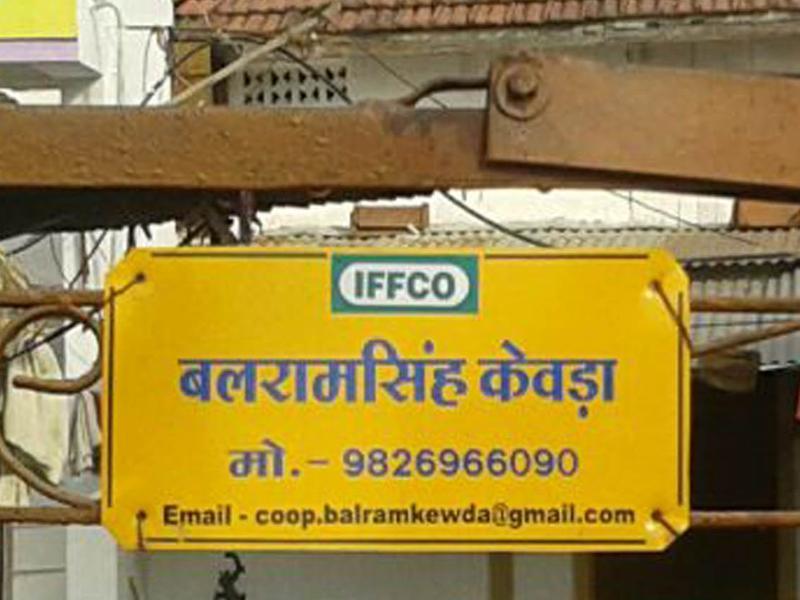
The village, which falls under the Harda district, around 115 kilometres from the state capital, has houses with nameplates bearing the mobile numbers and email ids of the residents, in addition to their names. Most of the population is net savvy, active on social sites and is comfortable with mobile banking. Not only this, youngsters discuss national and international news with villagers to connect them with the world.
Many of the villagers’ email ids have the word “coop”, short for cooperation, in it. Some of the well known villagers, or rather their email ids are, coop.balramkewda@gmail.com, coop.bhagwat@gmail.com, coop.bhagvatginare@gmail.com, coop.devendra@gmail.com and coop.gayaprasad@gmail.com.
What is even more interesting is that in conversation, people often refer to one another by suffixing a ‘.com’ to their names.
Narayan Rajput, 19, said, “We call each other by our email ids. Even those who do not have email ids are referred to by using the ‘.com’ suffix. For example, people usually call me Narayan.com.”
This change, which has been three years in the making, has been the initiative of an enthusiastic villager, Ashok Gurjar, when he formed a group, the Gramin Vikas Sahkari Sakh Samiti Maryadit, and started training villagers on how to use the internet at Re 1 per hour. Now, in a village of around 300 families, at least one person per family essentially has his or her email address.
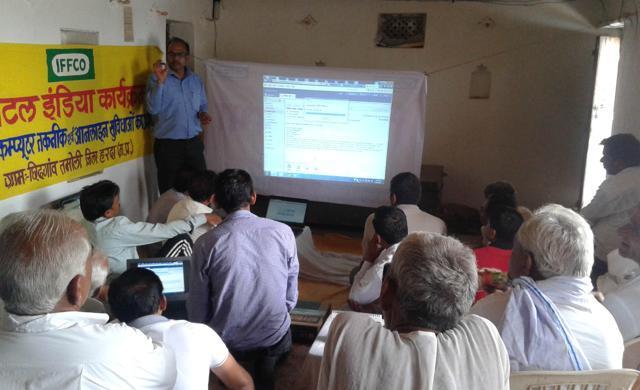
“A few years ago, villagers found it difficult to receive compensation for damaged crops via documentation. They also faced problems with passbooks and documents related to crop loans,” Gurjar told HT.
“I have decided to convert their documents into e-documents so that they can use it anytime. But to maintain secrecy of their documents, it was necessary for them to learn how to use the computer and the internet. Since most of the villagers are farmers, they did not know how to keep their records safe. These e-documents help them a lot,” he added.
Gurjar further explained how the village was converted into a “hi-tech” village.
“After a little effort, the villagers succeeded in getting a Railtel Communication Limited mobile tower installed. We used solar energy to supply power to this tower. We have constructed a room with 24x7 wi-fi facilities and installed a computer to impart training. In the room, people can also use internet on their smartphones,” he said.
“The Madhya Pradesh Jan Abhiyan Parishad has recognised our work and is going to organise a three-day camp to take our efforts to the next level. In the camp, villagers will be made aware of government policies and services,” he added.
The villagers have also recognised the benefits of the internet.
“Thanks to the use of the internet and this hi-tech knowledge, we get our crop compensation on time. The use of internet has proved beneficial for youngsters because they search for jobs and competitive exams easily on their phones and computers. Now, they also apply for jobs without travelling to Harda, the district headquarters,” Uttam Rajput, a villager told HT.