
 E-Paper



Andrew O’Hagan: “Liberal white men have had a difficult decade”
The English writer on capturing the anxiety of middle-aged heterosexual men in Caledonian Road, his Dickensian novel set in the digital age

 Prefer HTon Google


How did you conceive the idea of writing Caledonian Road? Also, tell us about its wide cast of characters.
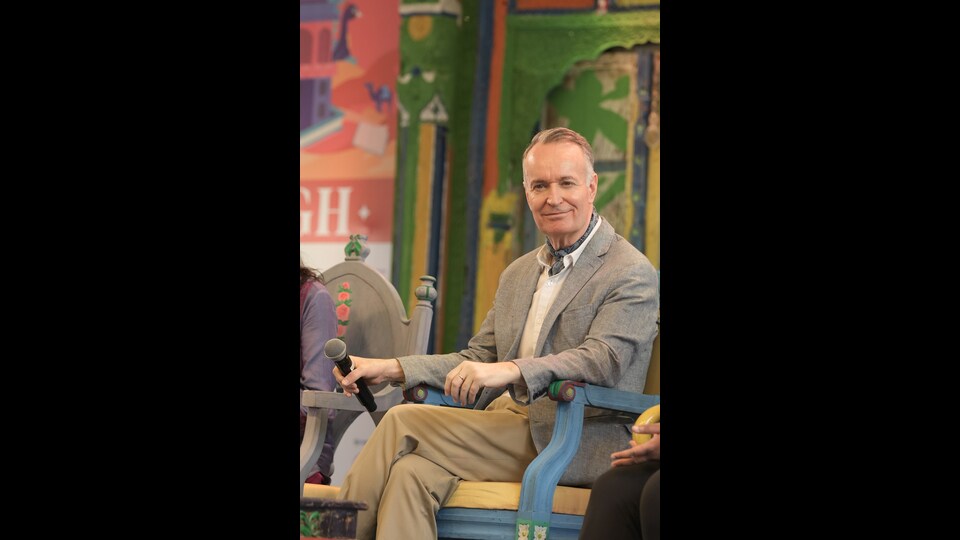
I had been thinking about this book for a long time. I lived in Kings Cross in the 1990s when I was in my twenties and I was always overwhelmed by London as a place: a multiplicity of human beings from all over the world, their varied economic statuses, life experiences, and this multifarious, multicultural road, Caledonian Road stretching up through North London, that really interested me. I realised if I could tell the story of the people who lived around that road, then I’d have a new kind of novel about London. And that it would have a relationship with the Dickensian novel, the Victorian novel. So, it’s a big social novel that I tried to put onto the page: the rich, the poor, the domestic, and the foreign men, women, and children from different backgrounds. That’s what I wanted in this book. It took me 10 years to research and write it.
At the beginning of the novel, there’s this sentence, “Oh, the progress of guilt and vanity in the average white liberal today.” Were you trying to capture the anxieties of a male artist in post-Brexit UK?
I think that liberal white men in Western society have had a very difficult decade. And I speak as one, by the way; I speak autobiographically. I am a middle-aged, middle-class, white, liberal man. And we’ve had a difficult 10 years because we’ve been challenged on everything that we used to think was religious. You know, we thought we were on the right side of history. We thought we were arguing for equality and decency. We thought we were on the side of the underdog. But, as it turns out, we have been part of the problem all along. Perhaps we have made a lot of noise about equality, but have we actually contributed much to it? Have we given up any of our privileges? Have we distributed our wealth? No, right?
The white liberal in Western society is not the enemy of this book, but he’s equally responsible for the complexity of the situation. We’re in the newspapers that think of themselves as being on the right side of history: the ones who get everything right and those who are anti-racist ,are pro-women, pro-abortion and anti-Trump. They don’t ever find themselves in the wrong. Well, this novel doesn’t take that for granted but it questions these very people. It certainly questions the people on the right wing, but it also thinks: why not question the people on the left side? Because society is in a mess and it’s not all just down to one faction? Intolerance and virtue signalling have been a huge problem on the left as well as on the right, so I was thinking of that too with this book.
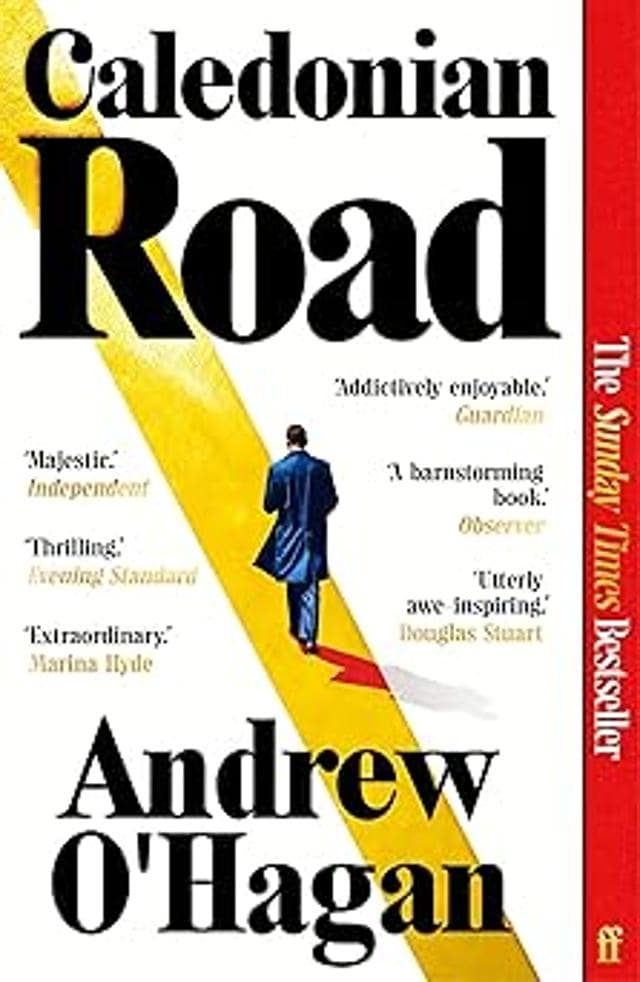
The principal character, Campbell, doesn’t take himself too seriously, but there’s a distinct way he looks at himself. In telling the story of Campbell, there is an attempt to show an artist’s own journey of creating myths about himself. How does he situate himself in the order of things?
As creative beings, we have the capacity to invent ourselves. That’s a human capacity. That’s been there all along. It’s the foundational truth of fiction, of literature, of movies, of songs, of storytelling of every kind. This is standard creative behaviour, and we don’t do that only when we’re writing books, we do it while we are living life.
If you were hysterical, you might say that means that we’re all liars. And, I don’t think that’s true that we’re all liars. I think we’re all creative, and I think we tell the story of ourselves that best suits us at different times in our lives. We’re creative with the truth. We’re economical with the truth. We are adventurous with the notions of what we might be rather than who we are. And this is healthy. This is what children do, too. It’s what creative people do. It’s what adults do throughout their lives. We must use our imaginations to fully live, I feel.
The book uses irony and satire to shine a light on British mannerisms. There is a pitting of nostalgia for a bygone world with a newer way of living. Campbell uses a mindfulness app, and also apps to calm himself down. Was this deliberate? How cautiously did you tread writing between these two worlds?
It was very deliberate. This was a comedy and a tragedy together from the beginning when I first conceived of this book. I knew it would hopefully be a funny book that also told truths, difficult truths, and maybe even tragic truths about the way we live now. But comedy was always part of the vehicle. It was always one of the wheels of a four-wheel tuk-tuk, making its way towards the future of this book. I wanted to have a sense that we weave together all the strands of our lives regarding what is true and what we wish to be true.
Campbell Flynn, my central character, is, if you like, suspended between the old and the new ways of living. He is detained by the notions of the past. He is upset to think of his childhood and his parents, and he’s trying to survive the past. As we all are. But at the same time, he [has] grasped social media, mindfulness apps … he even writes a self-help book about his condition, Why Men Weep in their Cars, hoping that it applies to other men, too. But he does that to also make him some money. You know, this is a comic situation in the sense that a traditional man should be fighting for his life, fighting for his freedom of mind, and that’s really the comedy at the centre of the book. One is made to think: Is this man slightly delusional and yet brilliant? And I think these two things can go together. Look at some of our politicians: they’re brilliant people, but they’re fully delusional, too. That intelligence has not prevented them from being fools and also from fooling themselves and trying to fool the public intelligence: that’s something we can take into account. Intelligence is no guarantee of living a decent life and slowly Campbell Flynn comes to know about this in the book.
In his review, Xan Brooks called this book a ‘state of the nation social novel’. Where do you see your novel in terms of the spectrum of London-centric books that you may have enjoyed reading?
I loved Bleak House, Dickens’s great book. I also loved Our Mutual Friend, another great book by Charles Dickens. I loved the American writer Tom Wolfe’s Bonfire of the Vanities. All these must have influenced me. Particularly, Wolfe because he worked as a reporter and as a fiction writer. He used a lot of research in his big novel about New York. In the 1980s, he told several difficult truths about life in New York during that period, and I think that must have influenced me to some extent but for me, I’ll be happy if Caledonian Road takes a modest place next to the books that have been written about London over the last few hundred years, which have tried to capture the moment. Because this isn’t a book about an unchanged city. This is a new London. Dickens would not recognise the London that I have tried to capture in this book of social realism. It wouldn’t be socially real to him: the social media’s impact, the Internet’s impact, the impact of cryptocurrency, and all the modes of communication… ways of being, ways of being self-conscious, mindful and all sorts of different ways of organising and understanding your life that have defined London in the 21st century. There hadn’t been a novel yet before Caledonian Road, so if it really captures all these energies of the new London in a modest way, I’d be very happy.
Campbell, with his self-help book, is also trying to suggest how difficult it is for artists to support themselves financially. What he wants to do doesn’t always benefit him commercially. Then, we have his literary agent who keeps reminding him of the value of his creative output, the material value which, in his view, is completely divorced from the way Campbell pursues his projects creatively. Are you commenting on the duality of being an artist in the contemporary world?
The relationship between creativity and commerce has been there since the beginning of art, but it’s very much a contemporary issue, the way it has been even in the Renaissance and throughout the history of publishing. Is it possible to keep the focus on creative excellence while writing a great book or must you make compromises to make it appealing to the mass market and make it commercially viable? I have to say I’ve never considered that question for real when I’m working on a book. If it happens, then it’s great; like it has been with Caledonian Road. It has been on several best seller lists for weeks. And, you know, I think it’s very healthy. That’s golden for me. That’s wonderful also because I did not compromise in the writing of this book to make it commercially successful. It just so happened that the story I had to tell and the way that I told it connected with people. There was a hunger out there for a big multidimensional, multicultural book about modern London as it exists right now and Caledonian Road slipped into that need, that hunger. But I had to do no second-guessing of the audience either. Maybe my instincts have become more directed towards a bigger audience as I get older, but I wasn’t consciously thinking about it. Maybe I simply know my readership now. I certainly believed that there was an audience out there that would respond to this book. But it didn’t affect the way I wrote the book: the book was always going to be this way.
Saurabh Sharma is a Delhi-based writer and freelance journalist. They can be found on Instagram/X: @writerly_life.


