
 E-Paper



Anuja Chauhan says it’s time for her books to not have only romantic tracks
Anuja Chauhan has been a darling for numerous Indian readers

 Prefer HTon Google


Anuja Chauhan has been a darling for numerous Indian readers. This is not just because of the relatable characters that she weaves from everyday life, but also because of their sheer cheekiness that she’s able to suffuse in her prose. This time around, the author enters uncharted waters with a whodunit murder mystery, Club You to Death. The transformation is a conscious one. “As I grow older, I feel driven to dig a little deeper into the darker, more secretive places inside the heads of colourful characters,” says the author. Excerpts from an interview with the author:
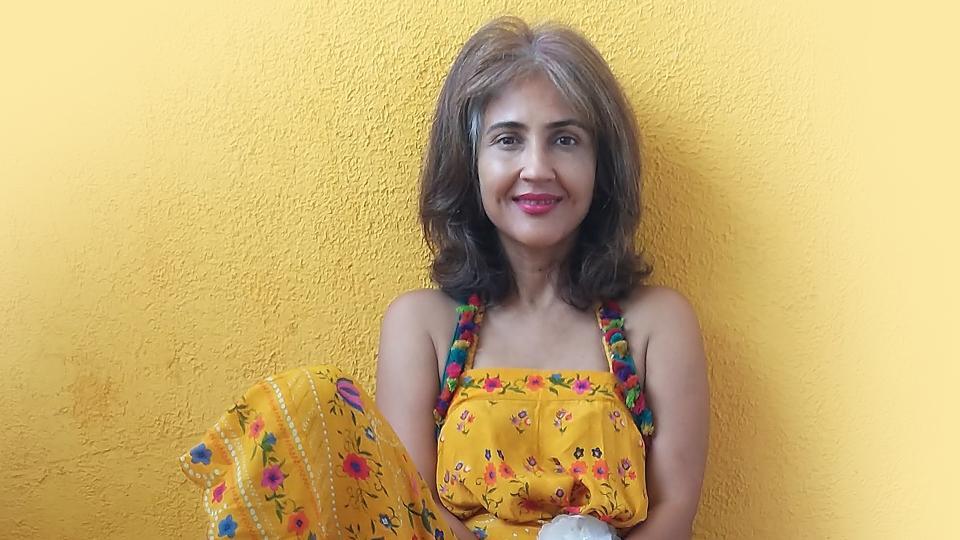
The book is a far cry from your previous works… yet you retain your signature cheekiness and charm. Have your previous novels, in any way, helped you in penning this whodunit?
Yes, of course, every new book contains the learnings gleaned from the ones that came before. I love writing romance and I’m pretty sure that all my books will always have a strong romantic track - but I feel it’s time to not have that as the only track. My books always contain a vast cast of colourful characters and as I grow older I feel driven to dig a little deeper into the darker, more secretive places inside the heads of this vast cast of colourful characters.
There is immense film-like quality to your work… the narrative style, the reveals etc. how influential have films been for the writer in you? Does the advertising past chip in here?
Yes! Advertising scripts are essentially tiny movie scripts, one details out visuals, dialogue and an entire background score while writing them. As I’ve written ads for seventeen whole years, that is the skill set I bought to my novel writing. But I’m also a compulsive reader, and so my writing pays homage to my favourite writers too - I love funny, insightful books that deal with important, weighty topics in a deceptively light-hearted way. Lightness of touch is very important to me, especially in dialogue. I wince every time anything is too ‘on the nose.’
Just a few pages in, your writing kind of mirrors the current society – blaming the girl for a guy’s shortcomings, the now infamous ‘Lutyens’ club. Was that a conscious move? Or how much of these influences come from personal experiences?
One can’t write in a vacuum. The goal is always authenticity. If a book is set in current times, it needs to showcase and address current issues Otherwise the dialogue wouldn’t sound natural, and the characters won’t feel grounded in their milieu. Also, a character’s take on various issues helps the reader quickly understand that character’s fears, flaws and motivations better.
How was the experience of writing a whodunit? For a first attempt, having completed writing it in the lockdown is an achievement.
Thank you. It took me all of five months to write, actually, which is the fastest I’ve written a book. But I think I’d thought about it for a while before I started, so it was all fairly pre-cooked in my brain already. Writing actually provided me a welcome escape from the insanity that gripped our world last March - it helped me to focus, to just ‘stay calm and write on’ and to not panic or get overwhelmed by what was happening all around me.
You’ve become quite sought after in Bollywood, it seems you enjoy the attention and the collaborative process. What do you make of the Ott vs theatre debate? With one novel set to be an Ott show and another set to be adapted into a film…
I like the OTT platform. I’ve binge watched a lot of shows and I enjoy the layers that an OTT format allows for. We see characters grow, or regress or slide slowly down a slope into a moral abyss - it’s pretty compelling if done well. But there are too many shows now. Far too many, and they are all far too similar - the quality is starting to suffer.
Yet, do you think a film adapted from a novel can turn detrimental to the novel itself as it will always be associated with the film? Does that play in your mind?
The lives of films are very short-lived nowadays. They live or die in a single Friday. Books have a far far longer shelf life. Once you buy a book it stays in your shelf - and in your heart - forever.


