
 E-Paper



Anuradha Roy: “The readership for literary fiction in English is small”
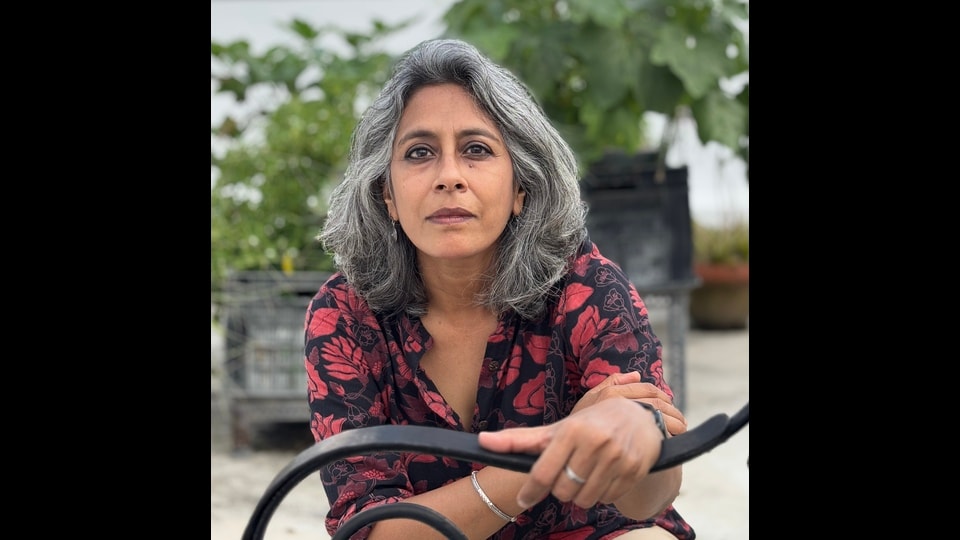
Author of Called by the Hills on her new book about life, work in the mountains, weaving essays with her artwork of trees, peaks, flowers, landscapes, her dogs

 Prefer HTon Google


This was originally supposed to be a book about flowers in the Himalayas, your home for the last 25 years. But Called by the Hills contains, well, mountains — it is many many portraits from your world in Ranikhet. You open with your first visit to the dilapidated cottage where you would eventually move in with your husband in 2000. Over the course of this small book, we’re introduced to several characters. There’s your housekeeper Ama, whom you call “the Ancient” with whom you engage in what can only be described as flower wars. There’s your neighbour Amit who shares with you books, cuttings of plants, advice and gin. There are your dogs — particularly Jerry, your “magic dog. Fiction turned into fact” who showed up in your life soon after you’d finished writing about a similar pet in The Earthspinner (2021). There’s the lemon tree that would not fruit, there are langurs... It’s a very thoughtful, meditative book and with a definite narrative arc. How did you plot it, how did you decide whom to include and how much, how did it all come together?
When I began with the book, I thought I would write only about the flowers. But… but. A line in Kiran Desai’s wonderful new book [The Loneliness of Sonia and Sunny (2025)] describes exactly how my plans altered: “This was India… You might try to write a slender story but it inevitably connected to a larger one. The sense could never be contained.”
Once I realised my scope was going to be larger, it developed organically – the people connected to plants in my garden entered the book first. Yesterday, I was reading an essay by Emma Freud, in which she traces the genealogy of a begonia cutting she is gifted -- from one cutting to its parent, spanning times and places, many lives and many secaturs – she realises the original plant had belonged to her great-grandfather Sigmund Freud. It is in a similar way that the people included in my book came to be in it.
The narrative arc emerged gradually for me – I understood it after the first draft was done, and I was talking to my agent Clare Alexander about it and she said perceptively, “It’s all about the dogs, isn’t it?” When I got to work on the second draft, I focused on that.
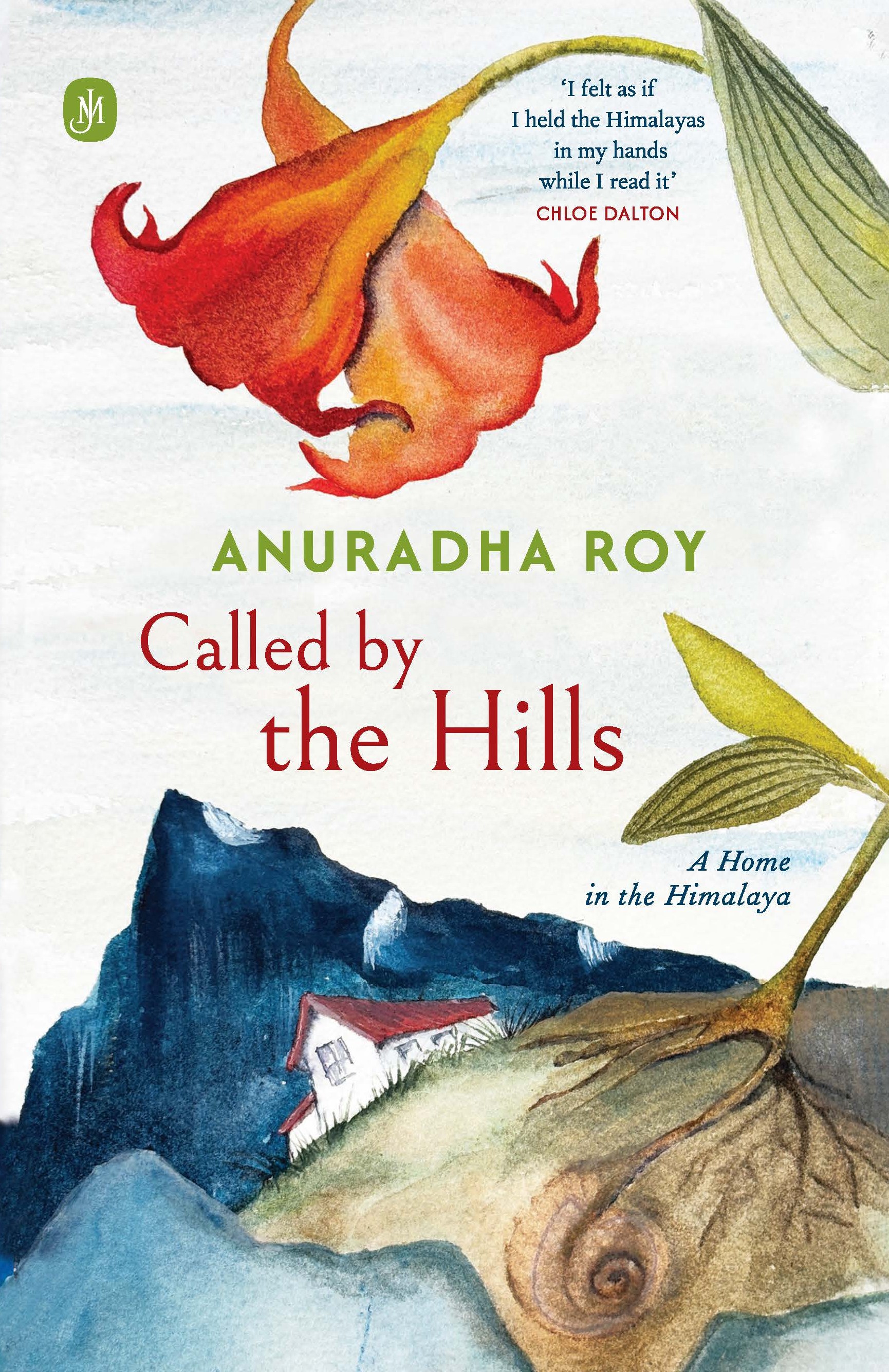
The book is filled with your artwork. There are colour pictures of trees, mountains, your dogs, the landscape and lots of flowers. And it comes with six postcards with your paintings in an envelope on the back and two floral bookmarks. You’ve written about the artist Clare Leighton’s Four Hedges — which contains illustrations from her garden — serving as a model for this book. But tell us more about your art and how it came to be. Were any of the paintings made specifically for the book? What did producing this very resplendent book entail?
For years I had shifted to painting with oxides on my ceramic pieces or I would paint doors, cupboards: I painted things. I stopped doing watercolours. This changed when I went on a writing residency where one of the other writers, Sophie Herxheimer, was working on a graphic novel. She is a trained artist, and wherever she went, she whipped out brushes and started on a picture. With her, I began painting again – mostly my surroundings. When I came back home, I continued. I started experimenting with pastels and gouache as well, and joined on a rapid portrait-painting group online. My mother has always painted and so do several of my cousins – we actually have a very critical and helpful family painting group where we exchange notes and pictures.
Only two of the paintings were made specifically for the book. All the rest were painted over a period of time, without any intention other than making a painting.
The making of the book was a close collaboration with everyone at Hachette, my Indian publisher. They were full of ideas and pulled out the stops with the production values. We had a lot of fun with the book, and I think it shows!
The early sections of the book are about, as you write, living in endless forest and carving out from it a small garden that is one with the forest. It all sounded quite ethereal, really — waking up in the middle of the night to moonlight in your face, the birdsongs of “unearthly loveliness” echoing across the forests… dogs joining in to the call of foxes, “A heartbreaking sound that was not a howl or a whine but a song of longing, the call of one wild being to another.” You began writing fiction after moving to Ranikhet — and I feel like each of your novels has been described as lyrical or evocative or just simply beautiful. Sleeping on Jupiter (2015) was longlisted for the Booker, All the Lives We Never Lived (2018) won the Sahitya Akademi and was shortlisted for several literary prizes. How much of your surroundings — in the sense of the rhythm of the Himalayas — slip into the writing?
Would my language have been largely different if I had never lived here? I don’t know. I think how a particular writer’s sentences and paragraphs fall have almost everything to do with their reading; and with the music in their head, their sense of the architecture in a piece of writing. Also, every writer has to change her prose according to the demands of the narrative. Whether it is the child in Sleeping on Jupiter or a middle-aged woman in the 1930s writing letters to a friend, as Gayatri does in All the Lives We Never Lived, I have to find the appropriate voice for each one, separately.
You write about taking copies of one of your novels to a hotel near your house. “I showed the manager his hotel’s name — it was in the novel, I told him, as were many other Ranikhet landmarks. Look, there’s even a hand-painted map of the town in the book — OK, not 100 per cent accurate, but enough. The tourists were sure to buy it. Would he sell it? To encourage him, I added that he sold locally made jams from his hotel, and my book had a whole jam factory in it,” you write. He took one copy, which didn’t sell — despite the paper band that read “Bestseller! Local Author! 25% Discount” — because he had locked it up safely in a drawer. Which novel was it? Is your work really still as little known in the town you live in? Surely, some journalists or readers must have shown up enquiring about you at some point!
The honest truth is the readership for literary fiction in English is small, especially here. My new book about this town, it is non-fiction, so there is much more interest, but so far luckily, people seem to respect privacy and don’t barge in.
What did your life look like before you moved to Ranikhet in 2000?
Rukun and I both used to work at the OUP before the year 2000. I was the acquisitions editor for literature and ecology, a job I loved, and I lived a fairly standard editorial life – work, friends, author meetings, book events, some travel, often to Ranikhet. No dogs because we were at work all day, and pots in a veranda in which I grew a few plants.
What is your writing process? How does writing fit into your life of hard physical work of living in the mountains, the leisure and beauty of it all, and the pottery you make and the publishing house, Permanent Black, that you run with your husband Rukun Advani?
It is a truth universally acknowledged that if you live in a hill station you must be on perpetual holiday! But when two people are running a publishing house, however beautiful the surroundings, there isn’t much leisure. I enjoy all the work I do – the design work for Permanent Black, looking after its website etc; so, it doesn’t feel like suffering but it can get overwhelming at times. The writing happens in the middle of a lot of daily chaos and activity and if I am at work on a book, I am obsessive about it. I’ve always written – from before I knew how to actually write, as a toddler, I had notebooks full of nonsense. I don’t think I’ve ever been without it, and couldn’t be.
You mention several books about the Himalayas and nature in general. What would you recommend to readers of this book — about mountains, wild animals, birds, flowers or just writers living in nature — read next?
You could start with Stephen Alter’s Becoming a Mountain, since it is an excellent book by a contemporary writer. There are many, many others: Jamaica Kincaid’s Among Flowers, about her travels in Nepal; Frank Smythe’s The Valley of Flowers; Chandi Prasad Bhatt’s Gentle Resistance. There are two beautiful volumes on trees and flowers I’d recommend to anyone: Sita Reddy edited a volume of Marg called Ars Botanica, The Weight of a Petal; also Divya Mudappa and TR Shankar Raman’s exquisitely illustrated Pillars of Life: Magnificent Trees of the Western Ghats.
I am currently reading Neha Sinha’s new book Wild Capital, about birds, trees, plant life, hidden in plain sight in Delhi and it is a real lesson on how being observant and open to nature can lead to astonishing discoveries in the most unpromising places.
Saudamini Jain is an independent journalist. She lives in New Delhi.


