
 E-Paper



Ayşegül Savaş: “Daily life is deeply important”
At the Ubud Writers and Readers Festival, the author of The Anthropologist spoke about her pared back prose and about writing in English instead of her native Turkish

 Prefer HTon Google


Both The Anthropologists and Long Distance are deeply preoccupied with observation — with the act of looking at others and, in a way, at oneself. What draws you to the idea of perception as both connection and distance?
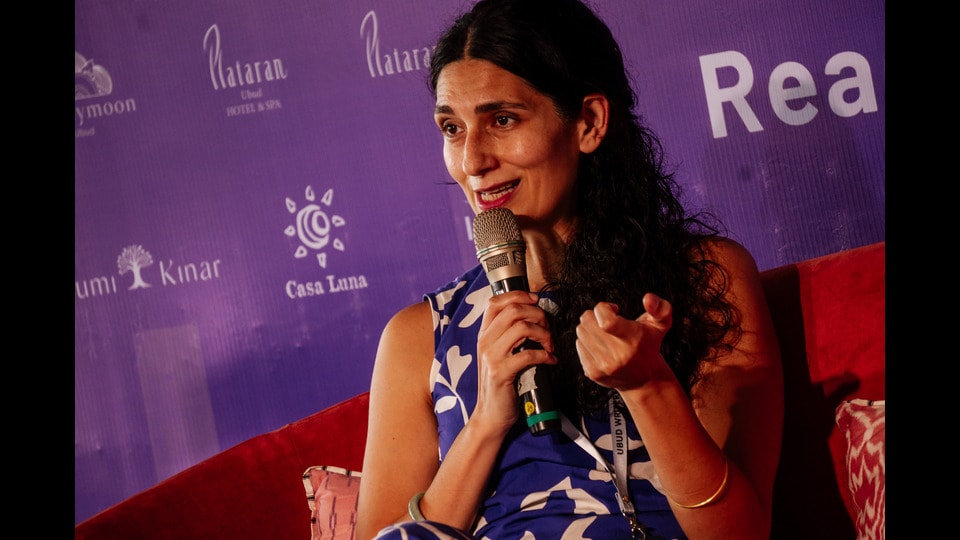
I think for many writers, one of the reasons they become writers in the first place is that they were observers as children. I also have this theory that many of us were shy — we spent a lot of our childhood on the periphery, watching others closely, deeply curious about what people were doing, but not quite being able to jump in and be part of the action. And of course, we spent a lot of that time reading. That is another way to become a writer — by being immersed in fictional landscapes, to a point where you feel you’re the hero yourself.
I think my childhood upbringing carries over to the type of characters that I write, because that’s how I have been in the world, by always observing others and having a different world going on inside my own head.
The Anthropologists follows a narrator who returns home and begins studying her surroundings as if she were conducting fieldwork. It’s such an original lens on belonging — how did that idea begin for you?
I wanted to write a book about daily life, but I felt that you’re not simply allowed to write about daily life on its own — it can feel too boring. I couldn’t just describe what people eat for breakfast, or what they do when they spend time with friends. I needed some kind of structure that would signal to the reader: this is a book about daily life.
Daily life is deeply important, and it’s something we often overlook in favour of bigger or more dramatic stories. The anthropological lens became useful because anthropology is, at its core, a way of looking closely at how people live. It’s a study which breaks down habits, routines, and behaviours through a particular framework.
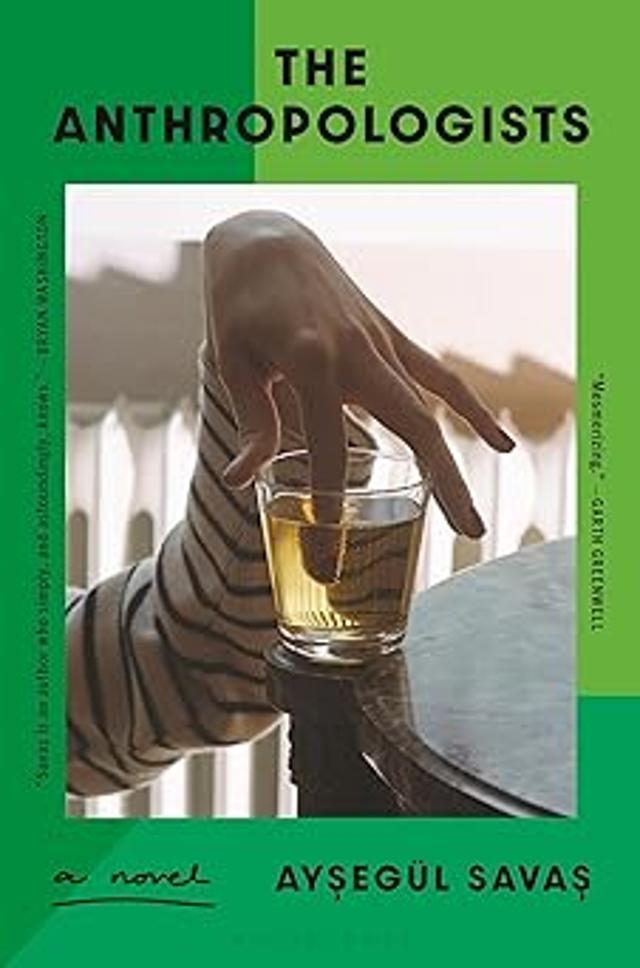
The Anthropologists feels like it’s asking if we can ever truly see others without turning them into objects of study. Were you consciously engaging with the ethics of looking — especially as someone who’s lived across different cultures?
More than the ethics of looking, I was engaged with the ethics of belonging, and with what gives us a right to ownership of a place. If we’re not native to a place, can we ever really say that we belong there? And if we don’t quite belong, then what is it that makes our lives valuable, especially when such a large portion of the world now lives as foreigners.
Many of us no longer live in the cities where we were born or are surrounded by our families. So, we have to find new ways of engaging fully with the places we inhabit, without pretending to have deep knowledge of them — while still respecting the fact that our lives are valuable, and that we have a right to be where we are.
Coming to Long Distance, it gathers stories about relationships which are stretched across time, geography and silence. What did the short story form allow you to do that the novel didn’t?
My novels often are about a single space, and the exploration of that space. And the process of writing a novel for me is really taking pleasure in discovering that whole space, and walking its streets and going into its rooms. Whereas a short story is very much about one incident that changes something about the way we view ourselves, or that suddenly changes our certainties of the world and of our own identity.
So, it’s very quick. I think it can be a lot more striking and a lot more powerful, because it is about that moment of change, when the world no longer looks the same to us.
The stories often centre around quiet moments — missed connections, unspoken thoughts, friendships that dissolve softly. How do you decide what’s left unsaid in the story?
I don’t actually decide it. It’s more that that’s my authentic experience of how we are in the world, that we’re not speaking our honest desires, we’re not really giving expression to what we really mean. And often, we don’t quite know what we want or what we mean either.
So, I want to really focus on that feeling of keeping information to oneself, or trying to process information without really knowing, without having any certainties. And that’s why there are so many silences in my stories.
The title itself, Long Distance, feels like both a spatial and emotional condition. Did you see the stories as connected by that tension — between intimacy and remoteness?
Yes, it always is about that. Often, the stories begin with an intimacy, and that intimacy will reveal itself to be an emotional absence. Or they begin with an emotional absence — something we want to push away.
By the end of the story, we discover that what we want to push away is actually at the core of our longings in the world.
Your prose is very pared back — spare but resonant. How conscious are you of rhythm and quietness when you write?
I’m very conscious and not conscious at all, if that makes sense. The pared back prose is something I think that happens over many, many revisions. When I’m editing, I try to take out everything that’s not essential. And I try to describe the feeling in the cleanest and the simplest terms that are available to me. That is very essential to me as an author because oftentimes you don’t really know what you’re writing until you’ve started writing. As you go, you discover your own thoughts. That discovery process for me is making things sparser and sparser. The end goal is saying: Yes, this is something that feels true. There isn’t any decoration around it that’s making you look away from the truth.
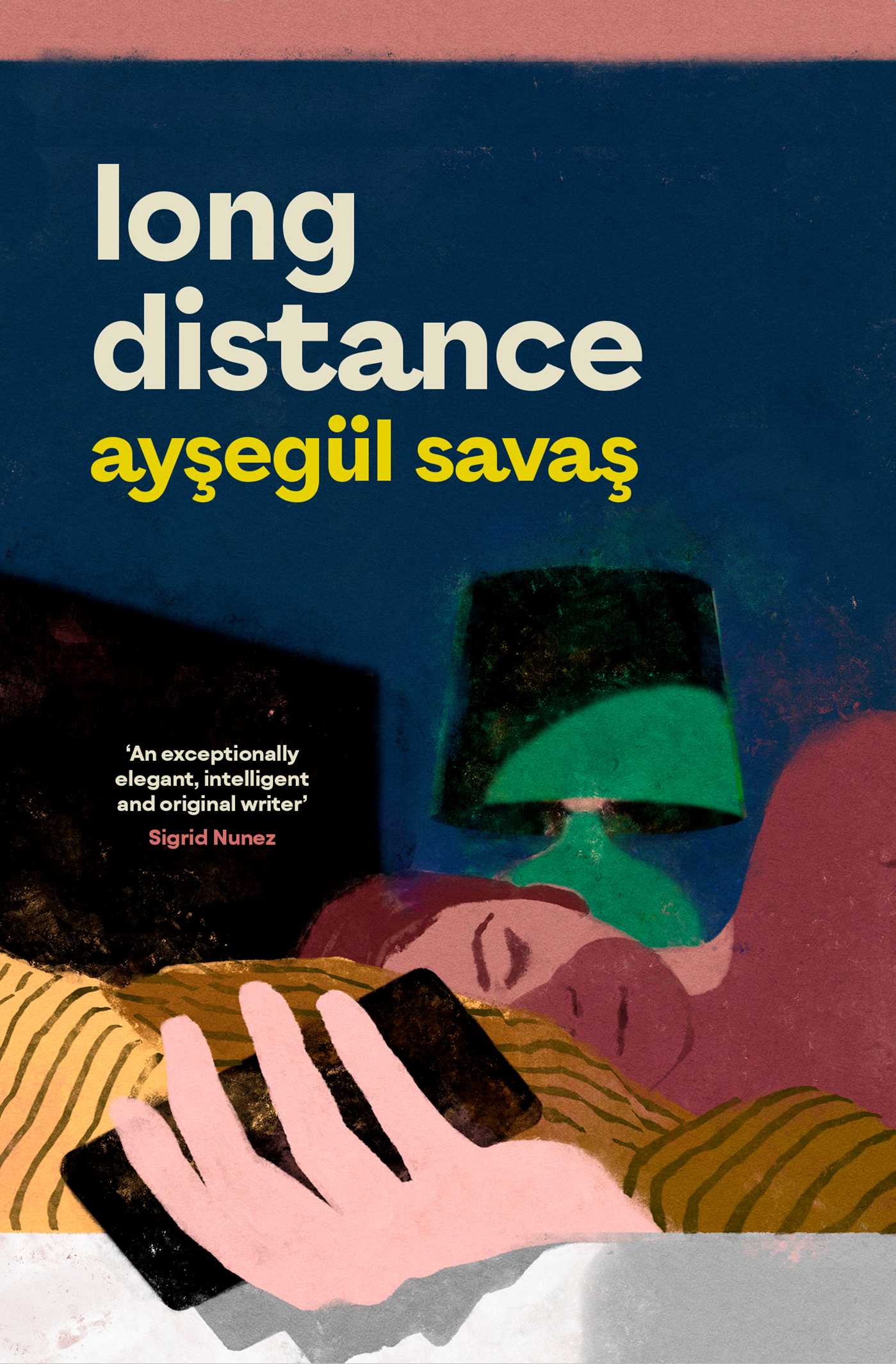
You write in English but often from a sensibility that feels rooted in translation — as if language itself is a foreign country. How do your multilingual experiences shape your fiction?
This is something I think about quite often. That I’m writing in a non-native language, and why I don’t write in Turkish. It feels almost like a betrayal that I wouldn’t write in my native language. But at the same time, I started speaking English at an early age. Many of the childhood books I read were in English. So, it’s almost a native language.
Writing in a non-native language allows you a certain distance to write about things that are quite intimate without feeling like you are betraying your family. And it allows you... Allows me, at least, a certain level of honesty.
I also try to be careful to not write Turkish characters that sound like they’re in translation. Or Turkish characters that are meant to teach something to an English-speaking audience. So, if I’m writing a Turkish character, I don’t try to explain things that an English speaker might not know about them. Because that makes the characters fake. And perhaps that feeling of sounding like in translation is because I try to let the characters be who they are without over-explaining it to the reader.
Are there writers or artists who shaped your sense of stillness and precision on the page?
Of course, there are many. Particularly in terms of stillness, I would say the Japanese author Yūko Tsushima and her book The Territory of Light are very important to me. When I first started writing, the work of the German writer WG Sebald was very influential for me. He has a way of circling around topics without explicitly naming them, without looking them straight in the eye. That creates both attention and this unbearable stillness that I find very beautiful and emotional. I’m always inspired by authors who are able to say things as clearly as possible. That to me serves as a form of stillness. In that sense, Natalia Ginzburg (The Little Virtues) is so direct in her language, that everything else falls apart.
Every book has a stack of books that inspire it and they are particular to that book. And then there are the writers you’ve read in your early adulthood that really formed who you are. For me, that’s Virginia Woolf.
You’ve said elsewhere that you like to “leave space” for the reader — to not resolve everything. Is that a kind of trust in the reader’s imagination?
Reading for me isn’t an act of patronizing. It’s an act of sharing. I find it very ungracious to teach a lesson — to say, “this is how it is” and “this is how this should be viewed”. By creating spaces in a work, you’re allowing interpretation. My experience of the world is that we don’t end our lives with five lessons. We end our lives in the middle of things, leaving emotions unresolved.
So, because life itself is not set in its meanings I think books can’t be set in their meanings either. And every reader, based on where they are in their life, will have a different experience of the book. I trust that they will be able to understand what I am trying to say, and then fill in the gaps and make the book their own.
How has your relationship with writing changed from your early stories to now? Are you more deliberate, or more instinctive?
When I first started writing I had extreme impatience to fill my works with everything I found interesting. And as I continued writing I relaxed a little bit and said, I have time to write other books. I don’t have to put everything into this one.
I would say that I’m more focused in my writing. And my books and stories now deal with one particular topic rather than trying to highlight everything.
Does writing for you feel like locating yourself in the larger world?
Of course. Writing is this incredible way to live where you’re allowing yourself many different lives. You allow yourself to become things that you’ve aspired to and that perhaps you didn’t succeed in being for many different reasons. While writing you can inhabit the world in different settings. I have a sense that every book I write is a home that I build. And when the book is done you have to dismantle it, or as you say, let other people move in. It’s both a very pleasurable and very melancholy act of being in the world.
Rutvik Bhandari is an independent writer. He lives in Pune. You can find him talking about books on Instagram and YouTube (@themindlessmess).


