
 E-Paper



Book Box : 21 years, 20 books, and one question: How do we endure?
The Juhu book club’s 2025 reading list, featuring Empire of AI, Black Butterflies, and Kaikeyi, becomes a diagnosis of our times.

 Prefer HTon Google


The Juhu Book Club in Azerbaijan
Dear Reader,
The Juhu Book Club turns twenty-one this year.
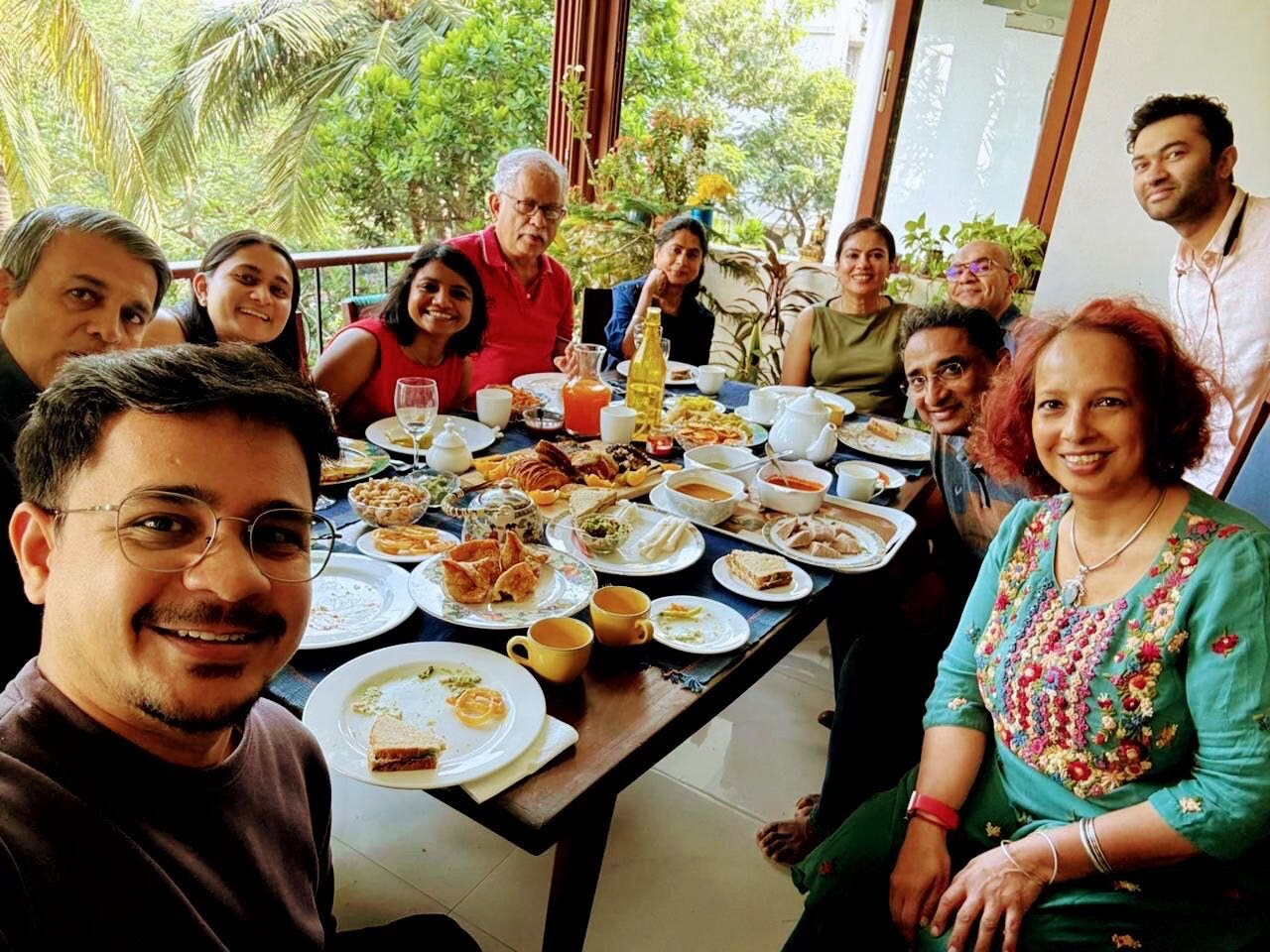
Much like the protagonist of any good story, the book club shape- shifts. Readers come and go, each leaving their mark in favorite books shared. Friday evening book discussions give way to Sunday mornings. Children enter, seeking their own bookish corners, as Aslan the bouncy white Labrador bounds around us in the garden.
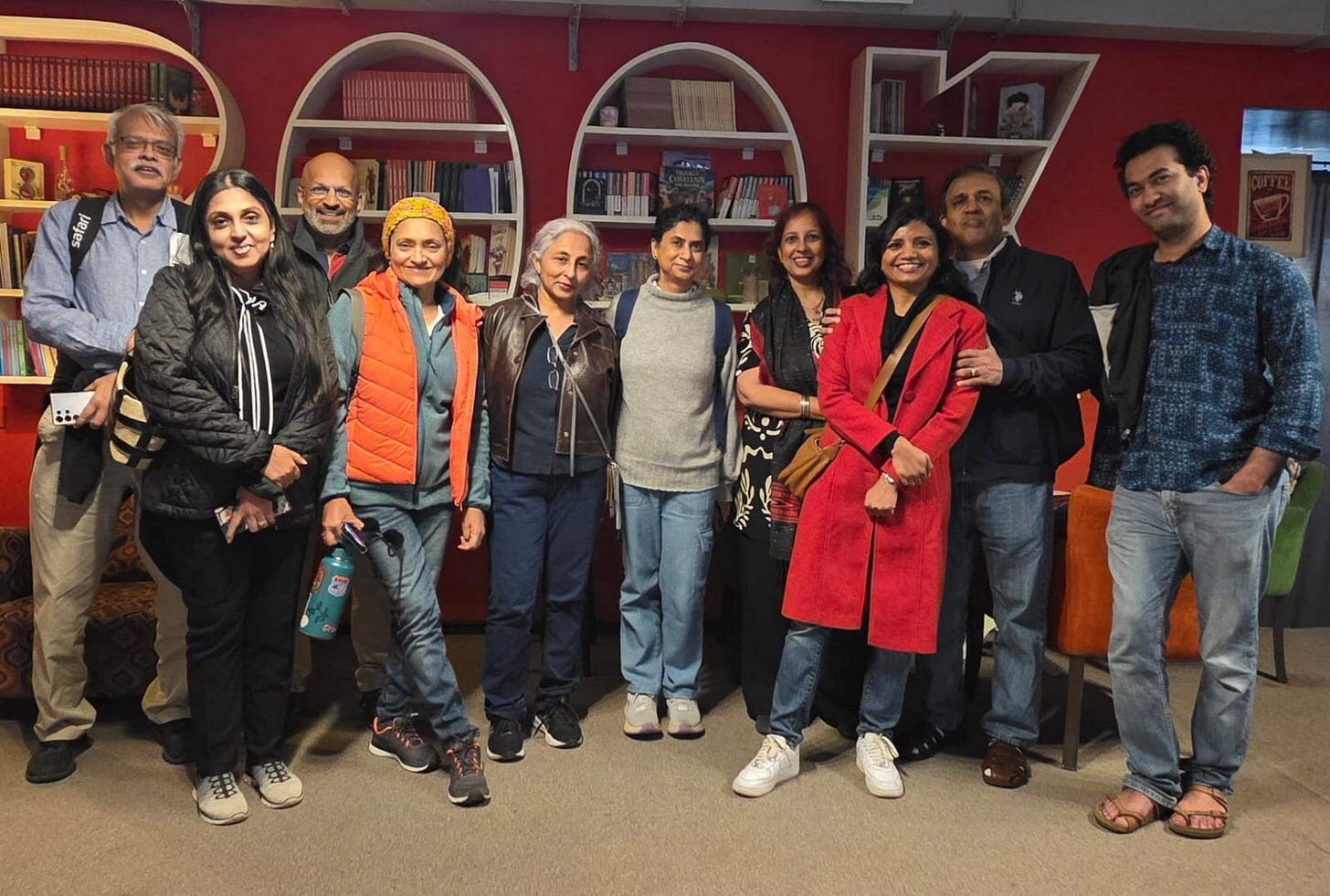
Sunday Mornings at the Juhu Book Club
We travel - to Kochi, Samarkand, Bukhara, and in 2025, Azerbaijan. And our books- they arrange themselves around these journeys, reflecting the light of these distant places back to us.
Our reading list tells us what we fear.
It articulates our central question. In this age of monstrous systems — these great engines of technology and state, how does the solitary soul endure?
Three currents run through our book list.
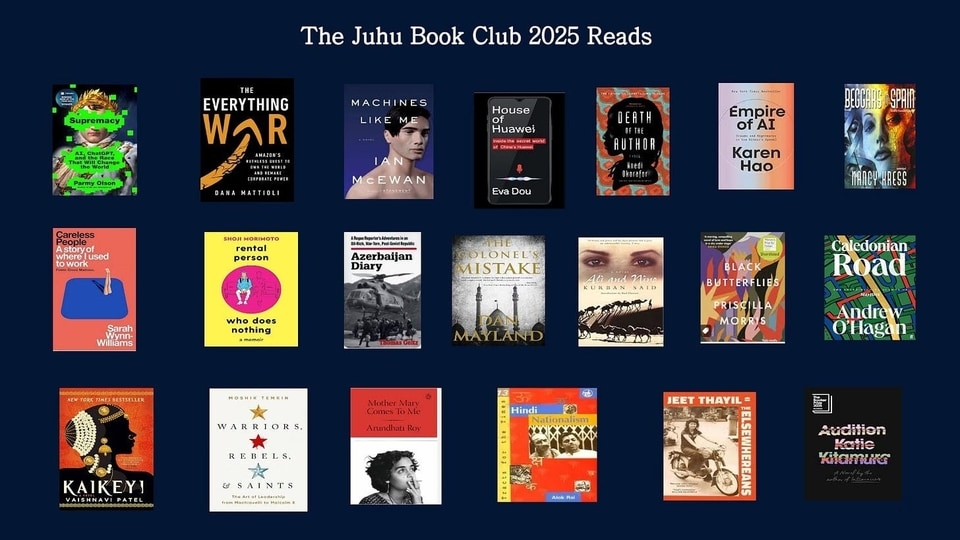
First, the machines. We read their chronicles of corporate omniscience in The Everything War, House of Huawei, Empire of AI and Careless People. All-seeing and all-hearing, these almighty algorithms know our every wish, they hear our every utterance. Along with these, come the novels, like Ian McEwan’s Machines Like Me, exploring relationships with robots and Nancy Kress’s Beggars in Spain investigating genetic engineering, both books performing a delicate autopsy of the human condition under the weight of the digital. Poised against this is the quiet anomaly of Rental Person Who Does Nothing, a study in human presence without productivity, a state of simply being.
Second, the past. We look at the way history breaks into the present. Ali and Nino is the precise documentation of an Azerbaijan border, the East versus the West. Black Butterflies records the agonizing minutes of a siege in Sarajevo. Caledonian Road looks at the state of the city of London, as our protagonist finds himself caught in the grip of old versus the new, with the money moving from immigration scandals to the dark web. Even the thrillers we choose like The Colonel’s Mistake are about fractures of identity, the past breaking into the present.
And third, the storytellers themselves. In a year haunted by digital djinns, we are drawn again and again to the fragile human who makes the story. We attend the poet in The Elsewhereans, for whom language is the only viable citizenship. We shadow the actor in Audition, in her various versions of the truth. We witness, in Death of the Author, the ultimate transference: the narrative impulse passing from a human consciousness to a lattice of code. Alongside these, we read retellings like Kaikeyi, which resurrects a demonised queen from the Indian epics and gives her a voice of fire and reason. In Mother Mary Comes to Me, we witness a mother-daughter story, as childhood scars sublimate into skillful storytelling.
And our reading map? It tracks our anxieties: the subcontinent where Hindu nationalism threatens pluralism, Azerbaijan and Sarajevo where civilizations collide, China where the state has fused with technology, Tokyo where productivity has been weaponized. We read where power concentrates and fractures.
But our map has its blank spaces too - very few voices from Africa, South America, Australia. A gap we resolve to fill next year.
We believe in a kind of dialectic. We mix genres freely, believing the friction between fact and fiction produces a finer truth. And yet. No poetry. No essays. No plays. We choose the sustained narrative, the long form, as if we need the weight of a whole world to hold us down. Like building a bunker out of books.
The book list is complete. The year is over. The club continues, a stream of consciousness shared among shifting selves, with the need to gather in a room (or a garden) with other people and say, Did you also feel this?
It is a ritual of collective enquiry, part of the endless, beautiful, troubling effort to understand what it means to be alive now, together, in this room, as the Sunday morning light falls upon the page, with the world, in all its complexity, waiting just beyond the window.
The solitary soul endures like this, reading together.
Sonya Dutta Choudhury is a Mumbai-based journalist and the founder of Sonya’s Book Box, a bespoke book service. Each week, she brings you specially curated books to give you an immersive understanding of people and places. If you have any reading recommendations or suggestions, write to her at sonyasbookbox@gmail.com. The views expressed are personal.
The Juhu Book Club: 2025 Reading List
I. The Engines of Power & Technology
- The Everything War by Dana Mattioli
- House of Huawei by Eva Dou
- Supremacy by Parmy Olsen
- Empire of AI by Karen Hao
- Careless People by Sarah Wynn Williams
- Machines Like Me by Ian McEwan
- Beggars in Spain by Nancy Kress
- Rental Person Who Does Nothing by Shoji Morimoto
II. The Intrusive Past
- Ali and Nino by Kurban Said
- Azerbaijan: A Rogue Reporters Diary by Thomas Goltz
- Black Butterflies by Priscilla Morris
- The Colonel’s Mistake by Dan Mayland
- Hindi Nationalism by Alok Rai
- Caledonian Road by Andrew O’Hagan
- Warriors, Rebels and Saints by Moshik Temkin
III. The Fragile Storyteller
- The Elsewhereans by Jeet Thayil
- Audition by Katie Kitamura
- Death of the Author by Nnedi Okorafor
- Kaikeyi by Vaishnavi Patel
- Mother Mary Comes to Me by Arundhati Roy


