
 E-Paper



Book Box | Andrew O’Hagan on the Dickensian dark web of modern London
Scottish journalist and author Andrew O’Hagan talks about why the social novel still matters- and why good books are as essential as protein.

 Prefer HTon Google


Dear Reader,
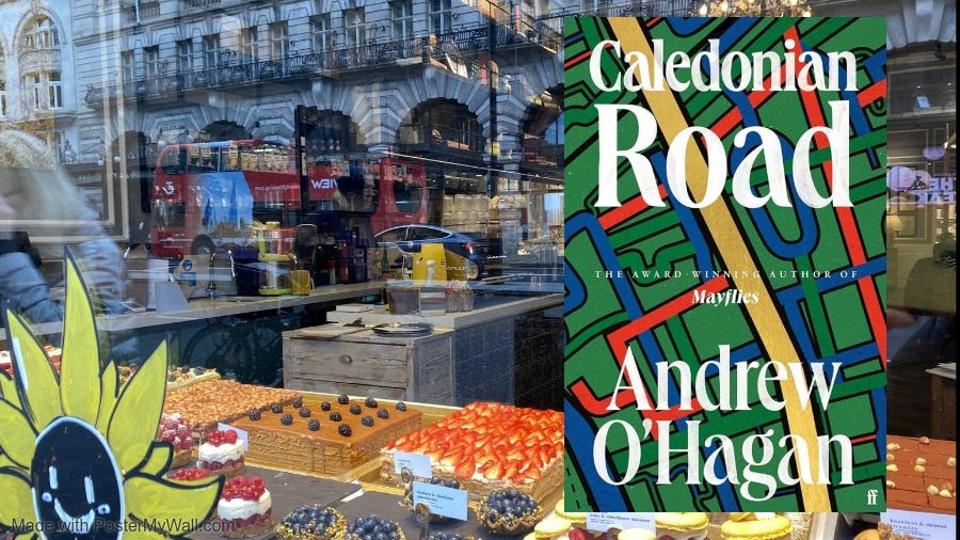
For months I resisted reading Caledonian Road. Never mind the rave reviews, the prizes it was picking up, and that it was plastered over the window displays of all of London’s Waterstones bookstores as Book of the Month. Because did I really want to spend 600 pages reading about the angst of a middle-aged intellectual white man?
Despite this, something beckoned— here was a social novel in the tradition of Dickens that looked at the murky money connections between Russian oligarchs and the British aristocracy. Set in London, it dug deep into politics, immigration, street crime and the dark web. With the very human story of Campbell, an art critic, a self-made intellectual who rises from the ranks and then inevitably starts to fall. And so I began, and in doing so, was drawn in deeply.
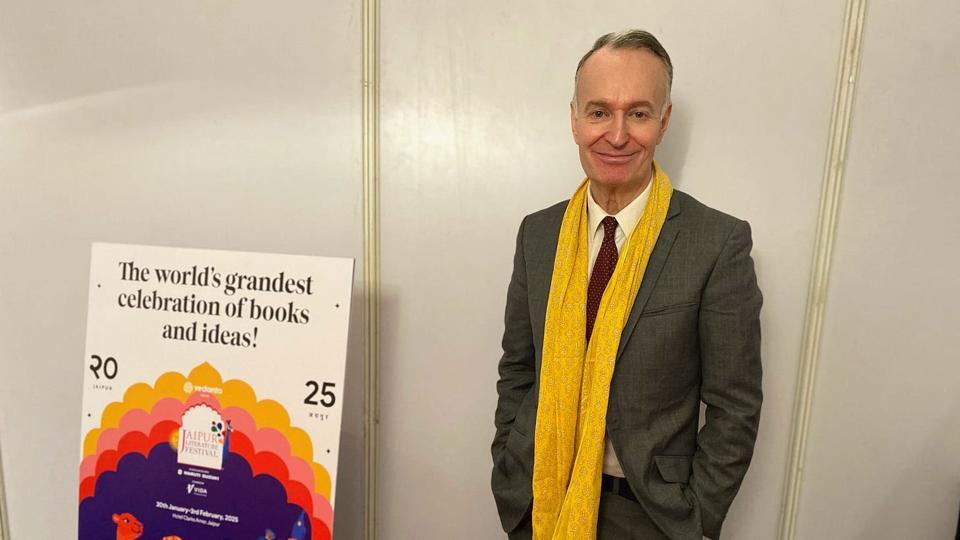
I met author Andrew O’Hagan soon after, at this year’s Jaipur Literary Festival. A slender Scotsman with a melancholy resting face and a wry sense of humour, Andrew spoke to me about why the social novel matters. We met more recently, this time on Zoom.
On a recent Friday afternoon Andrew is hunkered down in his Scottish seaside writing den, surrounded by the detective-like charts that fuel his Dickensian cast of 60. Here are edited excerpts of our conversations.
The youngest of four boys, you grew up a feminist?
I was the only feminist in my family, including my mother. My father was a tough man who lived according to old-fashioned, very macho rules—you just earned the money and drank a lot, and the boys were supposed to be tough and the girls were supposed to be sort of servants. My mother was a cleaner. She cleaned schools, she cleaned chip shops, and then she would come in and do all this work at home for free. And all these men just expected to have their mother running around, producing bread and soup and, I mean, it was amazing, and it was amazingly objected to by me. But my mother would say, I enjoy doing this, and this is my life. Over the years she seemed to enjoy it less, and became much more feminist afterwards. But, yeah, I wanted to get that energy into the book, because that was what I grew up with. Not just in our house, but in all the houses in our housing estate in our town, women were slightly subjugated by men, and the stories about how they achieved a revolution in their own lives are still arriving in novels and plays and poems today.
Your father was a strict man?
He was a very strict man. He was an addict, an alcoholic, a violent person—a social problem that was almost commonplace in the world I grew up in. Often, the people suffering in those circumstances are not only the addicts, but their partners and their children, and this is part of the social fabric that I’ve always tried to write about—as generations grow up in difficult circumstances and then try to use their experience and their imagination to look at the exploitation and disadvantages of other people.
That is a Dickensian impulse, almost. Dickens grew up poor, working in a blacking factory, abandoned by a father who’d been in prison for debt. And what did he do when he grew up? He wrote about children living in families who were in debt. It doesn’t happen to every writer, but it can happen, and it happened in my case.
You’ve spoken earlier of how reading as a child helped you make sense of the world?
My life was saved by reading. I don’t know what would have happened otherwise. I was feeling around in the dark for a long time as a kid, and then suddenly my eyes began to open, and I was blinded by the light, and I’ve been blinded by the light ever since. The opportunity to read those wonderful stories—that’s the great thing about literature. It’s not just that they turn a light on so that you can see how brilliant other people are. They turn a light on in you and allow you to fully live. They replenish the imagination every day. Good books are as essential as protein in any well-lived life. And I would shout that from the top of any building. A person who doesn’t read is at a distinct disadvantage in their life. That may sound like a harsh thing to say, because some people may be so distracted or preoccupied, or they can’t get to books, and I feel sorry for those people the same way I would feel sorry for any malnourished person. And I do put it in those terms. It’s not a moral decision to read a book. It’s a practical decision, very often. Can you get to a library? Can you buy a book? Do you have a friend who you can talk to about what you’ve read?
Where did you get your books from?
It was quite a lonely journey being a solo reader in a house without books. But I had friends in the library. That is to say, the librarians—all women, all brilliant—doing what was called interlibrary loans. They would order books for you from other libraries that they didn’t have. And they changed my life, these women. They spotted kids from houses where there were no books, where there were social problems or maybe alcohol abuse, and they said, “We’re going to create opportunity for you and distance and freedom.”
I read Robert Louis Stevenson and Charles Dickens and all the children’s books like The Little Prince and The Secret Garden—all those classic children’s books which were really about how to live and how to use your imagination.
And then you moved to London, joined the London Review of Books at 21, worked as a reporter and have written ten novels. Tell us about your 10th novel that took you ten years to write—how did Caledonian Road happen?
As a reporter, I’d been working in crime, cryptocurrency, in fake identities and online personalities. Those stories gave me a wealth of curiosity about the modern world. And then two things came together in my head—the Victorian model of the social novel and this very non-Victorian subject matter. I realized that I could have a Dickensian novel about very non-Dickensian things, but where the same human problems would emerge—the gulf between rich and poor, between men and women, between truth and lies, between exploitation and decency. All these oppositions that existed 200 years ago still exist, but they express themselves through new technologies and new forms.
This happened ten years ago and I thought, bloody hell, if I’m ever going to do the big social novel, I need to do it now. That meant looking at some of the great schisms and separations that exist in modern life and getting them into one book. So the one-word answer to your question is: ambition. I was in my forties, I suddenly realized that I had enough ambition and had enough energy. I knew it would take maybe 10 years, because 60 characters based on real social phenomena in one book—you don’t pluck them from the air.
Writing this novel for you meant years more of research into these disparate worlds of haves and have-nots—was it hard to move from one to the other?
I wanted my novel to have the comedy and the sadness of modern London—all the corruption and all the colorfulness of a modern city in the age of the internet. So the research was crazy—craziest research of my life. But if you’re working in the Charles Dickens tradition, you’re trying to reinvent reality from the inside, and that means you have to go inside and get to know the thing that you’re trying to depict.
Sometimes, one part of my day was going to Windsor Castle to have lunch with the Queen and the aristocracy and Russian oligarchs. And then another part would be hanging out with young street guys and going to court when they’ve been accused of knife crime. And the world of DJs and fashion and film.
I did find it easy to move from one world to another. I think I was born an adaptive—I’m one of those shapeshifters. I’ve been like that in my own life, and I’ve been like that as a writer. The two things are very close instincts for me.
And you researched the world of sweatshops and of immigrants dying—was that hard?
It was almost overwhelming doing some of that research. When you write a novel, you’re dealing in invented characters—you can control the story. But these people are real. The forces that are operating on them aren’t controlled by me. And I would get overwhelmed by a sense that I was about to leave them there, walking away with a very thick notepad. And of course, I’d done that with their understanding and with their permission, but nonetheless, I was leaving them behind. They were people whose lives I could neither control nor in any straightforward way improve. And that’s a kind of agony.
You also spent months on the dark web—was that scary?
Horrendous. The dark web is a sort of bazaar of the dangerous, the despicable, the narcotic, the violent. The things that can’t appear in public will appear on the dark net. It’s a dehumanized place, but I had to get to know it as a novelist for this book.
So yes, I was conscious of it as being dangerous, conscious of going in too far, but because it was going to lead to a place where (my protagonist) Campbell would lose himself in the dark web, I had to lose myself slightly in the dark net to be able to tell this story.
Caledonian Road has an amazing audiobook version as well.
Michael Abubakar (the narrator) is brilliant. He’s at the Globe at the moment, in a Chekhov play, and he’s got a big career ahead of him. He is only in his twenties, and he takes this 700-page novel—with dukes, duchesses, Russian oligarchs and their children, Scottish people and Polish people—and he comes up with a voice for all of them!
So what next?
I have a non-fiction book coming out this October on friendship. I have a novel set in Glasgow on the cards. For another future novel, I’m working closely with AI scientists. If our children are speaking privately to machines all day—and yes, they are—what will the effect be on society, on human community? These are huge questions. So novelists must begin to understand things better, to imagine scenarios, tell stories in which these problems are addressed.
…
I come away from these conversations convinced novels still matter. From Russian oligarchs to AI ethics, a social novel like Caledonian Road, with its conflicts and comedies and cast of city characters, has the power to change the consciousness of our times. For that alone it is worth reading. What other social novels in this tradition that you would recommend?
(Sonya Dutta Choudhury is a Mumbai-based journalist and the founder of Sonya’s Book Box, a bespoke book service. Each week, she brings you specially curated books to give you an immersive understanding of people and places. If you have any reading recommendations or reading dilemmas, write to her at sonyasbookbox@gmail.com. The views expressed are personal)


