
 E-Paper



Book Box: Priscilla Morris, British-Bosnian novelist writes war with a woman’s face
The Women’s Prize–shortlisted author reflects on the writing of Black Butterflies, a novel of family memory and resilience

 Prefer HTon Google


A book that kept me company at some of my toughest times this year, Black Butterflies is a literary gem, a war novel seen from the eyes of a protagonist who is a painter of landscapes. Shortlisted for the 2022 Women’s Prize, this debut novel from British-Bosnian writer Priscilla Morris came recommended by a fellow book clubber and has been one of my most striking reads of this year. All this made our book club discussion with author Priscilla Morris extra special.
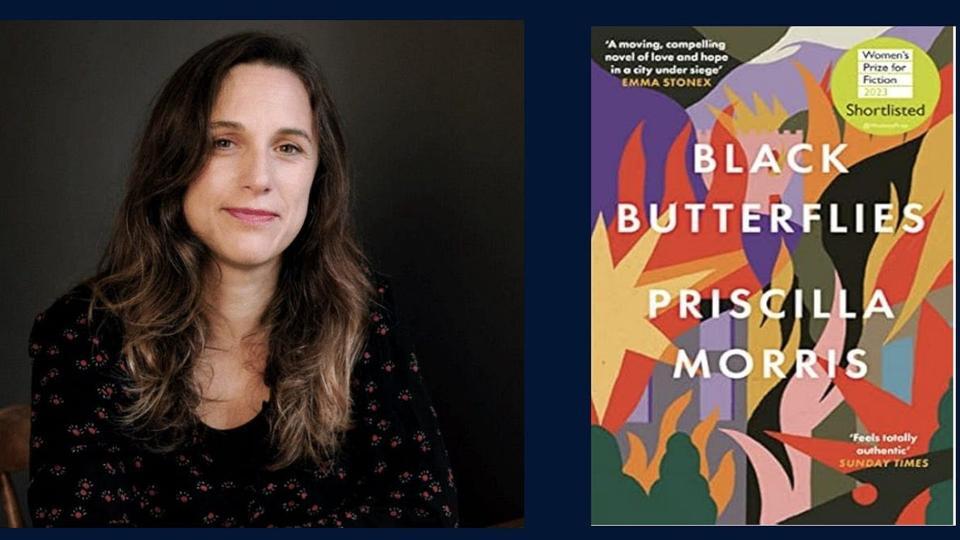
On a recent Friday evening we got together online, Morris from her home in Catalonia, Spain and book club readers from all over the world, from Melbourne, Hong Kong, Singapore, Mumbai, Bangalore, Manali, Sweden, London and Toronto.
Here is an edited version of our conversation-
Priscilla, thank you for joining us, especially at such a busy time. You have a writing retreat coming up soon, isn’t it?
Yes, tomorrow I have eight people from all around the world coming in. It’s the first time I’ve done a writing retreat, so my husband and I, who are running it together, are rushing around getting it all together. I will be running the creative writing classes, workshops and one-to-one consultations, and my husband, composer Rory Pierce, will be leading the walks through the cork oaks, while our chef Lucy is busy with the menus.
As a writer how important is it for you to live surrounded by beautiful landscapes?
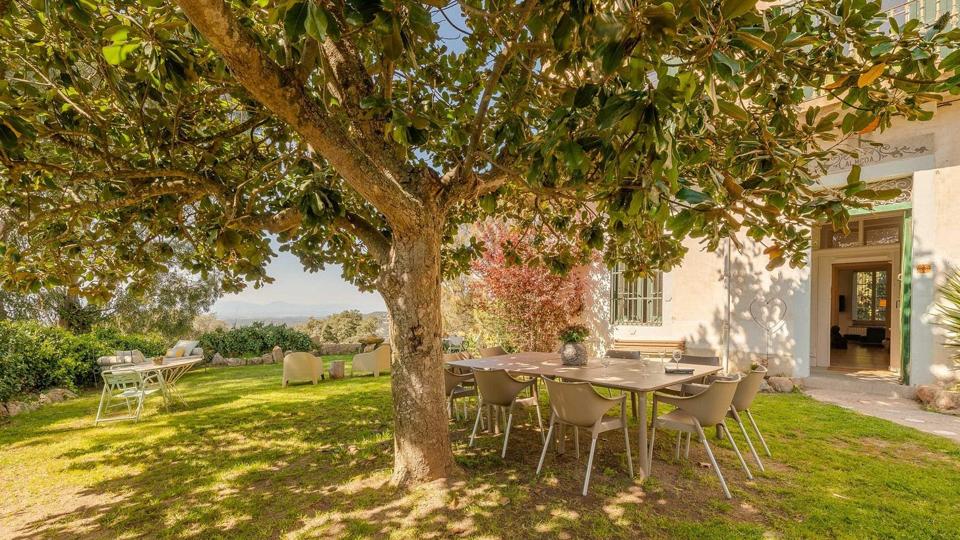
My husband is Irish, and we live part of the year in Ireland, and part of the year, we are here in Spain, in Catalonia, a little bit north of Barcelona. It’s a beautiful spot with views from over forested plains to the distant Pyrenees. I love walking, I appreciate being close to nature, I find it refreshes me creatively.
I grew up in London, and I do love big cities as well and I love that Barcelona is close to where we live. But the older I get, the more I love living in nature.
You were born in Cambridge, a place you returned to graduate in languages, but you spent your childhood in London. Tell us about your reading?
We moved a lot when we were little and I have a memory of us sitting on the steps up to the front door of another new house — reading, reading, always reading — as boxes and furniture were brought in around us - Enid Blyton, the Narnia books, Pippi Longstocking, Nancy Drew, The Hobbit, Alice in Wonderland.
I remember waking up at 2 am one Christmas morning to find The Witches by Roald Dahl in one of our stockings. The thrill! My younger sister and I took it in turns to read a chapter each, waiting impatiently for the other to finish.
Coming to your debut novel Black Butterflies, you write with such a strong sense of place. In your novel, the city of Sarajevo feels like a character itself. How did your personal connection to the city influence your writing?
I love Sarajevo. I used to go there as a child to visit my grandparents. I have memories of eating baklava that my grandmother used to make, going fishing in the mountains, swimming, chilling watermelons in the rivers and then eating them, walking to the centre of Sarajevo, to the beautiful old Muslim market area, with its cobbled streets and having Bosnian and Turkish coffee and sweets.
Then when I was 19, and the war started, I started watching on TV all these awful images of buildings being destroyed and snipers appearing on the streets.
Writing this book became my way of holding onto my cherished childhood memories, expressing my love for the city, and showing its slide into destruction.
Who was the inspiration for the protagonist of your novel?
My great uncle. I first heard his story when we were at my grandfather’s funeral in London in the Serbian Orthodox Church in Notting Hill. My mother pointed him out - he was a landscape painter who lost his life’s work in his studio in the fire that destroyed the National Library in Sarajevo. And he thought he was never going to paint again, but he did.
I was so inspired. I thought, I have to write his story.
With your background in journalism and with family history at the core, did you ever try to tell the story as reportage or memoir? How did it become a novel?
I tried everything! I tried journalism, but the story felt too big. I tried a short story, but it was still too big. I even tried to write it as a children’s book. It wasn’t until I was in a creative writing master’s program that I committed to it as a novel. The simple answer is I am a novelist at heart.
Fiction gave me the freedom to draw out themes, work with symbolism, and shape the narrative to explore deeper truths, rather than being strictly bound by what happened. It was the form that allowed me to make sense of the war for myself.
What made you decide to make your protagonist a woman?
I started writing from a male perspective with a male artist, and it was hard. I’d interviewed my great uncle so closely, and I found myself writing exactly what had happened to him. There was no room for fiction.
In Sarajevo, I interviewed about 12 people about their experiences of the war. Many were women, and the memories that lodged in my mind were women’s memories. I realised I was seeing the siege through a woman’s eyes.
At the time I was reading The Plague by Camus — a novel about an outbreak that also feels like a siege.
When I closed that book, Zora just came to me – I knew she would have red hair. She would be resilient, warm-hearted, separated from her husband at the beginning of the siege. I just knew these things about her. I didn’t know the details yet.
I changed he to she, and suddenly the story flowed.
Both your protagonist Zora and your great uncle are painters of bridges, which become a central metaphor in your novel. Why bridges?
Bosnia is full of bridges - it’s such an extreme, mountainous part of the world, with these fast flowing rivers and so you need bridges everywhere. They are these beautiful, ancient Ottoman structures that symbolize the union of different cultures—the very opposite of the walls and divisions that war creates.
During the dark nights of the siege, Zora’s neighbour, the bookseller Mirsad tells a dark fairy-tale about a bridge. Why include that story?
A bridge is always seen as positive, but I also wanted to complicate that symbol; bridges can be used to conquer, and their construction can involve sacrifice. This duality is why I included the gruesome fairy tale of a woman being walled into a bridge. There are so many versions of this story throughout the Balkans, and everywhere, and it’s either a woman or children that need to be sacrificed. It speaks to an unspeakable, ancient violence and the sacrifice of the feminine.
And so that’s partly why I chose the story; Mirsad tells in the winter, when they’re all sitting around the fire in the shelled apartment, because it’s a story about bridges. Also the story provided a moment of oral storytelling, which was a real survival tactic during the siege of Sarajevo - no electricity to read, people can’t watch TV, of course.
You talked to your great uncle and you also travelled to Sarajevo to research the war. How did you carry the emotional burden of this firsthand testimony and distil it into a novel?
I had interviewed my great uncle at length but it wasn’t quite enough, because after he and his wife left Sarajevo, they found it traumatic to dig up the memories of what daily life was like.
So I went and lived for five months in Sarajevo. And I got to know people, I had to get to know them quite well. Obviously, people don’t just open up like this about their wartime experiences. Ironically, everyone saved their war stories for my last week there. I returned to England weighed down by these memories; it was a deeply depressing period. It took me a long time to digest that trauma and allow myself the creative freedom to fictionalize it. I had to distance myself from the sheer horror to find the story. The act of writing the novel was, in part, my own attempt to make sense of a war that had devastated my family.
It is quite a rarity to have war books written by women authors, right? Are there any other women writers who inspired you in this kind of space?
You’re right. It is quite rare. And the irony is, when I first started writing this novel, I thought to myself, God, I don’t even really like reading war fiction. What am I doing? And I did tend to associate it with a rather male genre. But as I researched, I discovered books that influenced me - like But Helen Dunmore’s The Siege - it’s also about a siege, with an artist at the centre. Chimamanda Ngozi Adichie’s Half of a Yellow Sun is brilliant. Téa Obreht’s The Tiger’s Wife and Lana Bastašić’s Catch the Rabbit deal with the Balkans beautifully. I became excited to write from a woman’s point of view.
We loved the audio book of Black Butterflies – did you have a say in the choice of narrator?
I did! I rejected the first narrator — her voice was too brisk, too businesslike. And I said, no, no, that is not Zora. I’d imagined Zora’s voice as warm and textured, a bit older, artistic, measured. With Rachel Atkins, I said, Yes. Her intonations were exactly how I imagined them.
You mentioned that living in Brazil helped your writing ? Could you elaborate on how a change of place and culture can unlock a writer’s voice?
In the UK, I felt restricted by my own insecurity, like ‘How dare I try this and do this, how dare I write?’ Then in my early thirties, I went to Brazil. I was teaching English out there to lawyers, and I lived in Rio, which is one of the most fabulous cities in the world. And I found such a can- do attitude, it freed up my creativity and I just thought, let’s go for it.
And I’d been to visit the Amazon, and I started a children’s poem about the Amazon, the themes of the environment, talking animals, the lot. But I was a novice writer then, and I didn’t grade my language, or change my vocabulary for children. So when I got about 10,000 wordsI thought, my God, what child is ever going to read this?
I knew I needed help. That’s when I applied for the master’s at the University of East Anglia.
How did studying creative writing change things for you ?
It was a turning point. During the interview, they asked what I was working on. I wasn’t working on anything, so I just said, “Oh yes, I’ve got this idea for a book about Sarajevo.” The whole story came back to me.
Until then, I was a perfectionist who hadn’t shown my writing to anyone. I forced myself to go to this course where you show your work to 12 strangers. I was terrified, but I got amazing feedback. It was a huge confidence boost that really turned things around for me.
Writing about a traumatic recent history as a partial outsider must have been daunting. What has the response in Sarajevo been to your book?
I was incredibly nervous. It took me 12 years to write, partly because of this sensitivity. The greatest validation was being invited to the Sarajevo Literature Festival and presenting the book there. To stand before an audience, many of whom had lived through the siege, and see them nodding as I spoke about specific moments—like the necessity of grabbing joy where you could—was profoundly moving. I had been very careful, sharing drafts with people whose stories inspired characters. While there will always be contested narratives, seeing that recognition in their faces confirmed to me that an outsider, or semi-outsider, can sometimes hold up a mirror that feels authentic.
What next for you, Priscilla? What are you working on now?
(Laughs) I said I’d never write about war again. But here I am, writing about another war. My new book is inspired by the mountains of Catalonia, near the French border, and the Spanish refugees who fled Franco only to be interned in France. I guess I haven’t quite finished with war. Or rather, war hasn’t quite finished with me!
Priscilla Morris’s novel Black Butterflies is available in print and on audio. She will be hosting writing retreats in Catalonia, Spain in Spring and Autumn 2026. For more information, visit her website at priscillamorris.org.
(Sonya Dutta Choudhury is a Mumbai-based journalist and the founder of Sonya’s Book Box, a bespoke book service. Each week, she brings you specially curated books to give you an immersive understanding of people and places. If you have any reading recommendations or suggestions, write to her at sonyasbookbox@gmail.com. The views expressed are personal.)


