
 E-Paper



Excerpt: Off the Shelf by Sridhar Balan
A book on publishing in India features fascinating personalities and anecdotes. This excerpt is on Dean Mahomed (1759-1851), the first Indian author in English, who also set up the first shampoo parlour in the UK



When, in early 2019, Google carried a doodle celebrating a somewhat unusual Indian-British man called Dean Mahomed, I was pleasantly surprised. Few people outside India’s literary and quizzing circles would have heard of Dean Mahomed. And his achievements, too, were not of the kind that are normally considered worthy of celebration — he did not invent a world-changing gadget, or score 100 test centuries, or set up a global business empire. But he did, in his small and surprising way, expand the definition of enterprise, migration, entrepreneurship and autobiographical writing.
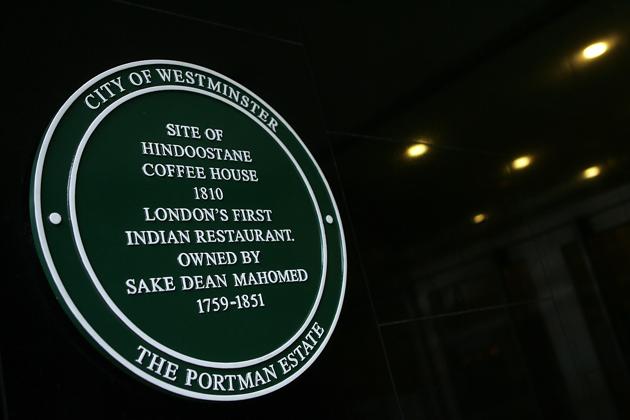
My mind went back to the London Book Fair of 2010. Travelling around the city after I had finished my appointments, I came across a blue plaque that said ‘Hindostanee Coffee House’. It marked a site at the corner of George and Charles Streets where the coffee house once stood. It was a quiet little memorial to an intrepid Indian entrepreneur who had not only established the coffee house, thus being a forerunner of Indian cuisine in England, but was also — and more famously — responsible for pioneering ‘Indian therapy’ in England. He was also able to show scientifically the beneficial results of his therapy at a time when evidence-based research was in its infancy. Dean Mahomed pioneered the art of shampooing and massaging in England by setting up the first shampooing parlour there. The beneficial effects of this therapy — a clever re-imagining of tel-maalish and champi — became so popular that Mahomed came to be known as a ‘shampooing surgeon’, though he had no formal degree in medicine. He also kept a diary, a record of his travels and adventures in India, Ireland and England and later published them in two volumes, thus becoming the first Indian author in English.
Dean Mahomed’s life is a wonderful story of determination and adventure — and rare business acumen. Dean (‘Deen’, before the Anglicization), was born in Patna, the son of a barber (therefore the prowess in maalish and champi). This was the period of the slow dissolution of the once mighty Mughal empire, and the East India Company was making inroads into previous Mughal strongholds. By the middle of the eighteenth century, the Company had made a decisive change both in its incorporation and in its character. It was now no longer a mere trading company; it had begun to assume a very significant administrative presence with a strong military character. The Company needed native volunteers as sepoys and those recruited into service began to be known as ‘Company bahadurs’. Dean Mahomed’s family decided that the family’s future and loyalties lay with An Indian Author and Entrepreneur in England off the shelf the Company. Accordingly, both Mahomed’s father and elder brother joined the Company’s Bengal Army. As for Mahomed himself, he was apprenticed at the age of eleven to an Anglo-Irish patron, Ensign Godfrey Evan Baker, who took a shine to the ambitious young boy. During the next eleven years, Mahomed saw service in the military campaigns of the Bengal Army along with Baker, and as Baker rose to become captain with his own independent command, Mahomed too was promoted regularly, becoming a master and then a subaltern officer. He travelled extensively in the service of the Bengal Army, and apart from Bihar, Oudh and Benares, visited Calcutta, Delhi and Madras.
Finally, in 1784, Mahomed gave up his Company job and set sail for England along with his benefactor Baker and landed in Cork via Dartmouth. He was to spend almost the next twenty-five years of his life in Cork, gaining a measure of respectability among the Anglo-Irish society and learning and perfecting English. As his English improved, Mahomed began to write poetry too as this was an accepted part of the cultured life of the Irish elite. In 1786, he married an Irish girl, Jane Daly, somewhat in haste and in secret. He had converted to Protestantism and Jane was a Catholic and marriage between the faiths was forbidden at the time. Dean Mahomed was a trusted friend of the entire Baker household and at that time was engaged in commercial activity, initially trading in the large number of goods that Baker and he had brought out from India by ship.
How do we know so much about Mahomed’s early life? He kept a diary of his travels and adventures in India and the voyage to England and his early days there. In March 1793 he resolved to publish it as a book in two volumes. The economics of publishing at that time was that no printer would undertake a book’s printing even with advance payment unless it was subscribed for. No printer wanted to stock any books, either bound copies or loose sheets. Subscription ensured that copies would move out to the subscribers immediately upon printing. In this, Mahomed was greatly helped by Baker’s extended family, who subscribed for a total of 112 copies. Thus, in 1794, Mahomed’s Travels was published, making him the first Indian author in English. In India, we are indebted to the historian Michael Fisher, then of Oberlin College, who discovered Mahomed’s Travels and presented it with an extensive analysis and commentary as Dean Mahomed (1759-1851) in India, Ireland and England.
In 1807, Mahomed and Jane along with their children migrated to London. He found service with a controversial nobleman, Basil Cochrane, in Portman Square. Cochrane had learned the therapeutic effects of vapour cure while in service in India and had now thought of setting up a vapour bath in his house. He invited Dean Mohamed to help him set up the bath. While Turkish baths or hamams had been introduced in London as far back as 1631, the therapeutic effects of vapour had mainly been confined to discussions in medical circles. It had not yet been commercially exploited. So Basil Cochrane’s idea was an entirely novel one.
While the original idea came from Cochrane, it was Dean Mahomed who set up the first vapour bath. He also perfected the idea of applying medicated steam to various parts of the body. By the end of 1809, Mahomed felt confident of launching his own business, using his Indian identity as his calling card. He established the Hindostanee Coffee House at the corner of George and Charles Streets and offered to his patrons a unique Indian experience. The house served a range of meat and vegetable dishes cooked with Indian spices, served with seasoned rice. Seating was on bamboo cane sofas and chairs, on the walls were paintings of Indian landscapes, and for discerning patrons there was a smoking room with ‘hookahs with scented tobacco and Indian herbs’. And of course, Mahomed did not serve coffee but only wines and other spirits! The Hindostanee Coffee House ran from 1810 to 1812, the ancestor of all the many Indian eating establishments that flourish in London today.
It was Dean Mahomed’s move to Brighton in 1813 to set up the Mahomed Baths that finally established his reputation — primarily as a ‘therapist’. Besides vapour baths, Mahomed also added shampooing to his repertoire, and shampooing here meant the expert art of oil massage, or maalish. The baths were a runaway success, and Mahomed became quite famous as a shampooing surgeon. Advertisements for the Indian medicated vapour and shampooing baths proclaimed their curative powers in rheumatism, paralysis, asthma, gout, stiff joints and sprain. In 1820, Mahomed’s reputation was further strengthened by his book Shampooing; or Benefits resulting from the use of the Indian medicated vapour bath, which explained his famed methods. A second edition of the book was published in 1826.
Mahomed dedicated the book to King George, who along with William IV patronized Mahomed’s baths. The Duke of Wellington was also a patron, along with other members of the royal household. However, Queen Victoria declined her patronage, which perhaps led to a dip in the reputation of the Mahomed Baths.
Unfortunately, Mahomed’s sons failed to run the baths properly amid growing competition. Mahomed eventually lost control of the baths in his lifetime. He died in his eighties and was buried in Brighton in 1851.


