
 E-Paper



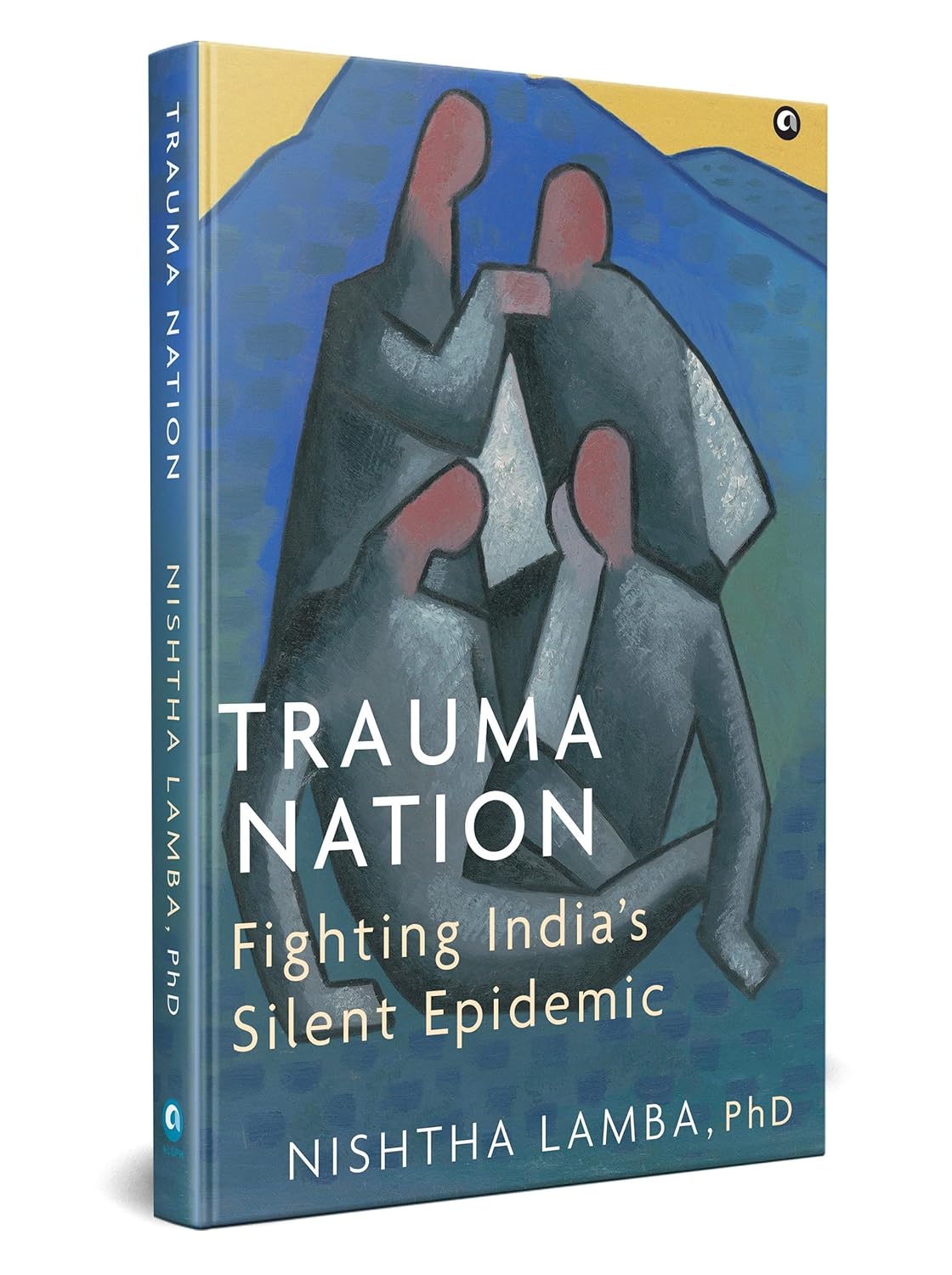
Excerpt: Trauma Nation; Fighting India’s Silent Epidemic by Nishtha Lamba
This extract from a book on the country’s burden of trauma that results in mental health issues, presents a rare case of a man being abused in his marriage

 Prefer HTon Google


I met Kabir just a month before I was due to send this manuscript to the publishers. The editor, much like me, was keen that I try to include a male perspective. I kept looking and waiting for it to come my way. This difficulty felt incidental initially, but soon, it became clear to me that it was structural. In a society where we equate masculinity with strength and control, men don’t find space to talk about being hurt within intimate relationships.
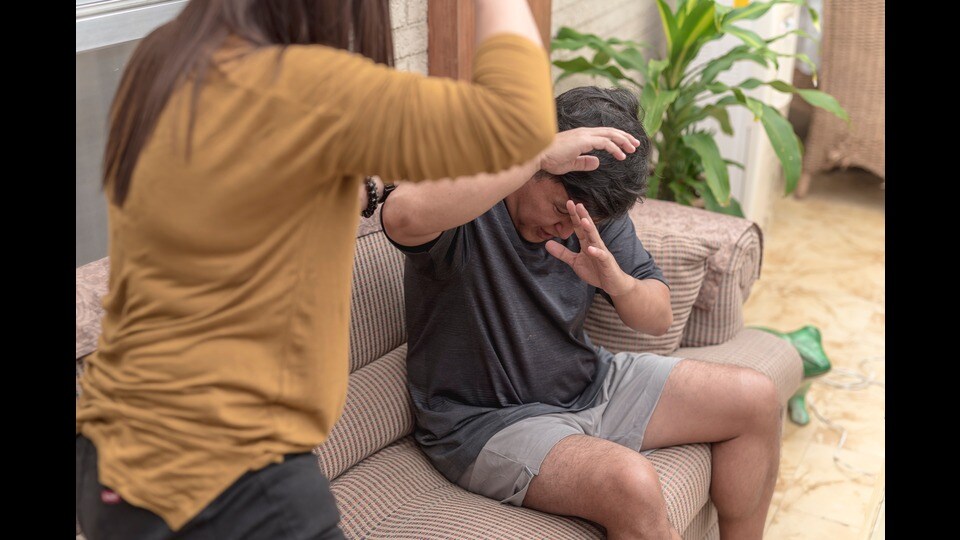
Kabir was in his early forties when we spoke, highly educated, articulate, and professionally successful. He was tall, dusky, well built, and had short curly hair that covered part of his forehead. He hailed from an upper-middle-class urban family, where education, civility, and moral uprightness are valued. He dated a few women before he decided to go for a marriage arranged by his parents. The match looked promising on paper. They met only a few times before marriage, and mainly spoke on the phone. The relationship lasted for about two years, from the time of courtship to filing for divorce. The emotional violence in the relationship was evident within the first week of the marriage. His wife had erratic moods, switching between spells of complete silence to emotional or physical rage. Silence was a way of withholding, conveying, ‘You don’t get access to me unless you comply.’ The violence was episodic but intense. Yet, Kabir did not initially name these experiences as abuse. Much like Kavita, he spoke of confusion rather than clarity in retrospect. But unlike Kavita, Kabir’s confusion was compounded by the fact that he was a man.
Kabir described himself, in different contexts of the interview, as a ‘good man’. He was not praising himself; it was his moral anchor. His understanding of himself as a ‘good man’ became the very grounds on which the abuse flourished. His idea of masculinity shaped both the abuse and his response to it.29 He worried that his defence could be perceived as an attack. At one point during a fight, he stood still and counted each slap—not to measure the violence, but to endure it. There were fifty-two. Masculinity functioned as restraint here; it disciplined him into compliance.
Post rage and violence, when Kabir would be completely distraught, his wife would demand sex. Refusal was framed as inadequacy. ‘You are my husband, this is your duty,’ she would say. Masculinity turned into obligation. Kabir said he then complied without desire, had anxiety about performance, and also feared that refusal would escalate the conflict or invite other accusations. He felt that sex was used after fights to reassert dominance.30 Again, being a man, it took him time to see it as sexual coercion. It did not fit into his vocabulary of victimhood. Kabir carried deep shame around these experiences, unsure where consent ended and obligation began.
There were traces of jealousy in Kabir’s relationship as well, where his wife blamed him for speaking to other women. She would disappear for long stretches during the day time and switch off her phone. Kabir suspected that she had an affair. Moments when she was not angry started to feel like calmness and love. Overall, however, the relationship was short-lived, and Kabir no longer remembered any good times.
When conversations of separation came up, he was threatened that a false case would be filed against him and his family. Towards the end of their relationship, both families also got involved in their arguments. Kabir endured physical and emotional abuse not because he lacked agency, but because leaving felt like exposing his family to irreversible harm.
When Kabir finally approached the police, the response was not neutral indifference, but active disbelief. A female police officer laughed when he spoke. ‘This puts a question on your manliness,’ she told him. Another officer advised him not to mention the violence at all. ‘You are taller. You are stronger. Who will believe you?’ The logic was crude: masculinity itself disqualified him from victimhood. His friends discouraged him to include episodes of sexual coercion in his case, as ‘no one would believe that a man can be forced to have sex’. Friends hinted at sexual inadequacy. ‘People will assume something is wrong with you,’ another friend said. Kabir, in fact, did not want to file any case, as he was worried about a false counter complaint of cruelty or dowry harassment from his wife. He said quietly, ‘I realized that the system is not made to hear men in my situation.’
After one particularly violent episode, Kabir avoided mirrors for weeks. ‘I couldn’t look at myself,’ he said. ‘I didn’t recognize the man standing there.’ It was not the bruises; it felt like a collapse of his identity, his masculinity. After separation and filing for divorce, Kabir started reading about relationship abuse and trauma profusely—a pattern I had observed in most survivors trying to make sense of the inner turmoil. When Kabir was telling me about the texts he had read, he spoke briefly and perhaps a little reluctantly, about being sexually abused in childhood by a babysitter. Through his readings, he had made a connection between then and now. As a child, silence had kept him safe and compliance had minimized harm. These survival strategies resurfaced now in adulthood. He endured the violence in the marriage silently and mostly with compliance. Jay Frankel, a psychoanalyst, has explained how, in order to survive, we could embody what the abuser expects of us, in our behaviour, feelings, thoughts, and perceptions.

Work and professional growth saved Kabir, much like in the case of Kavita. They offered him a constructive distraction. He kept saying to himself, ‘As long as I am functioning, things couldn’t be that bad.’ What also helped Kabir heal was not another committed relationship, but casual intimacy. Kabir explained to me that after a very abusive and socially burdened relationship, casually meeting people who were also lost in their lives healed him a little. He built a contrast to his abusive marriage with these encounters that were consensual, and had no obligation or masculine duty. This became reparative, as he related it to having agency and exercising his true self.
Every adult relationship always has two perspectives. Kavita’s, Sanchi’s, and Kabir’s respective partners may have their own perspectives too, shaped by their own histories. This isn’t to justify the excruciating violence and humiliation the survivors faced, but to make us reflect on how ‘perpetrators’ and ‘victims’ are both moulded by society. The decisions we make to love, to leave, to stay, are deeply personal and yet shaped by our environment.


