
 E-Paper



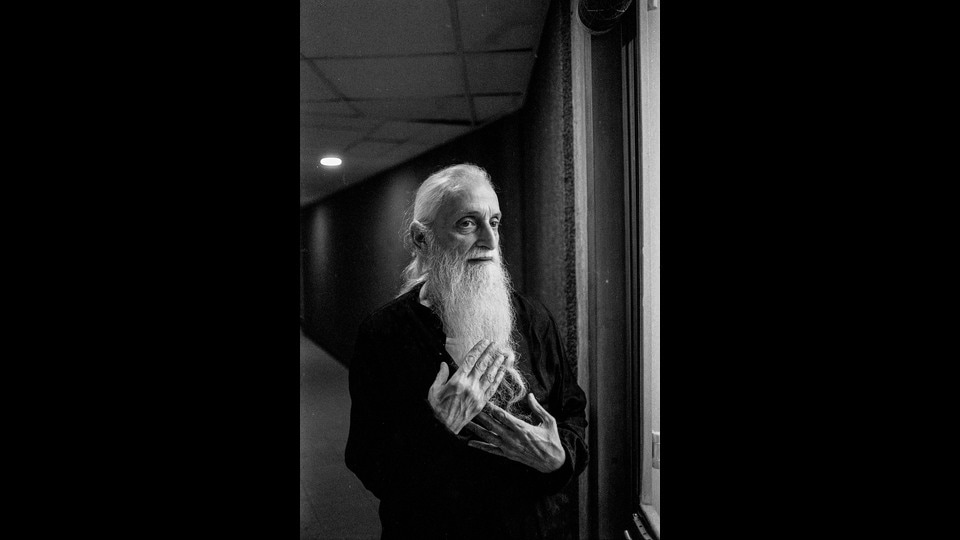
Hoshang Merchant – “Politics is a passing show, while humanity endures”
The poet and critic, whose latest book is ‘Rainbow Warriors of India’, talks about being the first Indian English poet who was openly gay, having his autobiography translated into Indian languages, and starting his own publishing imprint

 Prefer HTon Google


What made you write Rainbow Warriors of India, which chronicles the life of 22 individuals from the Indian queer community?
Rainbow Warriors was written as a response to my belief and my lived life that political activism is not the only activism but art can also be an important form of politics. I kept out the people at the barricades but included gay pioneers in the arts from the 1910s to 2010 who led by example. The idea came when we had lost all hope with Justice Shah’s 2009 pro-gay judgement being overturned in 2013 by the Supreme Court but gained a new momentum in light of the 2018 decriminalization of homosexuality in India. I carefully included Ashok Row Kavi because I understand his conservative politics as a gay person who grew up in the 1960s and was saved from an isolated life by the deep understanding shown to him by the Ramakrishna Mission monks. He has written his story. The human story interests me more than the political flavour of the day because politics is a passing show while humanity endures. My own celebrity status thrust upon me in old age merits a relook at my own prejudices and begs an explanation for the aesthetic positions I have taken.
What has been your journey with queerness and its expression over the years and the role that literature has played in it?
I studied literature to know the ‘WHY’ of my own outré homosexuality. This was when I was 16 in 1964 and someone like me living even in westernized Bombay was an anomaly. I continued and didn’t give up on literature till I wrote my PhD on Anais Nin whose own sexual experiments with incest, bigamy, episodic lesbianism not only gave me the courage to analyse the decadent Parsi and by extension the Indian family but her friendship as an older writer with young gay male writers gave me a template for my future life as the first out gay poet in Indian English poetry.
What has influenced your poetry and how would you describe its gradual progression with time?
I began as a gay love poet. By this I mean I wrote about my physical love with men from the age of 16. My first poem was published in Gay Sunshine in 1974, which is Litany, a list of gay icons in literature and western history who inspired me. But I stumbled upon Sufism in Iran, where I lived and taught for some time, which suddenly made me a spiritual poet. I revived my interest in Bhakti and understood that Mira shamed the Vrindavan saints, who refused her entry, by telling them that the only male in Vrindavan was Krishna and all, including them, were female souls pining for the male God.
I travelled for 19 years so couldn’t compile a book till I was 44. Once I had a desk at the university, I put together my travel poems with newer Hyderabad ones to make Flower To Flame, which came from Rupa Publications. Later, when I fell in love with a drug addict who died after four years, I put together four books called the Jonah Quartet because his name Yunus is Jonah in the Bible. Post Yunus, lovers over the next few years gave me the Hyderabad Quintet, my travels gave me the Proustian Place/ Name: A Sextet. The Book of Chapbooks, on the other hand, imitated Jibanananda Das and even the intense poems following my sister’s death in America occasioned chapbooks which I put together as The Book of Chapbooks. All these are available from Writers Workshop.
I wasn’t done mourning my elder sister, the only woman I was close to after Mother.
So that occasioned Sufiana from Harper Collins, which many consider my best book.
A final flowering came at 60 in the difficult Pound pastiches which Red River brought out on my 73rd birthday as Paradise Isn’t Artificial. But people wanted more.
I met a young lover on Facebook whom I called Lalon and wrote him 18 short poems, which is the first book I brought out from my own imprint, HM Books, under the title Lalon’s Book.
So I am respected today at 78 not as a pornographer but as a spiritual gay poet who reminds himself that we are not our sexual organ but entire beings with a mind and body and an imperishable soul. Many condemn my holistic vision and the literary establishment that has still not read my oeuvre of 35 books in as many years continues to slot me in narrow segments but the gay literary establishment has given me not one but two lifetime achievement awards.

Recently, your biography The Man Who Would Be Queen was translated and published in Bangla. What has been the response from Bangla readers and are you planning to get it translated into other languages as well?
By writing only in English I am preaching to the converted. On my birthday, I received a call from Hebbagoddi in Karnataka from a gay boy who couldn’t speak in English but told me that my book, Yaraana, which I purposely wrote in simple English, gave him the courage to continue his gay life in a village and not unalive himself. The need for Yaraana is in our villages; it has to be translated into as many languages of India as possible. My autobiography in Bangla is the first step. It was to be published digitally in Bangladesh this December but the political revolution, I hope, has fertilized the ground for a sexual revolution spearheaded by translation and eventually by original work in indigenous languages by local gays.
I have asked you, Chittajit, for a Hindi version of my autobiography and the Malayalam version is underway from a straight married devotee of mine supervised by another student who came out as bisexual after a 20-year marriage.
So, yes, my book is going places and places are running with my book.
At several public events, you have talked about being born in a Parsi family and mentioned how themes around spirituality have been a great inspiration in some of your notable works. Can you please tell us how such experiences have influenced your literary journey?
I was born in a family in the 1940s where one parent was of the Parsi priestly class, learned but poor and the other Merchant parent was wealthy but non-literary. As a child I was attracted by the mystique around my Parsi priest grandfather. I longed to be a priest but couldn’t because the priesthood is hereditary in patriarchal societies in the East. Then I read Percy Bysshe Shelley say, “The poets are the unacknowledged legislators of the world.” And that struck me like lightning: Wow! Hoshang, you despised creature! I told myself, “That way lies glory for you”. Even now, my detractors say my calling as a poet is too high, I was bound to fail. I’d rather fail from overmuch ambition than from low aspiration.
As a veteran in the English literary scene and an openly queer person, how would you evaluate the traditional Indian English publishing industry and the changes that you would like to see?
Indian publishing is in a mess. Amazon pulled out as it was not economically viable to publish English books, especially gay ones that don’t sell in India. I’m grateful to some mainstream publishers like Penguin and Harper Collins for publishing me in the 1990s and the 2000s. But now I have started my own imprint, HM Books, as I can’t keep up with political correctness, which has become a madness in the Indian publishing industry.
READ MORE: The critic as artist by Saikat Majumdar
Since you are also a celebrated educator, can you point out the difficulties you faced while being in the system as a queer person and the positive changes that are desperately needed to make an inclusive society?
I started teaching at Hyderabad University in 1986. I initially taught for bread and butter till I started one of the first courses in gay literature in India, which covered the authors in Yaraana, which came out in 1999. I was always an out gay person but supported by my social capital and personal charm, which made me a popular teacher. I was lucky to be supported by the elderly and powerful but vastly sagacious bosses who appreciated my value in the moribund academy and whose sagacity I finally valued in spite of my jejune ways that I still retain into old age.
My motto is “Know Thyself” and its counter motto followed by others who are threatened by me is “Fear eats the soul”.
Inclusivity does not only mean queer and Dalit in the straight Brahmanical patriarchal academy; it means acceptance of gays by other marginalized sections as well.
Any future projects that you’re working on and advice for future queer writers and poets?
I’ve brought my autobiography from Penguin, The Man Who Would Be Queen, up to date with All My Masters, (Queer Ink Bombay, 2016) but now I am closing my life by spilling all my secrets and everyone else’s in a five-part compendium called Open Book. I’m no one to give advice to anyone but I am deeply grateful for editors who followed my work and my imitators who followed me. But one should always be oneself, not only in style but also in content. Don’t tell the fashionable story; tell your own true story which you alone can tell. Also, please don’t rush to print too early and don’t seek safety in coteries.
Strike out in order to be heard.
Chittajit Mitra (he/him) is a queer writer, translator and editor from Allahabad. He is co-founder of RAQS, an organization working on gender, sexuality and mental health.


