
 E-Paper



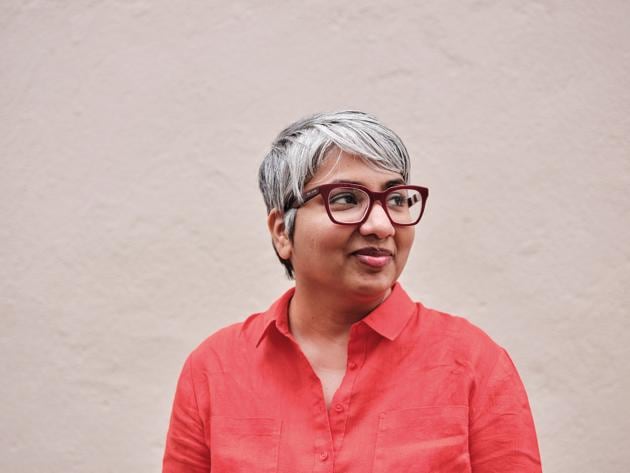
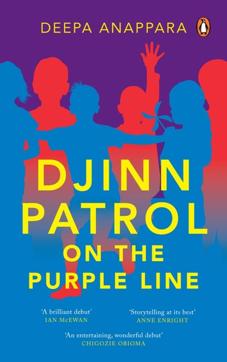
Interview: Deepa Anappara, author of Djinn Patrol on the Purple Line
The author talks about how her work as a reporter informed her novel


Your book addresses poverty in India but doesn’t devolve into stereotypical representations. Were there any concerns on that front while you were writing it?
While writing my novel, my attempt was to inhabit the perspectives of the characters fully such that the world would be described only through their lens. The main narrator of my novel is a nine-year-old boy, and his view of the world is shaped by his still-forming ideas; what he picks up from those around him; his interests in TV and food; and also his height, which makes him notice objects and animals at his eye level. To veer away from stereotypes, pity or sentimentalism, I tried to stay close to his point of view. Certainly this was a deliberate choice given the subject matter of my novel, but stylistically, artistically, I imagine this is what every novelist sets out to do in any case.
The choice of a child narrator is interesting and one that also shapes the reading experience. How difficult was it to write such a character in terms of providing an authentic portrayal through the English language?
In my novel, I wanted to portray how children experienced the disappearances of their friends and classmates. This was a perspective I hadn’t encountered before in the mainstream discourse and so, through fiction, I wanted to explore the fears of the children; how they made sense of the disappearances; and whether they tried to wrestle some agency from a world that denies it to them. Having decided on a child narrator, I found then that there were all sorts of difficulties in conveying his voice in English — children make up neologisms, they have favourite words and phrases, there is a certain rhythm and cadence to how they speak. Ultimately I decided to retain a few of the Hindu and Urdu words that my child narrator uses often, and in the syntax I tried to mimic the manner in which he would speak in Hindi.
Were the characterizations of Jai, Pari and Faiz inspired from your work on the field as a journalist?
The children are composites of the many children I had interviewed while working as a reporter.
How has your experience as a reporter made its way in your fiction writing?
In the acknowledgements to Djinn Patrol on the Purple Line, I have written that the only reason I could write this novel was because of the work I had done as a journalist, and the people I met at that time, who generously invited me into their homes and shared their stories with me. I don’t believe that a novelist can only write characters who are versions of themselves, but at the same time, without research, respect, and humility, I also don’t think anyone can successfully describe another person’s lived experience on this planet. Being a reporter offered me the knowledge and understanding that was essential to writing this novel.
As a debut novelist and an author of colour writing in the West, what were the challenges you faced in the process of getting Djinn Patrol on the Purple Line published?
I had been writing fiction seriously for over a decade before Djinn Patrol on the Purple Line was published. Though it is my first published novel, I wrote three other books before this that remain on my laptop. I can’t blame publishing, however, for these unpublished works — I needed that time to learn more about fiction and the craft of writing it, as these were subjects that I had only approached as a reader and not as a writer.
Having said that, I have to add that while it is difficult for anyone to get published in the West, a writer of colour faces multiple challenges that a white writer simply doesn’t. We are often told that it is difficult for a white, Western audience to understand the subjects we are writing about, or that they are put off by references that are beyond their immediate experience. I also think there is less acceptance of narrative arcs that are digressive and don’t follow traditional, Western forms of storytelling. But I am generalising here and there have been many conversations, particularly this year, about how that can be changed. I can only hope that these changes will happen soon.
As the book is getting translated in more than 20 languages, are there any reservations or any conditions you have when it comes to translations?
I trust that the translators know best how to render the novel in another language without losing its tone or specificity.
What is your writing process? Has the pandemic affected your writing or reading schedules?
With the pandemic there is more anxiety about loved ones, and anxiety disrupts one’s concentration. What should take one hour can end up taking three hours. I have accepted this as a matter of fact, and factored this in while trying to meet/miss whatever deadlines I might have.
What are you working on next?
I am working on a second novel, but it is too early to talk about it.
Simar Bhasin is an independent journalist. She lives in New Delhi.


