
 E-Paper



India’s BRICS presidency is championing women-led diplomacy
This article is authored by Pravesh Kumar Gupta, associate fellow, Vivekananda International Foundation, New Delhi.

 Prefer HTon Google


In an era where multilateral institutions face growing scrutiny over their relevance and inclusivity, India’s 2026 BRICS chairship stands out for its deliberate emphasis on women-led development as a cornerstone of global diplomacy. By convening the BRICS Women Working Group Meeting on July 6-7 and the subsequent Women Ministerial Meeting on July 8-9 in Kochi, Kerala, India has added value to the grouping’s agenda by emphasising a more holistic, people-centric framework rather than just traditional economic and political coordination. This initiative is not symbolic; it represents a strategic assertion that sustainable global progress demands women’s leadership at every level, from policy formulation to implementation.
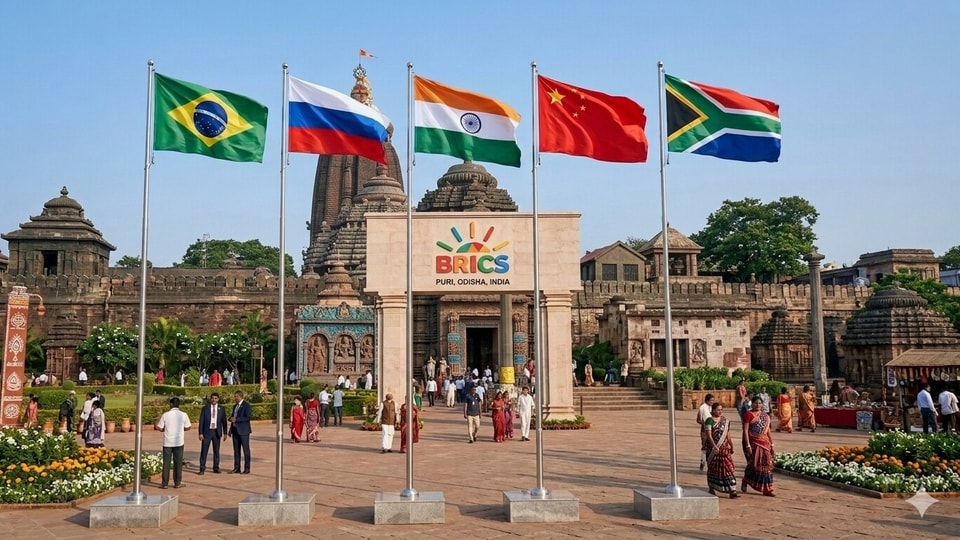
India’s overarching BRICS theme, Building for Resilience, Innovation, Cooperation and Sustainability, provided the perfect foundation for the women track. The track focused on four tightly interconnected priorities: advancing women in governance and leadership to ensure inclusive decision-making; promoting digital and financial inclusion to unlock economic opportunities; fostering entrepreneurship and skill development to enhance women’s agency; and recognizing women’s critical contributions to climate action, food security, and nutrition. These priorities directly address contemporary global challenges while aligning with the realities of BRICS nations, which collectively account for nearly half the world’s population and around 40% of global GDP. When women’s potential remains underutilised in such a significant bloc, the entire global economy suffers. India’s approach forcefully argues that empowering women is not a side issue but a multiplier for resilience and growth.
The Kochi meetings delivered concrete outcomes that elevate this vision beyond rhetoric. Senior officials first laid the groundwork during the Working Group sessions, building on earlier virtual preparatory meetings. Ministers then adopted the first-ever joint statement in the BRICS women track. This landmark document commits member countries to sustained cooperation on gender equality and women-led development across social, economic, and political spheres. Equally important, participants endorsed two India-led initiatives: The BRICS Digital Repository of Best Practices, which creates a shared platform for documenting and exchanging successful policies and innovations, and the BRICS Digital Capacity Building Guidelines, which provide a practical roadmap for institutional collaboration, knowledge sharing, and skills enhancement. These mechanisms ensure that dialogue translates into actionable, long-term collaboration rather than one-off events.
Critics might dismiss such gatherings as routine diplomacy, but the arguments supporting India’s focus are compelling and data-driven. Women’s economic participation could add trillions to global output, according to various international estimates, yet persistent gaps in finance, technology, and leadership hinder progress. In BRICS countries, where diverse cultural, economic, and developmental contexts coexist, a unified platform like this enables cross-learning that bilateral ties alone cannot achieve. For instance, India’s experience with women-centric rural development and digital inclusion programs offers replicable models for partners in Africa or Latin America facing similar challenges in climate resilience and food security. By centering women, India is addressing root causes of inequality that undermine broader goals like sustainable development and poverty reduction.
This emphasis on women-led diplomacy also strengthens BRICS’ geopolitical relevance. As the grouping expands and navigates a multipolar world, it must demonstrate value beyond trade and investment. Prioritizing gender equality signals that BRICS is attuned to 21st-century realities, where inclusive governance drives innovation and stability. Women leaders and entrepreneurs bring unique perspectives on resilience, particularly in areas like sustainable agriculture and community-level climate adaptation. Ignoring this dimension would weaken the bloc’s claim to represent the Global South effectively. India’s presidency counters this risk by institutionalising the women track, building on its earlier iterations and ensuring continuity across future chairships.
Furthermore, the Kochi events showcased India’s soft power and domestic achievements. Exhibitions highlighting advancements in rural development, STEM education, nutrition, and women’s entrepreneurship allowed delegates to witness practical success stories. This transparency fosters trust and encourages peer accountability.
One may also question whether declarations lead to real change. However, the establishment of digital tools for best practices and capacity building provides a monitoring and replication framework that previous efforts often lacked. These initiatives facilitate ongoing engagement, joint training, and policy adaptation, creating momentum that outlasts any single presidency. In a world grappling with economic uncertainty, technological disruption, and environmental crises, investing in women’s capabilities offers one of the highest returns on diplomatic capital. India’s approach demonstrates that emerging powers can lead on social issues without compromising economic or strategic priorities.
By championing women-led diplomacy, India is not only fulfilling its responsibilities as BRICS Chair but also setting a precedent for other forums, including the G20 and United Nations. It reinforces the idea that true multilateralism must be inclusive to be effective. As BRICS nations together represent immense demographic and economic weight, empowering their women directly influences global trajectories on poverty, innovation, and sustainability.
India’s 2026 BRICS presidency, through its women track, makes a persuasive case: When women lead, societies become more resilient, economies more innovative, and cooperation more sustainable. The Kochi outcomes mark a significant step toward realising this vision, offering a model of diplomacy that prioritises human potential over narrow State interests. In doing so, India has elevated the conversation on global sisterhood from aspiration to actionable agenda, proving that inclusive leadership is the path forward for a more equitable world.
(The views expressed are personal)
This article is authored by Pravesh Kumar Gupta, associate fellow, Vivekananda International Foundation, New Delhi.


