
 E-Paper



Lockdown Diaries: That desperate caravan by Rajat Ubhaykar
India’s middle class has finally been forced to confront its privilege in the absence of the workers who make life so convenient.


“It’s been a while, no? What do you think? Isn’t the next crisis already overdue?” I remember this question popping up now and then during conversations with friends over the past few years. It had been over a decade since the 2007-08 financial crisis, after all. Little did we imagine that historic times lay just around the corner, in the form of a global crisis that would hit closer to home, and expose cleavages in Indian society like never before.
On the face of it, my life goes on as it has for some time now, immersed in writing, editing and research for the large part. Though yes, there have been some changes. My mornings are no longer marked by groggily opening the door to collect the three newspapers I devour every day. I’m slowly learning to live with the e-paper, even though it means I can no longer indulge in my early morning ritual -- strolling around the house with a cup of lemon tea in one hand and the op-ed page of the newspaper in the other.
Travel plans to Gujarat for my next book have been disrupted. I’ve been housebound for the last two weeks. As a travel writer, I’m growing worried that the straightforward act of travel is set to become an adventure sport in the post-COVID world; that the unmitigated pleasure of talking to strangers and learning about their lives is going to be tarnished by attendant precautions and paranoia, at least for a while.
So once again, after a long time, The Beatles and The Allman Brothers Band are beginning to take over my playlist. I find that singing along to their familiar tunes comforts me like nothing else, taking me back to a simpler world when it was easy to be ‘born a ramblin’ man’. Meanwhile, in my reading, I have turned from non-fiction to historical fiction and whodunits, anything that transports me from these troubling times when every hour of every day is marked by the drip drip of push notifications about deaths and infections.
The good news is that I have started working out twice a day, and am gradually coming to the painful realization that the burpee is my friend. I also wash the dishes now, in the maid’s absence. The other day, I was happy to see my brother sweeping the floor with the focused deliberation of a chess player, contributing his bit towards the household. With the approach of twilight, I sometimes find myself fantasizing about sipping milky chai at a thela, about partaking in a hearty conversation with friends over gin and tonic accompanied by chakli and schezwan sauce at the neighbourhood watering hole. Thus, the days pass...
But inwardly, I’m wracked with guilt, despair and helplessness. They haunt my dreams - the desperate caravan of migrant workers trudging resolutely in the heat haze on unending highways. Their images won’t leave me. I can picture them in my mind, shifting their load from one shoulder to another, rationing that last bottle of water, that last pack of biscuits, desperately looking back at oncoming vehicles, hoping against hope for a lift. I can see them battling the sun bearing down on their heads with every step they take, encouraging stragglers with a kind word or two, putting one foot in front of the other until it leads them home.
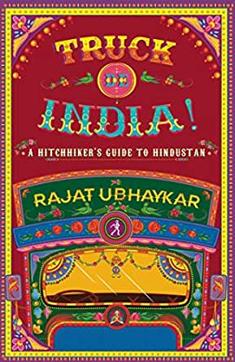
Not long ago, I spent six months on India’s highways, trying to thumb down rides from truck drivers across the country for Truck de India. I thought the experience had given me some idea about the lives of India’s underclass, and the loneliness of the highway. This crisis has completely destroyed that notion. In my mind, it has exposed me as a privileged impostor. Because while I continue to live a life barely displaced from normalcy, the lives of migrant workers and the truck drivers who hosted me on the road have been upended beyond recognition.
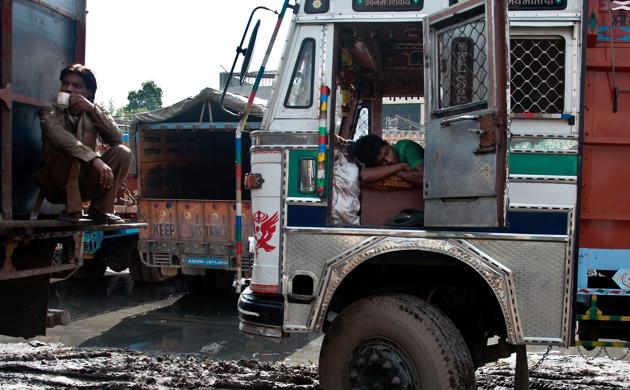
Dhabas have shuttered down, inter-state transport has been disrupted, all of which means that truckers have been stranded on highways on the verge of starvation. Some have been compelled to abandon their vehicles and walk back home. Others are trapped in cloistered, sweltering truck cabins, assaulted by mosquitoes, with no reliable access to food, water or toilets. Can I, ensconced in my airy room, ever truly empathize with their plight? Or am I only capable of impotent sympathy?
Watch more:
These are some of the questions that occupy my mind in this crisis that has cast into sharp relief the chasm between the haves and have-nots, between me and my remarkably generous trucker hosts, a gap that has always been considered par for the course in our deeply hierarchical society. As I write in Truck de India, “Much of India, that toils in the informal sector, how they survive, strive to thrive, their silent reserves of endurance, their inexplicable optimism, their calloused hands - this is never talked about. The vertiginous gap between the rich and the poor; the stark difference between their lived realities, as if they’re members of two different species; this is never mentioned.”
After a long time, I finally see this gap being highlighted, and brought to the fore in the public imagination. Members of India’s middle class minority has finally been forced to confront their undeniable privilege in the absence of the supporting cast of workers that make their lives so convenient. And that is my sincere hope from this crisis, that we will learn to value our ‘unskilled’ workers in times of normalcy as we are in these extraordinary times - when the ‘unskilled’ have suddenly turned essential, when we’ve discovered that the labourers who load India’s trucks with goods and the drivers who ferry them to their destination are, in fact, central to our idea of normalcy. I hope we will not take them for granted again, and treat them with the kindness and dignity they deserve. That’s not too much to ask for, is it?


