
 E-Paper



Manjula Narayan picks her favourite reads of 2023
A memoir that spotlights the lives of tawaifs and dancing girls in 1980s India and a volume on the continuing vitality of the ancient Indian perfume trade and the skilled craftsmen at the centre of it

 Prefer HTon Google


This year, as usual, except for a Yiyun Li and a Patchett here and an RF Kuang there, I read mostly non fiction – memoirs, political biographies, studies of a filmmaker’s oeuvre, books on women in science, even a passionate treatise on an alternative food source that has led me to include crackling seaweed on my snack menu. Among the memoirs, I particularly enjoyed Sara Rai’s Raw Umber, which touches on growing up in Allahabad, her grandfather Premchand, the ordinariness of death, drawing from a pool of languages in her writing, and blurring the line between memory and fiction. While Lab Hopping by Aashima Dogra and Nandita Jayaraman looked at the challenges facing women in the nation’s laboratories, Anita Mani’s Women in the Wild takes the reader into the great outdoors and the world of India’s women wildlife biologists. Among the books on film, the one that caught my attention was Anirudha Bhattacharjee’s excellent Basu Chatterji And Middle-of-the-Road Cinema, which looks at the work of the director whose Khatta Meetha, Ranjnigandha and Choti Si Baat, among others, continue to be great favourites.Ashok Gopal’s mammoth A Part Apart; The Life and Thought of BR Ambedkar looks at Ambedkar’s conflation of religion and morality and also at how the idea of a suitable religion for democracy strengthened his view of Buddhism. Ambedkar’s intellectual, emotional and spiritual acceptance of Buddhism also forms part of Dust on the Throne, Douglas Ober’s impressive study of modern Buddhism in India that studies all that emerged from the new enthusiasm with which Indians began embracing the Buddha during the colonial era.
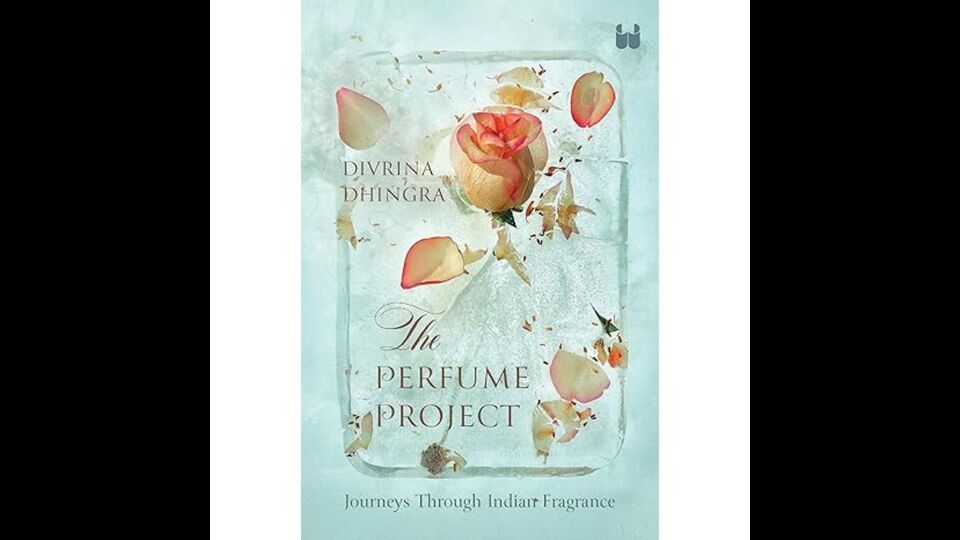

Hosting a literary podcast means I have to read a book a week. Since only books that I find interesting ever feature on Books & Authors, it’s hard to pick a favourite. Still, since I absolutely have to, I’d say Manish Gaekwad’s The Last Courtesan and Divrina Dhingra’s The Perfume Project absolutely topped my reading charts in 2023. Gaekwad’s memoir about his mother takes the reader into the kothas of Congress House and Bow Bazaar in 1980s Bombay and Calcutta, shows how entertainers at the margins – tawaifs, dancing girls and their troupes – dodge violence, and highlights the precarious lives of trafficked children – Rekha was sold at 10 because her large family was deeply in debt. This is an amazing picture of a strong willed woman who decided to make the best of things and ensure that her family, and especially her son, did not have to endure the extreme hardships she did.The wonderful fragrances of sandalwood and vetiver, rose, jasmine and saffron pervade Dhingra’s The Perfume Project. Packed with information, it looks at how towns like Kannauj and Madurai continue to be important centres of the creation and trade in specific perfumes, the complexities of Kashmiri saffron, the skilled craftsmen at the centre of the trade, the impact of climate change and changing land use, and the personal associations that make individuals prefer specific scents. “Incense was the original perfume. There was the belief that if you burnt it, the smoke was able to transcend the barrier between the worlds. Things like sandalwood may have remained in the realm of worship but once the kings and the nobles began smearing it on their bodies, it became popular with everybody,” says Dhingra. Good old reportage married to sensuous writing, The Perfume Project made a host of sublime scents waft back into my olfactory memory. Magic.
READ MORE: HT editors pick their best reads of 2023


