
 E-Paper



Mridul Bhasin: “There’s an urgent need to address road safety in India”
The United Nations’ World Day of Remembrance for Road Traffic Victims is observed on the third Sunday of November. A day after this year’s observance, the writer and translator, who set up the Muskaan Foundation for Road Safety after the death of her daughter in an accident, talks about the need for the nation to focus on road safety initiatives. Incidentally, 1,65,000 people die on Indian roads every year

 Prefer HTon Google


Can we begin with Durva Bhasin, your daughter, in whose memory you have dedicated the NGO, Muskaan?
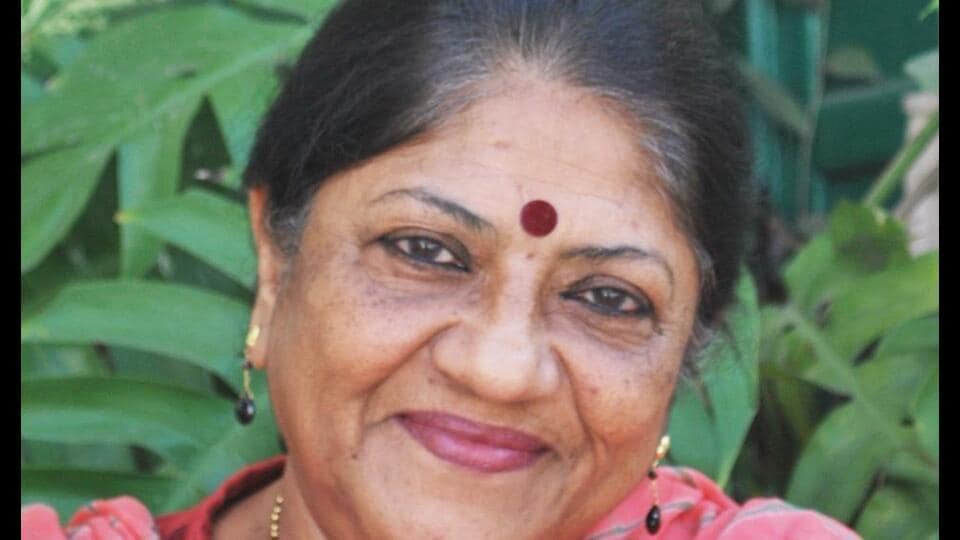
Durva’s fatal accident seems like a queer sequence of small little things that catapulted into an irreversible loss. It’s a wayward coincidence that she was hit by an errant driver on his first day of reinstatement after been suspended for three months for drunk driving. While leaving, she had said, ‘See you, mom!’ but we never got to see her again. Was she at fault? Was it the driver? Why did the school teacher not stop the bus to help her as the driver ran scared to the bus depot? Only bystanders attended to her. It is a sequence that is alive and a part of my mental scape till this day.
A pain as intense as losing a child impacts the parents and siblings in different ways. My husband Pramod did not express his pain in as many words, but he became dysfunctional; Shantanu, my son, clamped shut and had sleepless nights. Muskaan Foundation for Road Safety started three days later. It was her tutor, Sandip Sethi, who gathered some 50 children, her friends, and classmates who brought white flowers on her birthday three days later.
One brave heart got up and said in a wavering voice, “We will do something to keep her alive in our hearts.” A feeble voice began singing, Ham honge qamyab ek din. All joined as they cried.
This was 24 years ago. Muskaan became Durva — her never-say-die spirit, her laughter, her stubborn insistence on doing what she had decided to do. Muskaan Foundation for Road Safety is a name in itself today. It was an iconic beginning that seemed very odd to our friends in the early years. Well, they have an answer now.
I remember your statement that a once-in-20-years disaster like a flood receives more attention than road safety, which kills a significant number of people each year. Why doesn’t road safety receive adequate attention?
The 2004 Indian Ocean tsunami resulted in the deaths of approximately 225,000 to 230,000 people across 14 countries. Road accidents in India claim an estimated 1,65,000 lives annually, a number that continues to rise.
While it may seem callous to compare these tragedies, it highlights the urgent need to address road safety in India. Despite the devastating impact of road accidents, they are often overlooked and underprioritized. Several factors contribute to this crisis, including inadequate traffic management, lax enforcement of traffic rules, and a lack of coordination among various government departments responsible for road safety.
The 2019 amendment to the Motor Vehicles Act was a step in the right direction, but its effective implementation is crucial to reducing road accidents. By prioritizing road safety and taking comprehensive measures, India can significantly reduce the number of lives lost on its roads.
Only a couple of Indian NGOs working in the same sector take the United Nations’ World Day of Remembrance for Road Traffic Victims seriously. Yours is one of them. You use it as an occasion to conduct outreach campaigns highlighting the human aspect through a range of cultural events. Is the aim to sensitise children and mobilise the opinion of their parents?
The significant event of UN World Day of Remembrance for Road Traffic Victims has been observed by Muskaan for the ninth year now. This event offers us an opportunity to show the pain and sorrow that befalls the families of accident victims. Mukaan’s Youth Outreach Program built around this event involves 500+ students from about 50 schools and colleges in choir singing, theatre, and samvaad with those who have chosen to work for safer roads after suffering a personal loss. It also includes a quiz and a massive outreach through social media, TV channels, and print media. The crux is to involve those who are or would be road users soon and offer them an opportunity to ponder over responsible citizenship. The impact on the spot is visibly emotional as the audience is seen crying. Besides the prelaunch teasers and videos, the event videos bring massive response and a desire to participate.
You are working with children as young as three years old. Does capturing children so early help when they can’t really grasp the meaning of road safety?
Durva herself was still a child studying in a school, and this fact inclined us towards children. Begam Fauzia, an educator and an expert in Montessori schooling, answered the niggling doubts we had about the appropriate age to begin teaching road safety to children. She advised that the most suitable age for a child to be introduced to a concept or ideal is two-and-a-half years, as that is the time the child begins to grasp, assimilate, and learn most, and this knowledge stays with him as he grows to be an adult. So, from nursery until 12th standard, we introduced the concept of age-specific road education. Today, the CBSE and the State Education Boards have accepted it as an essential part of the Values and Life Skill Curriculum.
How difficult was your journey with Muskaan?
The journey was not easy for road safety, which was considered the sole domain of government agencies. It changed as the Muskaan team slowly worked to make it every road user’s concern. Slowly, the stakeholder departments began to accept our idea of capacity building of transport, health, and road making agencies’ personnel. We had to dig out the central government’s notifications like, for example, the one on the Good Samaritan law that safeguards those who want to help road victims. We discussed, wrote letters seeking appointments, and worked for public interest litigation. How our ill-perceived interference became a necessary perspective of public interest is a lengthy tale. The stakeholder departments had to grasp the fact that children, youth, and pedestrians were the most vulnerable segment, and that policies and roads had to be forgiving to safeguard them. So many of these issues remain on paper even today, yet those paper decisions are the mainstay for an NGO like us to fight and win — well, at least to be heard and be partially accepted.
How has Muskaan’s work impacted the community?
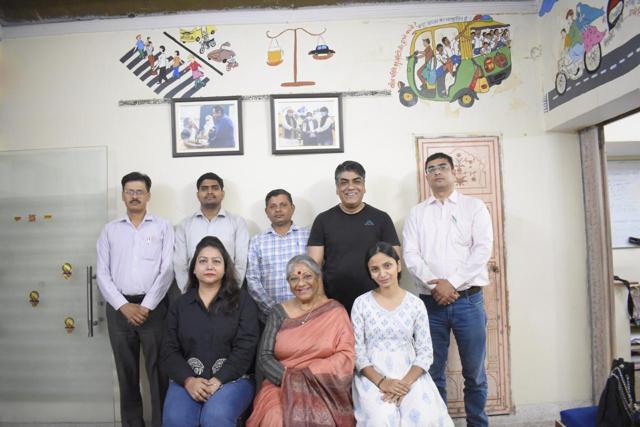
This is a very difficult question to answer, for the response is always, only partially correct. Muskaan spurred government departments into immediate action. We found that while the youth began to understand the necessity of the rules, the parents lagged behind. They yield to the status symbol syndrome when they let their wards drive underage. They are still ignorant about their legal obligation to be responsible for any untoward thing happening — a fatality, an injury, drunk driving or drug use while driving, or any other juvenile crime — when they allow their underage children to drive. The amended Motor Vehicle Act 2019 has put imprisonment, heavy monetary punishments for parents, and impounding of driving license for the juvenile when he comes of age. We, at Muskaan, try to bring awareness amongst parents too through meetings with them at social forums, schools, and through informative circulars. Many times, the children themselves prove to be good ambassadors and carry such messages to their parents.
Our two-wheeler defensive driving module presented in colleges and universities is a hands-on demonstration for safe driving and, as such, is popular. Muskaan recently conducted a survey in collaboration with Vivekanand University. This was published in leading Hindi newspapers like Rajasthan Patrika and Dainik Bhaskar and discussed analytically in The Times of India. If the sheer fact that our survey findings are discussed and published is an impact, yes, we have impacted. The findings in the survey were dismal; we found that the youth ignored parameters of the Bureau of Indian Standards while buying helmets or they wore useless helmets, which become fatal blocks to neurosurgery in case of an accident. Simple things like clasping the helmet clutch strip are ignored, while there is rampant red light jumping and over speeding. We are in no position to claim a behavioural change in road users. Basically, as an NGO, we are not capable of conducting a mass survey that covers multiple aspects of safe behaviour on roads.
The fact that responsible behaviour and respect for law can prevent accidents is only one aspect of the saga of why road accidents happen. There are faulty roads, potholes, lack of enforcement, overpopulation, and undeterred growth of four-wheelers in a country where the majority of the middle class uses two-wheelers. We have 75,000 two-wheeler riders dying on the roads of our country every year. When we talk of safer mobility, we have to keep in mind the fact that every year increasing fatalities in India are correlated with developmental increases in newer roads, flyovers, and highways. All these zones are dominated by cars. To talk of making an impact seems like a boastful statement. Yet one tries to get things going. Perhaps, that is the spirit. One has to try to cross the sea without looking at the horizon.
The amendments in the Motor Vehicles Act of 2019 imposed higher penalties for offenders to deter them from violating traffic rules. Yet, drivers turn oblivious after a couple of days. Isn’t it amusing that, despite knowing fully well that it’s for their own safety, educated and aware citizens refuse to abide by simple rules?
Recent amendments to the Motor Vehicles Act have introduced significantly higher penalties, aiming to deter traffic violations. However, the implementation of these penalties varies across states due to political and social factors. While some states have fully adopted the amended Act, others have imposed reduced penalties. Additionally, the inconsistent enforcement of these penalties, often influenced by corrupt practices, undermines their effectiveness.
While increased penalties can deter some motorists, a deeper behavioral change is necessary. Many road users still prioritize convenience over safety, lacking a genuine sense of responsibility. Experts suggest that changing such ingrained behaviours takes time and consistent reinforcement.
Community-based initiatives can play a crucial role in promoting road safety. By engaging with communities, NGOs can educate people about traffic rules, their impact, and the importance of responsible road behaviour. Sharing real-life stories and local data can resonate with individuals and encourage them to adopt safer practices.
Ultimately, a multifaceted approach, combining stricter enforcement, public awareness campaigns, and infrastructure improvements, is essential to address the issue of road safety in India.
Muskaan won the International Road Federation Award in Istanbul this year and Prince Charles Award earlier. Can collaborations with international organisations help?
The recent award won by Muskaan in Istanbul is a significant boost to our team’s morale. We are eager to continue work on the project that the award recognizes. Collaborating with international organizations, such as our previous work with the India chapter of the IRF, has proven beneficial in securing long-term project support. Work with international organizations allows us to work closely with communities, police, health authorities, and the NHAI to implement sustainable solutions and reduce fatal accidents.
Our partnership with the Alliance for NGOs has enabled us to advocate for crucial issues like speed limits around schools and hospitals, as well as helmet usage. Even small-scale collaborations with international entities can have a lasting impact, providing valuable guidance and expertise. These connections foster growth and open doors for NGOs like Muskaan.
You had a flourishing career as a writer and columnist but you suddenly stopped after your daughter’s death. The translations of both Vijay Dan Detha (New Life and Selected Stories; Penguin, 2008) and Ratnakumar Sambhariya (Thunderstorm; Hachette, 2016) happened later. Are you translating anything new these days?
When life takes a tragic turn, it is not within one’s control to choose its course. It seemed meaningless to continue to be a column writer, translator, and director of public relations in an ITC hotel. It was suddenly so surreal to exist and breathe. For days together, we sat like zombies struck by an asteroid or something. A line from King Lear by Shakespeare kept ricocheting in my mind: “As flies to wanton boys, are we to the gods; they kill us for their sport”. There is no God, one thought, and then with time the surge of disbelief and anger was slowly replaced by a faith that even her death had a purpose. Even today, in times of crisis, her presence is around, and solutions come our way as if sailing on the winds that bring her memory.
Kinshuk Gupta is the associate editor of Usawa Literary Review and the poetry editor of Jaggery Lit and Mithila Review.


