
 E-Paper



Report: Emami Art Experimental Film Festival (EAEFF)
The event was a treat for cinephiles drawn to slow, unconventional, and formally inventive films, which rarely get a commercial release

 Prefer HTon Google


In an age saturated with bite-sized visual content, it is easy to lose track of what we consume. Yet, the hunger for meaning persists; perhaps a reminder that quantity is no substitute for quality. Those who value substance over spectacle and craft over cacophony found themselves rewarded at the Emami Art Experimental Film Festival (EAEFF).
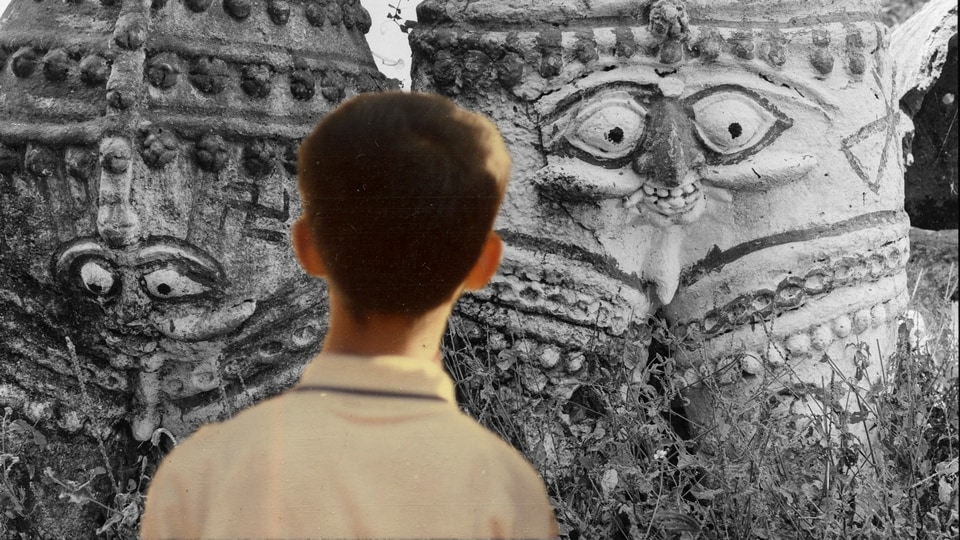
Hosted at the Kolkata Centre for Creativity (KCC) and the Satyajit Ray Film and Television Institute (SRFTI) from September 11 to 14, the festival was a haven for cinephiles drawn to slow, unconventional, and formally inventive films, which rarely get a commercial release in India. Open to anyone willing to challenge their assumptions about what a film can be, EAEFF also made room for post-screening discussions that deepened the engagement between filmmakers and audiences.

“We want people to attend, get shaken up, and leave with more questions than they came with,” said Ushmita Sahu, Director and Head Curator at Emami Art and founder of the festival. “An artwork does not exist to give out information or provide quick solutions. It is meant to be open-ended, allowing people to engage, think and interpret on their own terms.”
Among the Indian selections, Karthik Subramanian’s Sleepwalker Archives made a lasting impression. Spanning nearly an hour, the film excavates memory through images shot between 2015 and 2021 and archival photographs. Nostalgic yet menacing, it challenges linear thinking with its dreamlike blend of the personal and the ecological. Subramaniam subtly hints at a spectral presence that shifts his location from observer to observed, and draws attention to the ghostlike quality of the dry riverbed. “Inspiration is a function that we want nature to serve,” he reflected. “Can we engage with a river in a non-transaction way, as a friend, an ally, or a muse?”

Priyanka Chhabra’s 16-minute short, In The Forest One Thing Can Look Like Another, also dealt with this theme of how humans relate to their environment. It uses Internet chatroom conversations and Bollywood songs to explore the wide gap between the fantasies that people have about hill stations and their precarious reality as ecologically sensitive areas threatened by over-tourism. Her own experience of living in Manali adds a powerful personal touch.
Another standout, Mahishaa’s Babasaheb in Bengaluru, examines the power of iconography in empowering the oppressed. The five-minute film, created by the founder of Neelavarana, an Ambedkarite artist collective, documents statues of BR Ambedkar across Bengaluru. These monuments, erected not by the state but by ordinary people with their hard-earned money, commemorate a legacy that continues to inspire Dalits to “educate, agitate, and organize.”
It is worth noting that the festival’s idea of international cinema extended beyond films made in the United States and Europe. The lineup included films from Qatar, Palestine, Bahrain, Mexico, Chile, Peru, Paraguay, Hong Kong, Brazil and Ecuador. Sahu emphasized the need to spotlight filmmakers from the Global South, many of whom have no institutional backing.

One of the festival’s most haunting works was Upshot, by Palestinian filmmaker Maha Haj. The 34-minute film portrays a couple, Suleiman and Lubna, living on an isolated farm without internet or mobile phones. What first appears to be a retreat from capitalism gradually reveals itself as a fragile refuge from the trauma of Israeli occupation that has torn apart their family.
By introducing a character named Khalil, a journalist who claims to be a friend of one of their five children, the filmmaker disrupts the idyllic environment that contrasts with their inner chaos, and also the frictions in their relationship resulting from different ideas about parenting.

Several films used found footage as a creative strategy. Revival, a short film exploring isolation, made by Heidi Phillips, was derived from Super 8 films that the filmmaker came across in Montreal’s thrift stores. Carole O’Brien, who is also from Canada, had his film Time Away, screened at EAEFF. It uses found footage from an anonymous filmmaker who documented his personal travels around the world on film in the mid-1900s. Similarly, Qatar-based Yemeni-East African filmmaker Shaima Al Tamimi’s film Don’t Get Too Comfortable also uses archival photographs, sourced footage and animation to talk about the struggles of migrants from Yemen.
Laying out the intellectual and ideological framework behind this practice that is gaining popularity, Sayanth RS, curator and programmer, EAEFF, said, “The archival value of footage and its afterlife create a realm for reuse, positioning the artist-filmmaker as an archivist.”
The festival deserves kudos for celebrating indigenous artistic talent through films such as Fileona Dkhar’s Ancestral Echoes set in the Khasi Hills, Sky Hopinka’s Dislocation Blues bearing witness to the Standing Rock protests in South Dakota, and the Karrabing Film Collective’s The Mermaids or Aiden in World that speaks out against colonial violence.
Sahu said, “We must not underestimate Indian audiences. People are willing to encounter and experience cinema that challenges them. There is a thirst for experimentation with form and content. People do not want to just sit back and watch in a passive way. They want to discuss.”

A special package featured seven films by Australian duo Richard Tuohy and Dianna Barrie, including Tooborac, Intersection, In and Out a Window, China not China, Self-portrait with Bag, Boot-fall, and Nude Descending. Known for their handmade, celluloid-based practice, the pair also joined a panel on artist-run film labs with Karan Suri Talwar, founder of Harkat Studios, who waxed eloquent about the joy of working with your hands, and making films the old-school way.
Barrie noted that such labs are often female-led, community-driven, and politically grounded, especially across South America and Asia. Tuohy added that these spaces are sometimes unfairly dismissed for lacking rigour, and they need to be celebrated for their resistance and generosity.
Richa Agarwal, CEO of Emami Art and Chairperson of KCC, summarized the festival’s broader intent: “Our goal is not just to present films but to build a long-term ecosystem where artists, audiences, and institutions come together to support new ways of seeing and imagining.”
Chintan Girish Modi writes about books, films, art and music. He can be reached @chintanwriting on Instagram and X.


