
 E-Paper



Report: Rainbow Literature Festival
The 2025 edition featured a healthy mix of talks, panels and film screenings that explored the many complexities of queer life in India and beyond

 Prefer HTon Google


The 2025 edition of the Rainbow Literature Festival, held on 6 and 7 December at the Gulmohar Club, New Delhi, was subdued compared to the previous year’s edition. In fact, this time, there was a stark disparity between the two stages in terms of the number of sessions. This was both a conscious decision on the organizers’ part and a result of the IndiGo crisis in early December, which stranded many speakers who had intended to fly in for the festival. In the end, this contributed to a relaxed atmosphere, providing an opportunity to experience RLF without the fear of missing out. Overall, the festival was a healthy mix of talks, panels and film screenings that explored the many complexities of queer life in India (and beyond). This time around, there were also accessibility features such as ramps, ISL interpreters and a quiet room where participants could unwind when discussions became too overwhelming.
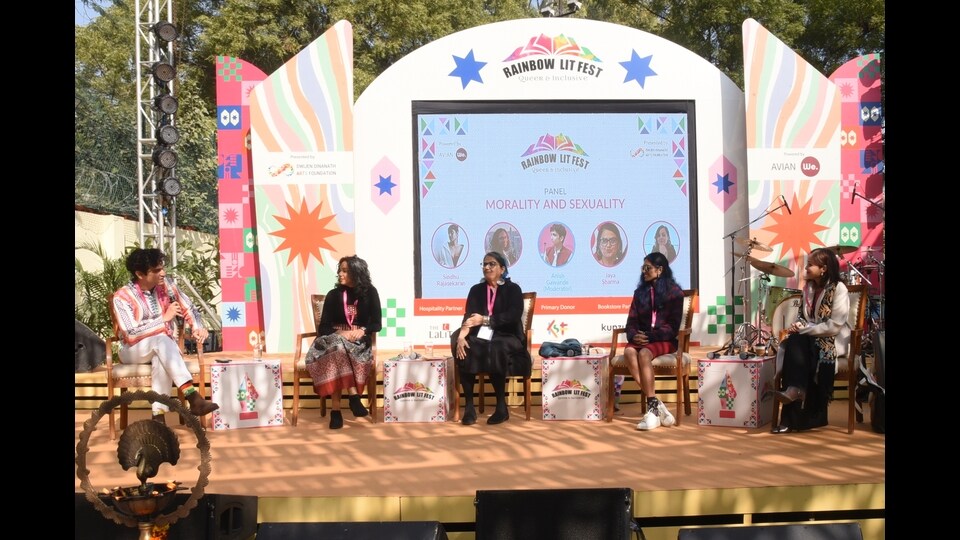
After the opening ceremony, the event began with a strong panel on Morality and Sexuality that touched on respectability politics and queer assimilation into the heteronormative. The panellists — ranging from a queer politician, a kink educator and a writer to a development sector professional — discussed how discourses on sexuality are often influenced by sociocultural understandings of morality and urged people to see both as fluid and constantly changing. Jaya Sharma particularly stressed on moving away from the debate of “good queers vs bad queers” and the futility of in-fighting.
Later, a session titled En-Thai-cing Thailand shone a light on queer life in Thailand as writer Apinuch Petcharapiracht and artist Oat Montien spoke of conservatism and homophobia still existing in a country that is otherwise hailed as the leader of progressive queer rights in South Asia.
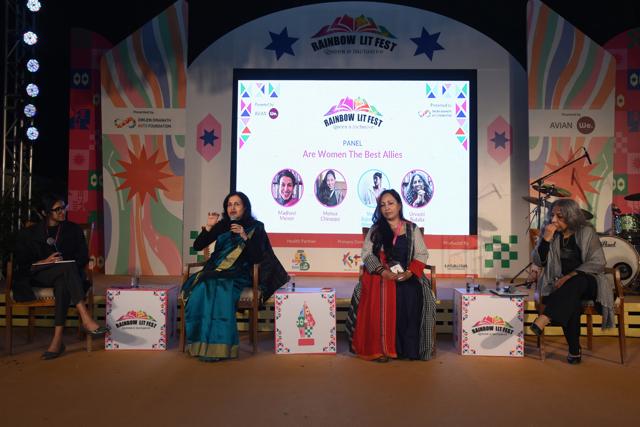
Disagreements, civil or not, are an integral part of life and queer discourse is not alien to them. RLF has often provided a stage for the airing of ideological disputes. Such was the case during Are Women the Best Allies, a late evening panel on the first day which sought to examine whether common ground and common problems were enough for solidarity and allyship. Panellist Madhavi Menon, a professor of English at Ashoka University and director of its Centre for Studies in Gender and Sexuality, rejected the notion of identity politics and deemed identity as restrictive silos imposed upon us. This led to an intense back and forth with an audience member who disagreed. They stressed that labels are useful in the battle to be recognized and gain rights. In another panel, Legality, Justice and Hierarchies, social activist and advocate Disha Wadekar defended the exclusion of the creamy layer in SC/ST reservations and other affirmative action policies.
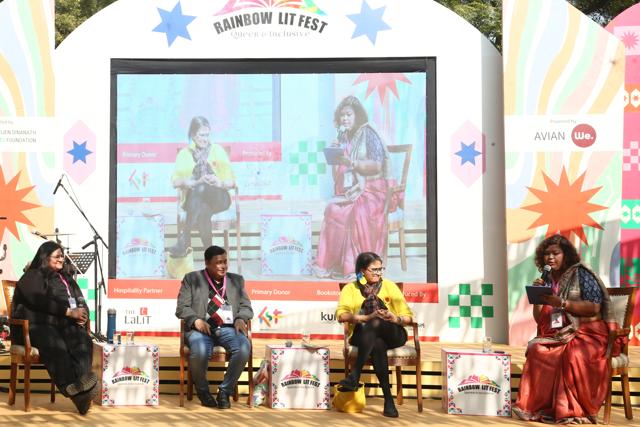
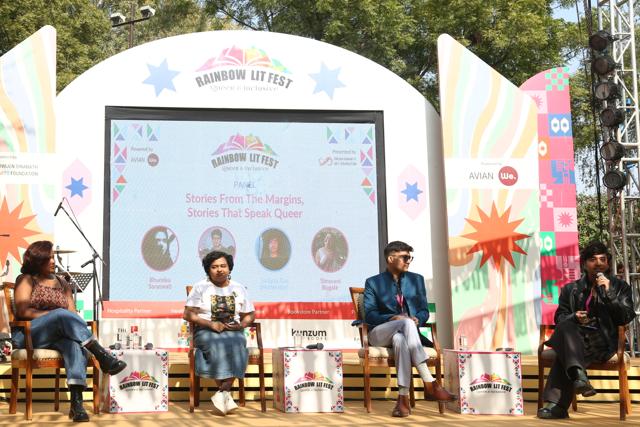
In a bid to make RLF 2025 more inclusive, the organizing committee collaborated with prominent names within the queer community who work on issues that often do not get the attention they deserve in the mainstream. This resulted in some standout sessions. The Sunday morning session titled Kinks and the Politics of Kinkiness was one of them. The panellists, particularly kinky activist Jaya Sharma and erotic fiction writer Ancilla L, provided a general understanding of the subject that broke through the binaries of pain and pleasure, harm and safety. Another superb session on the same day, Stories From the Margins, Stories That Speak Queer, brought up the classist, casteist and urban-centric nature of mainstream queer spaces. The young panellists showed the parallel lives and realities of Dalit and Bahujan queer people, arguing that queer liberation cannot happen without proper representation.
RLF 2025 also featured talks with public figures like Nikhil Taneja, founder of youth-media and impact organisation Yuvaa, social media personality Dolly Singh, and Shahana Goswami, an award-winning actress. The writer and poet R Raj Rao spoke about his career as a writer and academic over the decades, and how his queer identity has shaped him. He was also a part of a fantastic panel titled Queer Time: How Queer People Experience Ageing, where he was joined by Maya Sharma, Rumi Harish and Rudrani Chettri. The panel emphasized that there is no cut-off date for desire and discussed how ageing can come with its own unique challenges for queer people.
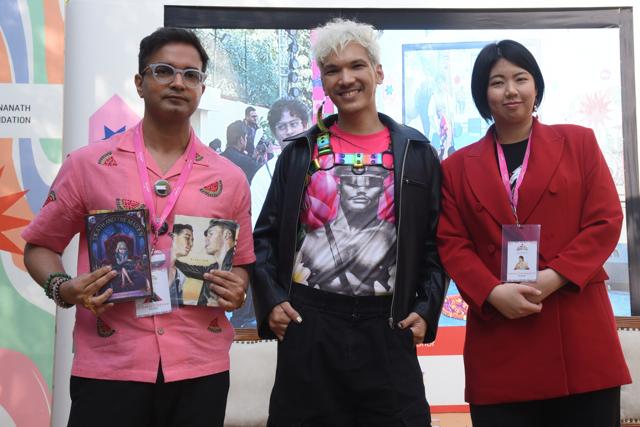
The Rainbow Awards for Journalism and Literature were announced just before the closing musical performance. The Op-Ed and Feature awards were given to Naina Bhargava (Love and loss in Multai) and Katyayini Saksham (Can Trans Women Ever ‘Identify’ as Women in India?) for pieces published in Queerbeat and The Swaddle respectively. Santanu Bhattacharya’s Deviants was the Fiction Book of the Year and the Non-fiction award went to All Our Loves: Journeys with Polyamory in India by Arundhati Ghosh. The Lifetime Achievement award was posthumously given to Saleem Kidwai, the late activist, writer and historian who played a pivotal role in the queer movement in India. He is perhaps best known for Same-Sex Love in India: Readings from Literature and History, a landmark volume co-edited with Ruth Vanita that documents the origin and evolution of queer desire in the country.
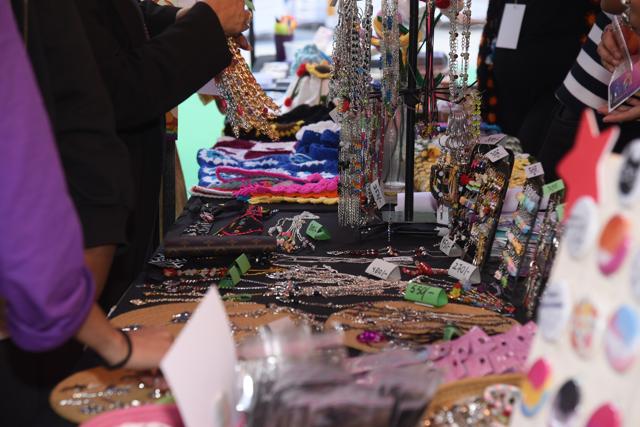
Beyond talks, discussions and panels, RLF 2025 had a strong slate of short films. From Shubham Negi’s Hills Don’t Dance Alone (15-year-old Sachin is bullied for cross-dressing in a school folk dance performance) to Anureet Watta’s Don’t Interrupt While We Dance (queer joy and anger through a group of friends celebrating a birthday crashed by police) to Ashutosh Shankar’s Tara (centring around a Dalit trans woman as she navigates life in Mumbai), these films, often the work of young film-makers, explored queerness with a lot of nuance. Another 2025 highlight was the session by Eric Chopra, founder of the Indian history focussed platform, Itihasology. Chopra took the audience through the history of the famous Jamali Kamali mosque and tomb complex in Mehrauli and spoke about its queer significance. The festival closed with spellbinding music and dance performances on both nights.
This reporter, who has attended all three editions of the festival, noticed that some themes and panels are being repeated edition after edition. For example, the 2025 Bringing Up (To Speed) Parenting panel echoed the 2024 Queer Parents: Yes, They Exist. Another repeating segment was Love Is . . ., which features couples recounting their experiences with relationships. While it is crucial to bring up these topics multiple times to examine how social mores and larger narratives are evolving, it feels like the same group of people – almost a rotating roster of speakers and audience members – are having these conversations, year after year with no sense of moving the ball forward on crucial issues. Still, it is encouraging to see spaces like the Rainbow Literature Festival exist. It will be interesting to see how the organisers expand the event’s frontiers to be more inclusive and diverse despite the realities of limited funding.
Areeb Ahmad is a Delhi-based freelance writer and literary critic. He is @Bankrupt_Bookworm on Instagram.


