
 E-Paper



Review: A Shining by Jon Fosse
Hallucinatory and dreamlike, the Nobel laureate’s latest novella can be interpreted in numerous ways

 Prefer HTon Google


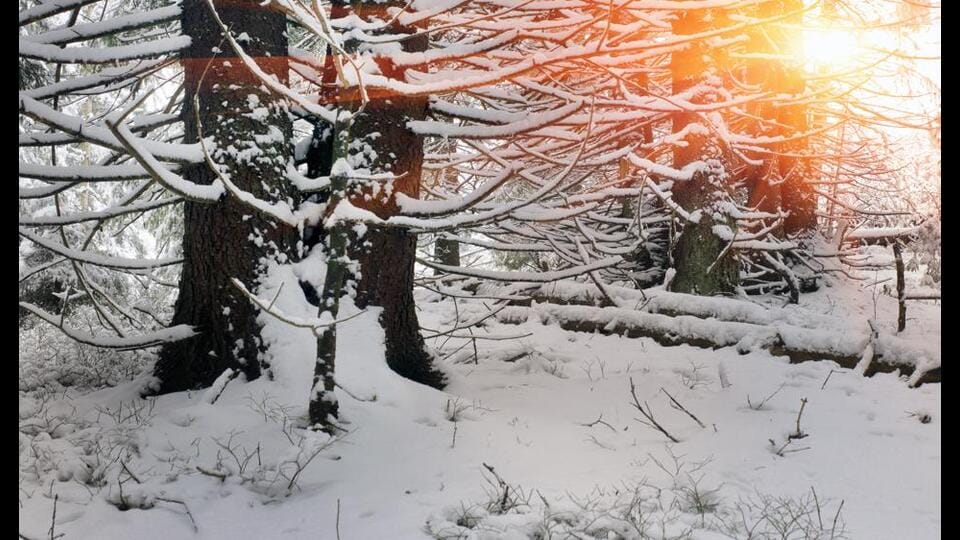
In the latest work of Norwegian author and Nobel laureate, Jon Fosse, a man sets out on a drive with no particular destination in mind. He keeps turning right and left until he reaches the end of a road in a forest. As it grows dark and snow begins to fall, instead of turning back for help, he foolishly decides to venture into the forest. As he grows increasingly cold and tired, he comes across a glowing being in the midst of the darkness. Eventually, he is lost and his encounter with the mysterious figure takes on a haunting quality.
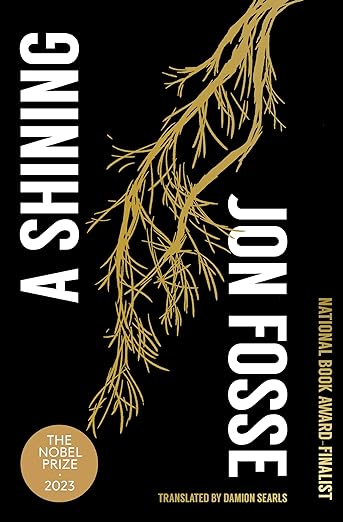
Jon Fosse’s distinctive style, which is challenging to describe because it is so unique, has been recognized by the Nobel Prize Committee for “giving voice to the unsayable.” His most renowned work, Septology, a seven-part novel compiled into a single volume, offers readers a transcendent exploration of the human condition through a continuous, uninterrupted single sentence. Damion Searls, who has translated Proust, Rilke, Nietzsche, Jelinek, Gide, and Modiano, among others, went so far as to learn Nynorsk, a North Germanic language, to be able to translate Fosse’s work as accurately and faithfully as possible.
“And now the whole presence is shining. No, I don’t understand this. It’s not something that can be understood either, it’s something else, maybe it’s something that’s only experienced, that’s not exactly happening. But is it possible to only experience something and not have it be happening. Everything you experience, yes, is real in a way, yes, and you probably understand it too, in a way. But it doesn’t matter either way. Because there it is, the presence, it shines shimmering in its whiteness.”
Fosse is a masterful writer whose prose is unlike anything you’ve read before. His writing is like a gentle breeze that sweeps you away, carrying you to a world of his creation. With each sentence, you become more and more immersed in his singular vision, and before you know it, you’ve forgotten everything else around you. Sinuous and undulating, his long sentences stretch across the page like a winding road through a beautiful landscape. His descriptions vividly paint a picture in your mind that’s both rich and detailed. As you read, you can almost feel the cool breeze on your face and hear the rustling of leaves in the trees.
“I stand totally silent. I want it to be totally silent, I want to listen to the silence. Because it’s in silence that God can be heard. Someone said that, anyway, or something like that, but in any case I can’t hear any voice of God, the only thing I hear is, yes, nothing. When I listen to nothing, I hear if the nothing can be heard, if that’s not just a figure of speech, just something people say, I think. Yes, I hear, yes, the nothing, not anything, not in any case the voice of God, whatever it is. But I’ll leave that for people to decide, I think.”

Told from the point of view of an unnamed man who lives alone and is consumed by a sense of isolation, the novella focuses on the themes of loneliness and numinosity in a mystical way. The protagonist shares with the reader that even if he is stranded in the forest, no one will miss him.
READ MORE: A deliberate embrace of unhurried prose: The Other Name by Jon Fosse
The book takes a mystical turn when a shining figure appears and speaks to the protagonist. This figure seems to represent something beyond the realm of the tangible world, something that is both comforting and unsettling. As the story progresses, the protagonist encounters the apparitions of his mother and father, adding to the fable-like quality of the novella. The text is rich with symbolism, suggesting a direct association with divinity. However, it is not as simple as that. The hallucinatory and dreamlike quality of the story leaves the reader with a multitude of meanings and interpretations to ponder over.
Comprising just 48 densely packed pages, A Shining can be read at one go. Its intriguing storyline will likely leave you wanting to re-read it. Brilliantly strange, it is an excellent starting point for anyone interested in Jon Fosse’s work.
Hritik Verma is an independent reviewer. He blogs at allayingart.wordpress.com. He is @Hritik38233434 on Twitter and @allayingart on Instagram


